
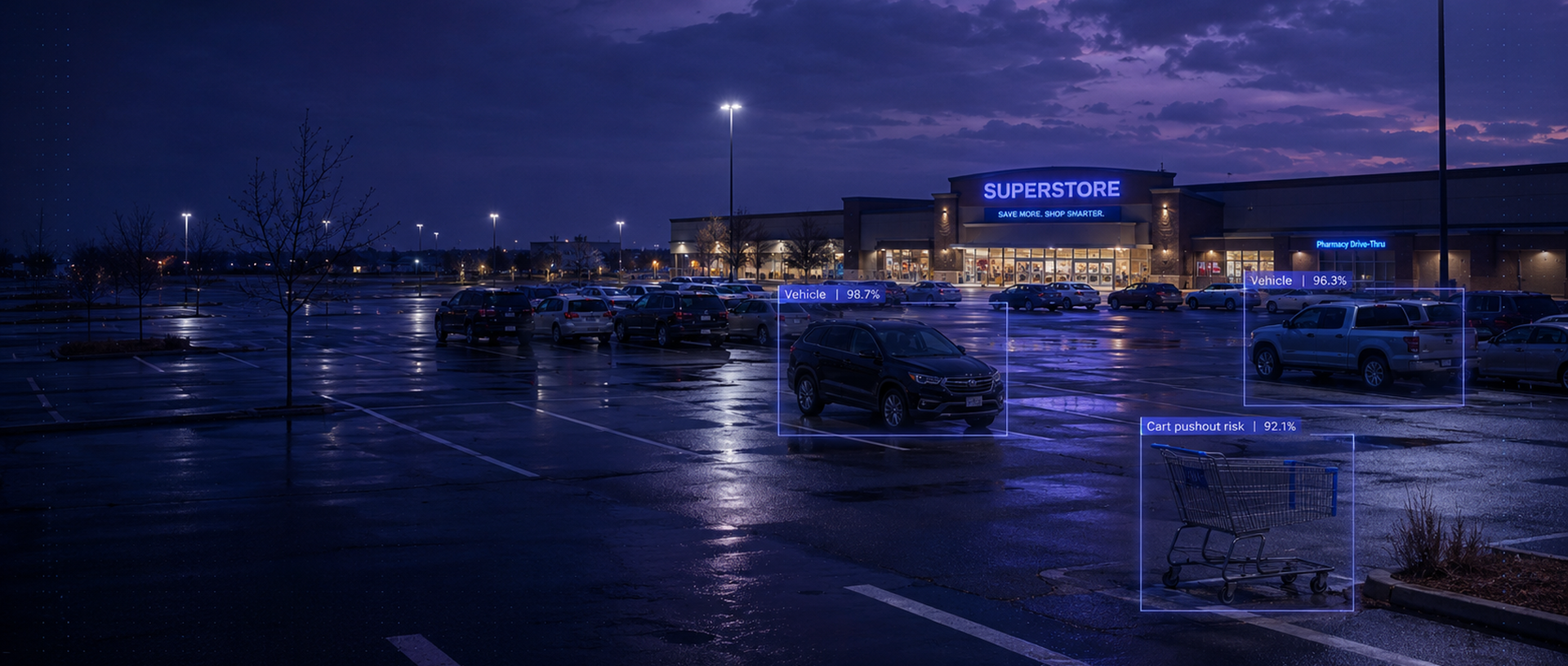
Webinar recap: Turning cameras into coworkers
How loss prevention teams use agentic AI to spot risk sooner, deter faster, and protect the full store footprint, on the cameras they already own.
Request a demo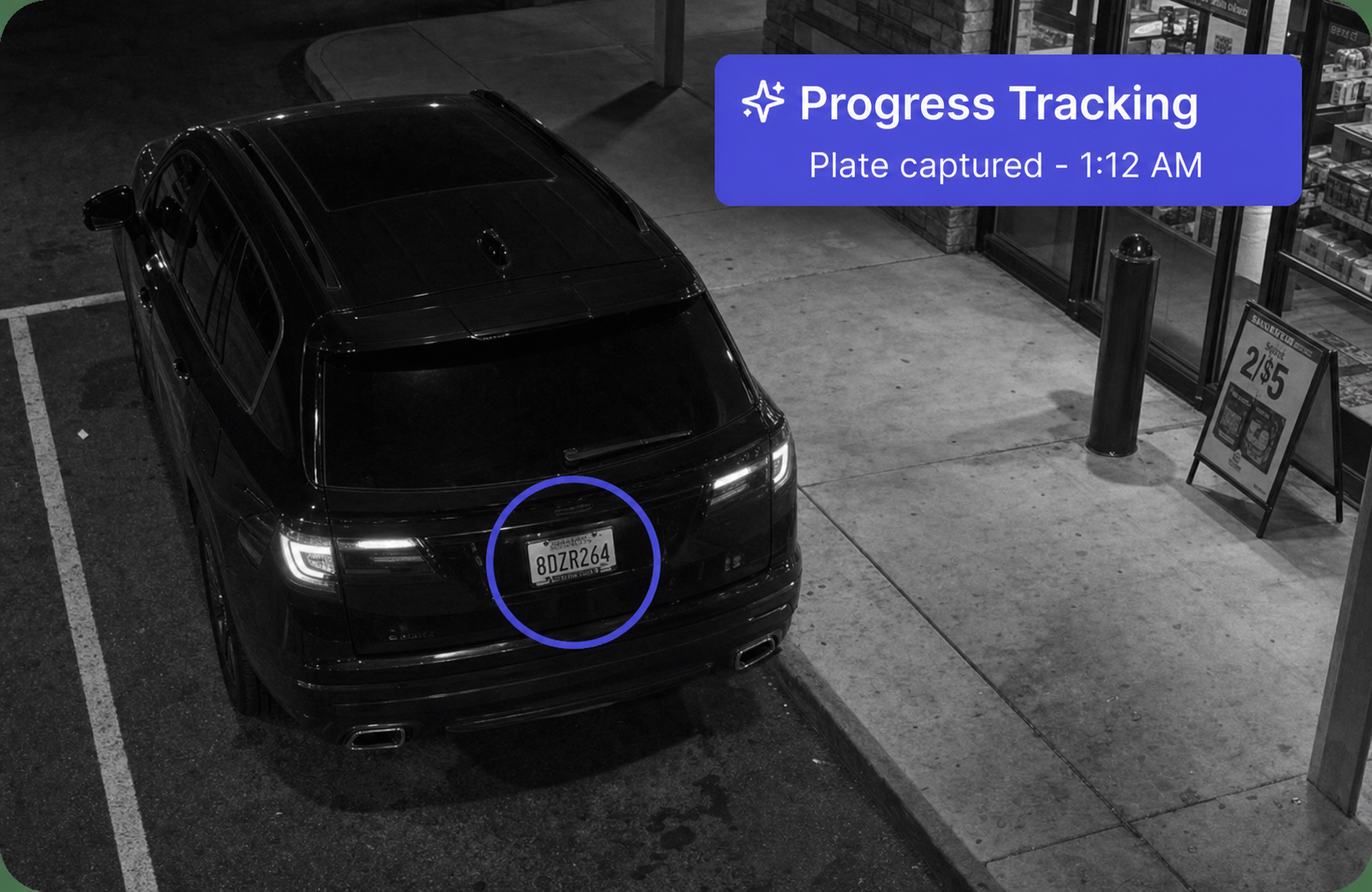
In a recent Loss Prevention Media webinar, Stefanie Hoover sat down with Rish Gupta, Co-founder and CEO of Spot AI, and Sid Sreeram, Product lead, to break down how AI agents turn the cameras retailers already own into coworkers that detect, deter, document, and resolve incidents.
The main theme stayed clear throughout: cameras are moving from seeing to acting. Detection has been around for years. What changed is that agents now go past the alert, break up the incident on site, and hand a finished case to your team.
Top takeaways
- Your cameras can move from see to act. Agents run the full loop from detection to deterrence to a documented case, on the cameras and infrastructure you already have.
- AI surfaces what you did not know was happening. Teams routinely find their loss estimates were low once agents start reviewing every camera, every hour.
- Deterrence is now automatic. Agents deliver live talk-down messages, escalate on their own, and stop a large share of incidents before anyone reaches for the radio.
- Every incident closes with a case, not just an alert. Agents assemble the timeline and pull clips from multiple angles so your team reviews and decides instead of scrubbing footage.
- One use case pays for the platform, then it spreads. Programs that start with vandalism or cash theft extend to unattended registers, store audits, and merchandising insight.
- Adopt it by helping the last mile, not replacing it. Buy-in comes from putting the tools in the hands of shift workers so the value shows up on the floor.
Best practices and key learnings
The session moved through seven themes, from the core concept to adoption. Each one below pairs the idea with the actions LP and AP teams can take, plus the clip from the recording.
Meet your AI agents for LP and AP
You already have the cameras. Spot AI puts a team of configurable agents on them, each running from detection through deterrence to a documented case. Deploy one agent for a single problem, or hundreds across the parking lot, the back of house, and the sales floor.
- Start with one agent on your highest-ROI problem, then scale.
- Configure agents per site and per use case instead of one generic detector.
“You can have hundreds of thousands of LP agents acting on your team’s behalf, 24/7, while you’re sleeping or doing more important tasks.”
From seeing to acting
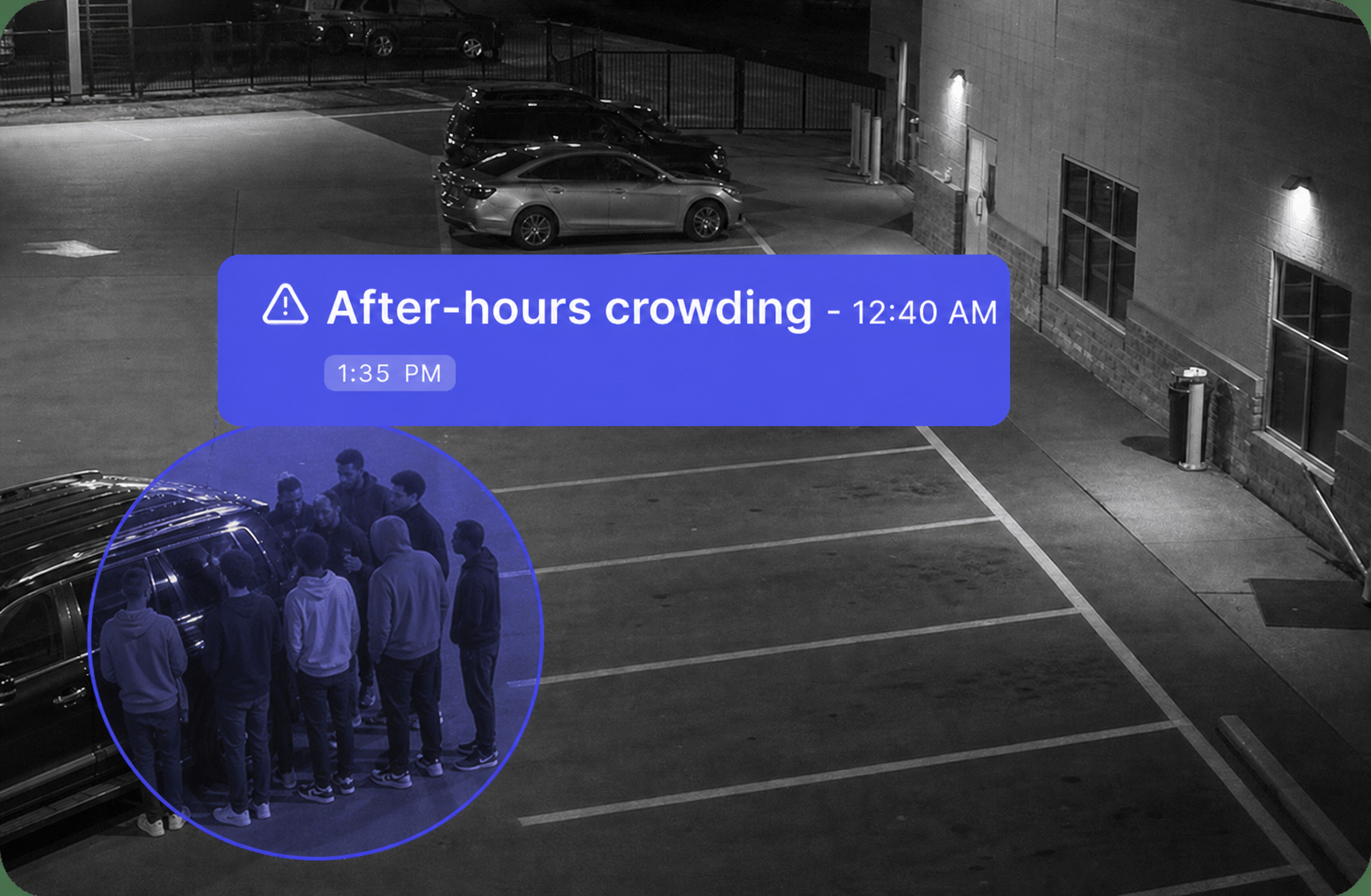
It took a century to get from the first CCTV cameras to video a machine can truly understand. Video language models were the turning point. Cameras can now reason about what they see and act on it, not just record it for someone to review later.
- Audit where your current system stops at the alert and who carries the incident from there.
- Prioritize the sites and hours where nobody is available to respond.
“We’re going from cameras just being able to see, to actually going all the way to act.”
A real agent flow: vehicle break-in
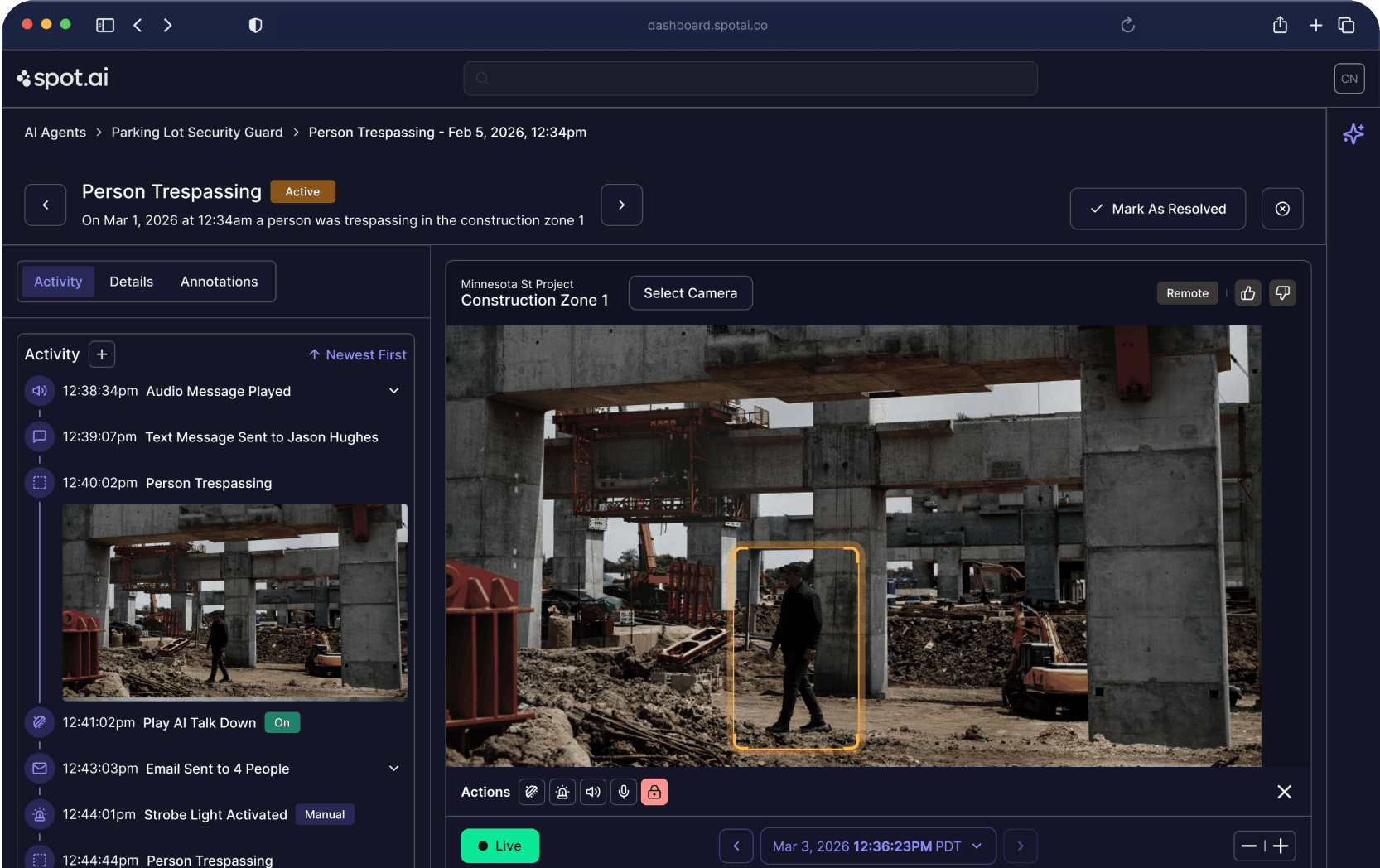
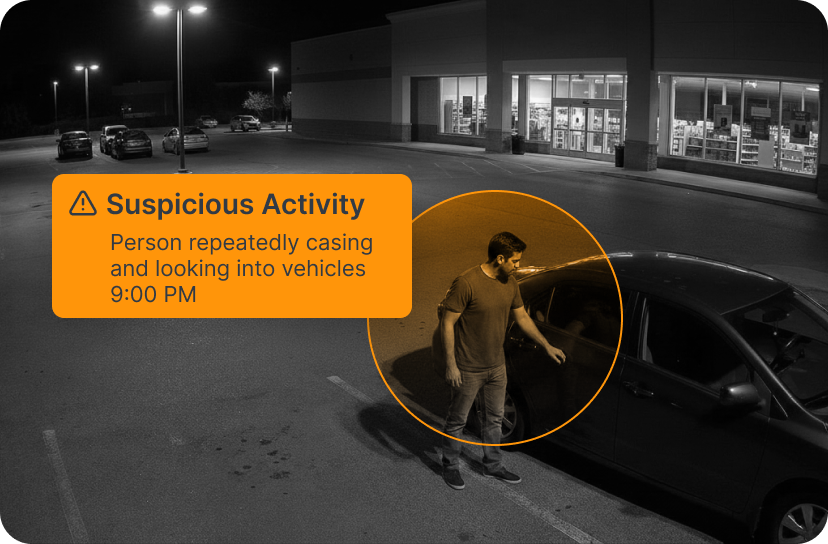
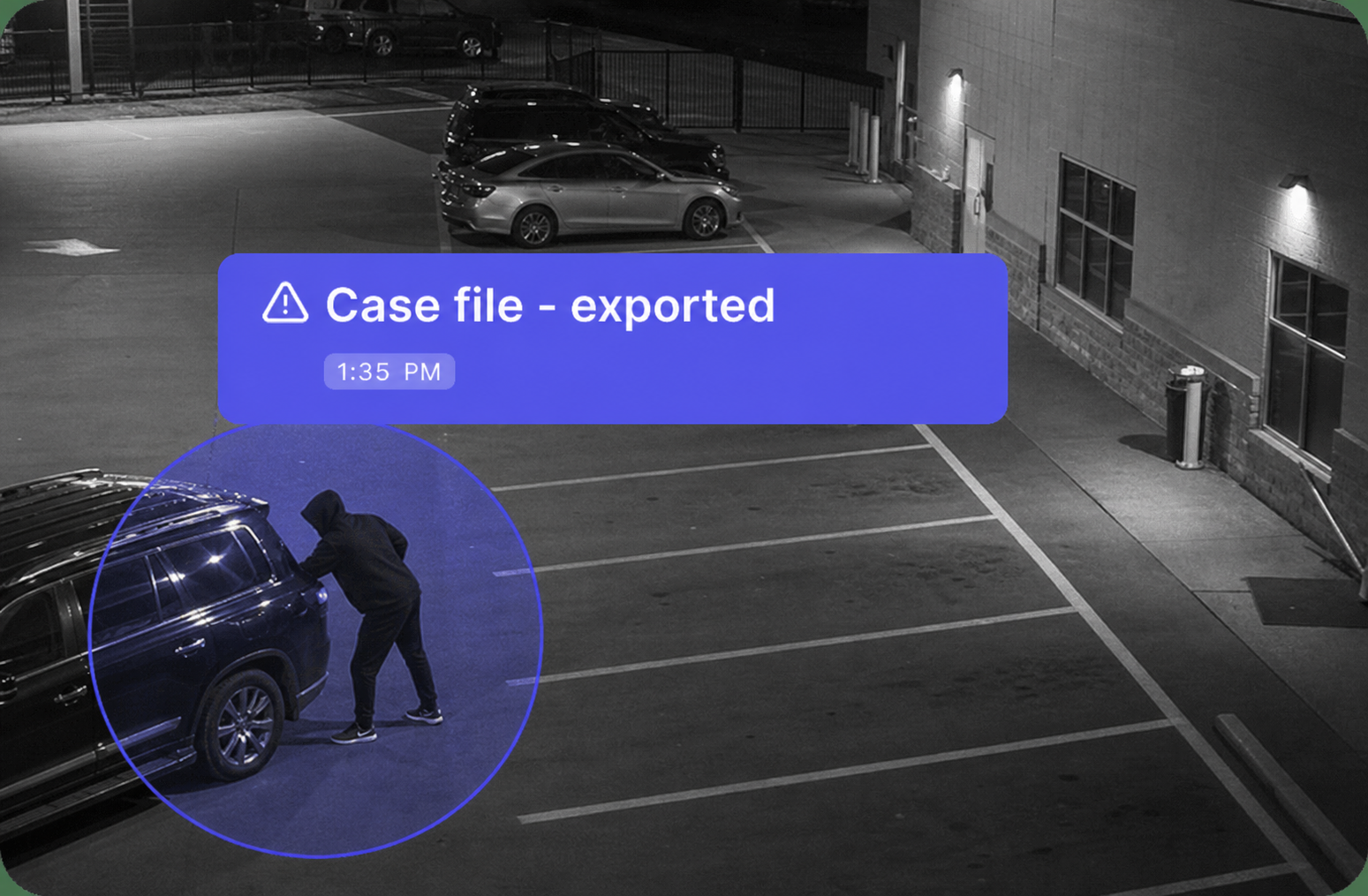
Sid walked through an actual incident. The agent tracks the scene on a chronological timeline, generates talk-down messages on the fly, and escalates until the person leaves. Then it starts a case with clips from multiple angles, ready for the team to annotate and act on.

- Keep the team in the loop on resolved incidents instead of letting AI handle them silently.
- Use the case record, timeline plus multi-angle clips, as the handoff artifact.
“AI resolves the incident, but we don’t want the LP team to just not know about it and assume it was handled. That hand-in-hand connection is what we’re striving toward.”
Real-time deterrence across every site
One national EV charging network started with a pilot of about ten sites facing vandalism, graffiti, and copper theft. Agents now protect around 120 sites and customers report deterring roughly 80 percent of incidents with little to no human intervention. In another deployment, a single deterred dumping incident avoided about 20,000 dollars in loss, per store.

- Pilot on a small set of problem sites and agree on success criteria up front.
- Track avoided loss per deterred incident to build the internal ROI case.
“We started with a pilot of about 10 sites, and we’re now protecting about 120. You’re able to deter about 80 percent of these incidents.”
Beyond detection: Iris and composite agents
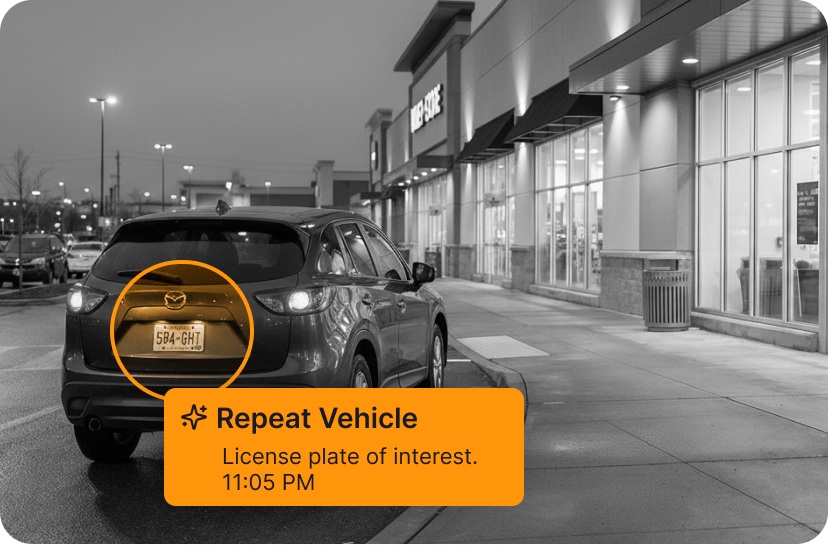
With dozens or hundreds of agents running, Iris lets you ask questions of your video the way you would ask a colleague, and sends scheduled summaries of what needs attention. Composite agents work like a regional manager, rolling patterns up across stores so a theft signature seen at one location is known at the next in near real time.
- Use scheduled Iris summaries to replace manual multi-site review.
- Let composite agents connect repeat offenders and patterns across locations.
“I live on Iris. I use it all day long, and it’s truly magical.”
Beyond shrink: registers, audits, and sales
The same agents extend into operations and customer experience. They flag unattended registers so staff can recover abandoned sales, verify open and close checklists across hundreds of sites, and map how shoppers actually move. One retailer redid an electronics display after the data showed customers behaving the opposite of what the floor plan assumed.
- Add one operations use case, like register coverage or audits, once the first security agent proves out.
- Use movement data to challenge floor plan assumptions.
“They completely changed their plan. Customers were spending time in the exact opposite place they thought they would.”
Augment, do not replace
The fastest path to buy-in is to make the tools work for the people doing the day-to-day. When shift workers see agents handling the tedious parts and helping them hit their goals, the story flips from something management uses to cut headcount to something the team uses to do better work.
- Put the tools in the hands of shift workers first, not just the head office.
- Frame the rollout around making the last mile easier, not replacing it.
“Think of these tools as a way to augment what you can achieve in a day, versus seeing them as a replacement of your task.”
How LP and AP teams can put this into practice
The session closed with a simple path: you do not need to overhaul anything to find out if this works for your team. Most pilots are up and running in under 30 minutes on the cameras you already own.
- Pick one or two stores and the highest-ROI problem, like vandalism, cash theft, or vehicle break-ins.
- Agree on 30 and 60 day success criteria up front, then use the data to make the internal case.
- Expect accuracy to reach a customer-reported 90 to 95 percent within a couple of weeks of feedback and tuning.
- Extend from the first win into operations, safety, and merchandising over time.
How Spot AI helps
Spot AI is the intelligence layer on the cameras you already own, or on premium NDAA-compliant cameras included in the all-in per-camera subscription. It sits on top of your current VMS and case management system rather than replacing them, and incidents are the output: push them wherever your team needs them.
- Agents cover detection, deterrence, documentation, and resolution across security, operations, and safety.
- Iris gives every manager conversational access to what the cameras see, plus scheduled summaries.
- Forward-deployed engineers tune agents to your store layouts and workflows during the pilot.
Want it walked through with your team? Spot AI also runs a free 90 minute onsite AI workshop: tools that are working across retail, your own use cases mapped, and the ROI case built together. Educational, not a sales call.
Watch the full webinar
The complete 51 minute conversation with Rish Gupta and Sid Sreeram, hosted by Stefanie Hoover of Loss Prevention Media.
Put an AI coworker on every shift
See how the latest in video AI spots risk sooner, deters faster, and keeps every site covered, around the clock.





.png)
.png)
.png)
.svg)