




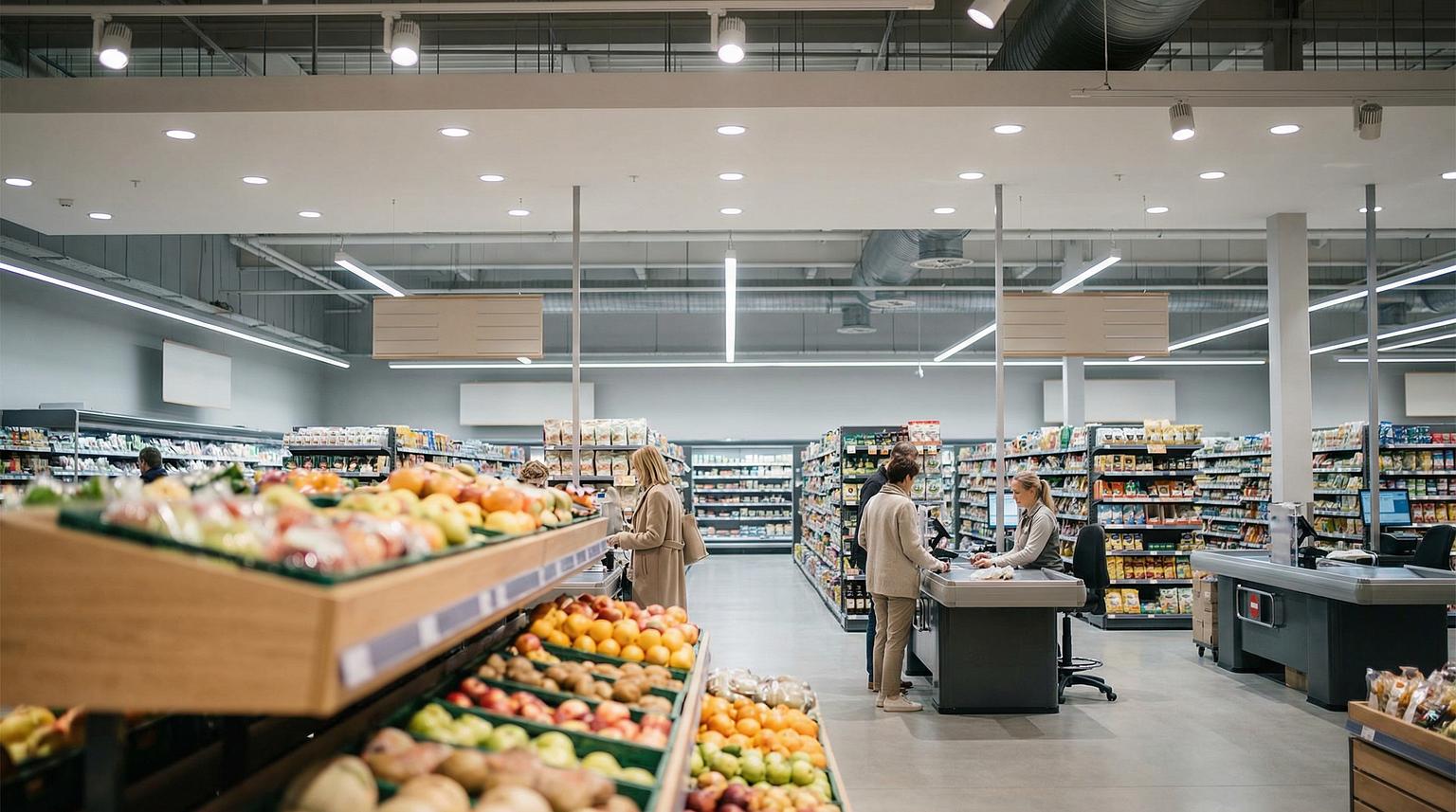


Grocery stores operate on razor-thin margins. When retail shrink climbs above industry benchmarks, it can erase profitability entirely. Yet the sources of that shrink are rarely obvious: a pallet of yogurt that expired before it reached the shelf, a self-checkout transaction where produce went unscanned, a receiving dock where invoice quantities didn't match what came off the truck, or an unmanaged parking lot where organized retail crime (ORC) teams stage before entering the store.
What makes grocery environments uniquely difficult is the combination of high SKU counts, perishable inventory, warehouse-format parking lots, overnight receiving windows, and self-checkout stations—all generating loss from different directions at once. Addressing one category while ignoring the others leaves significant margin on the table.
This article breaks down where grocery shrink starts, how to put controls in place across the store footprint, and where cameras paired with AI Agents close the gaps that manual processes can't.
Key terms to know
A few definitions set the foundation for the strategies discussed throughout this article:
Term |
Definition |
|---|---|
Retail shrink |
The gap between recorded inventory and actual inventory on hand, expressed as a percentage of revenue. Covers theft, spoilage, administrative errors, and vendor discrepancies. |
Organized retail crime (ORC) |
Coordinated theft networks using specialized roles—boosters who steal, cleaners who repackage, and fencers who resell through secondary channels. |
Exception-based reporting (EBR) |
Analysis of point-of-sale data to flag transaction outliers such as excessive voids, unusual refunds, or no-sale drawer openings. |
First-in, first-out (FIFO) |
Inventory rotation method ensuring older stock sells before newer stock, critical for perishable grocery categories. |
Shrinkage rate |
Calculated as: (Theoretical inventory − Actual inventory) ÷ Theoretical inventory × 100. |
Where grocery shrink originates—and why it compounds
Retail shrink is not a single problem. It is a collection of distinct loss types, each requiring a different response. The National Retail Federation's 2025 report found that ten percent of offenders cause sixty-eight percent of total theft event value, underscoring the outsized impact of organized crime versus casual shoplifting (Source: NRF). Meanwhile, retail consultant Brand Elverston has noted that industry shrinkage estimates attributing roughly seventy percent of losses to theft are "sophisticated guesses" rather than verified data—and that operational breakdowns likely account for a comparable share (Source: Retail Dive).
Grocery stores feel this problem from every angle at once. The table below maps the primary shrink categories to their grocery-specific drivers:
Shrink category |
Grocery-specific driver |
Typical detection gap |
|---|---|---|
External theft |
ORC staging in large parking lots; self-checkout bypass; concealment in reusable bags |
Limited camera coverage in parking areas and self-checkout zones |
Internal theft |
Register manipulation; sweethearting at checkout; unauthorized removal from receiving docks |
Inconsistent POS monitoring; minimal dock camera coverage |
Perishable spoilage |
Expired dairy, produce, and deli items; broken cold chain during receiving |
Manual expiration checks; temperature logs reviewed after the fact |
Administrative error |
Incorrect receiving counts; data entry mistakes; demand forecasting misses on seasonal items |
Periodic inventory counts that reveal problems weeks or months late |
Vendor discrepancies |
Short shipments; damaged goods accepted without inspection; billing errors |
Receiving staff under time pressure skip physical verification |
Each category compounds the others. When inventory records are inaccurate due to administrative errors, loss prevention teams cannot distinguish theft-driven shrink from operational shrink—making it harder to allocate resources effectively.
The grocery-specific hurdles that make shrink harder to manage
High SKU counts and perishable inventory
A typical grocery store carries tens of thousands of SKUs, many of them perishable. Products approaching their best-by dates must be pulled from shelves, yet without disciplined FIFO rotation, expiration losses accumulate rapidly. Measurement creep in in-store bakery and deli operations—where staff eyeball ingredient quantities rather than weighing precisely—creates unrecorded material depletion across batches.
Self-checkout fraud and accidental loss
Self-checkout stations have expanded across grocery to address labor constraints, but they introduce new shrink vectors. Research indicates that thirty-six percent of consumers reported leaving stores with unscanned items without realizing the error, while fifteen percent admitted deliberately gaming the system (Source: Emarketer). Unbarcoded produce—bananas, avocados, loose vegetables—presents a particular vulnerability because customers must manually select the correct item and price.
Tip: Self-checkout shrink isn't just about intentional theft—accidental misscans on unbarcoded produce account for a significant share of losses. Pairing overhead AI cameras with weight-verification prompts at self-checkout stations can catch both honest mistakes and deliberate bypass before items leave the store.
Warehouse-format parking lots and overnight receiving docks
Grocery parking lots are large, often poorly lit after hours, and serve as staging areas for ORC operations. Loitering vehicles, after-hours trespass, and cart theft all originate in these spaces. Receiving docks that operate during overnight or early-morning windows face similar exposure: limited staff, minimal visibility, and time pressure that leads to accepted shipments going unverified.
How do teams responsible for dozens of locations keep the perimeter, self-checkout, and receiving dock under control—without adding headcount at every site?
Building a grocery shrink reduction strategy from the ground up
Effective shrink reduction comes from controls that work together—so you can deter theft, tighten receiving, and catch errors before they compound. The following framework organizes prevention strategies by operational area.
Inventory control and cycle counting
Perpetual inventory systems that update stock levels through barcode scanning deliver substantially higher accuracy than periodic counts conducted monthly or annually. Cycle counting—continuously verifying small portions of inventory, with high-shrink categories receiving the most frequent checks—maintains accuracy without disrupting store operations.
For grocery operations, cycle counting focused on the top shrink SKUs in health and beauty, over-the-counter medications, and premium spirits allows loss prevention teams to spot emerging problems before annual counts reveal accumulated losses.
Receiving dock discipline
The receiving dock is where inventory enters the system—and where discrepancies between documentation and reality frequently begin. A structured receiving process includes these steps:
Physically verify quantities against invoice documentation before signing for delivery.
Inspect perishable products for temperature compliance and expiration dates; reject items arriving outside safe ranges.
Segregate damaged or defective merchandise at the dock rather than accepting it into inventory.
Log all discrepancies in a centralized system accessible to loss prevention and operations teams.
Establish vendor accountability agreements that create economic incentives for accurate, on-time deliveries.
Store layout and product positioning
Strategic placement of high-value and theft-prone items makes theft harder and staff response faster. Small, expensive items belong in locked display cases or behind service counters within direct line of sight of staff—not in corners or near emergency exits where camera coverage thins. High-theft categories like premium spirits and beauty products benefit from concentrated display near checkout areas where employees naturally congregate.
Staff training and engagement
Employees who understand shrink indicators and feel empowered to act prevent more losses than passive technology alone. Training should cover external theft signals—loitering in high-value areas, concealment movements, coordinated group patterns—as well as internal controls like register procedures and sweethearting awareness.
Staff should never physically confront suspected shoplifters. Instead, customer-service-based deterrence—approaching individuals with offers of assistance—signals awareness without escalation. Communicating shrinkage rates to store teams and involving them in identifying prevention opportunities creates accountability that extends beyond what any camera system can achieve on its own.
Camera placement strategy for a typical grocery layout
Camera systems form the backbone of grocery loss prevention, but placement matters as much as resolution. The table below maps recommended camera positions to the specific shrink risk each addresses:
Store zone |
Camera type |
Primary shrink risk addressed |
|---|---|---|
Entrances and exits |
Fixed dome, high-resolution |
Baseline documentation of customer and employee flow; ORC entry patterns |
Self-checkout area |
Overhead fixed cameras with AI analytics |
Unscanned items; produce misidentification; scale manipulation |
Point-of-sale registers |
Angled cameras capturing transaction activity |
Register manipulation; sweethearting; unauthorized discounts |
Receiving dock |
Weatherproof fixed cameras with low-light capability |
Short shipments; unauthorized removal; after-hours access |
High-shrink aisles (health/beauty, spirits, OTC) |
Fixed dome with dedicated coverage |
Concealment behavior; tag switching; coordinated theft |
Parking lot perimeter |
Outdoor cameras with night vision; mobile trailer units |
ORC staging; loitering; after-hours trespass; cart theft |
Back-of-house and stockroom |
Fixed cameras at access points |
Internal theft; unauthorized entry to restricted areas |
Lighting quality directly impacts camera effectiveness. Many dome cameras include infrared technology for night vision, but retailers should evaluate low-light performance specifications before selecting models—especially for overnight receiving dock and parking lot coverage.
How video AI turns footage into operational action
A single grocery location can generate hundreds of hours of footage per week. No team can review it all manually. AI Agents change the workflow by detecting specific events and routing the right clips to the right people—without anyone combing through hours of video.
Context-aware detection versus simple motion alerts
Legacy camera systems alert on motion alone, flooding teams with nuisance alarms. Context-aware AI analyzes multiple objects and the surrounding situation before deciding whether to alert—distinguishing between a delivery driver and an unauthorized individual at the receiving dock, or between a customer browsing and someone engaging in concealment behavior.
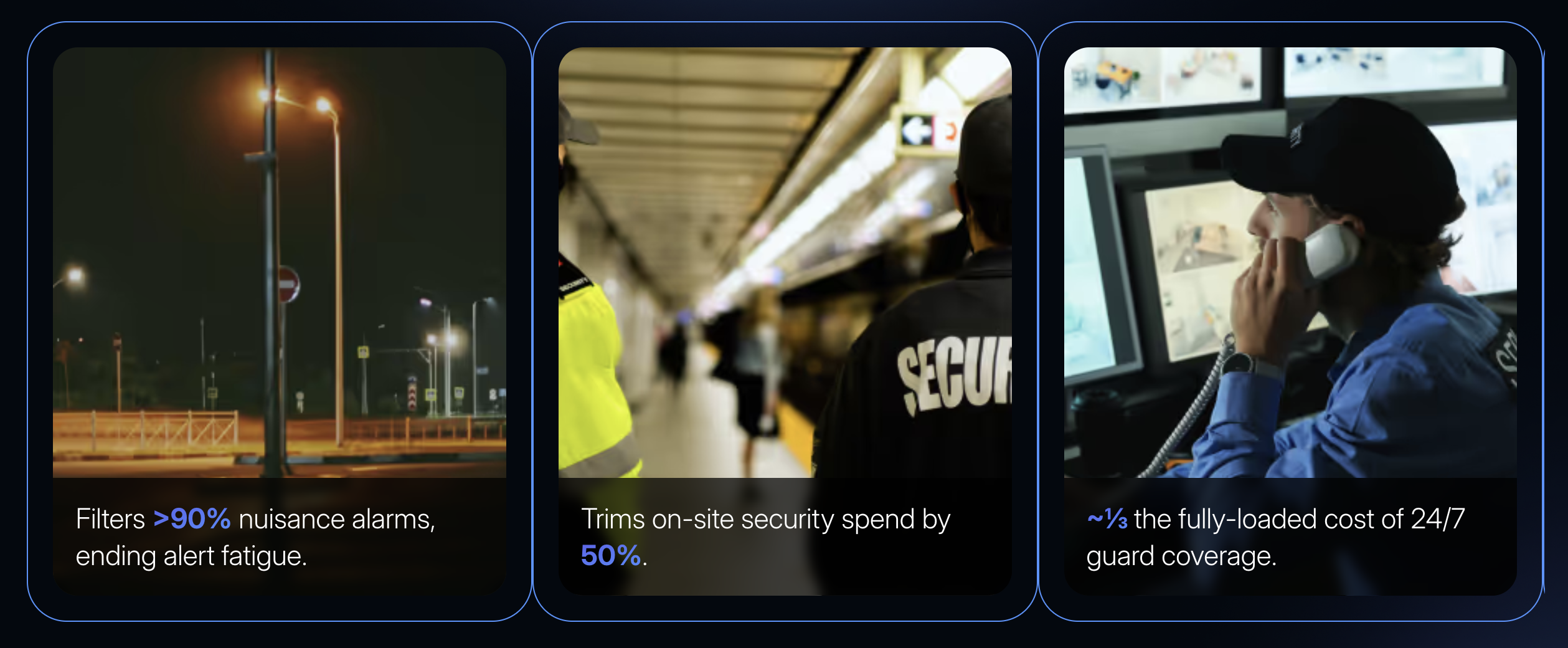
This distinction matters operationally. When nuisance alarms drop, teams can focus on the incidents that actually require response. Spot AI's AI Security Guard triages real threats and filters noise so that operators spend time on verified events rather than chasing false positives.
Self-checkout loss reduction through produce detection
Advanced video AI reduces self-checkout shrink by recognizing unbarcoded produce—like bananas and avocados—and flagging likely misrings in real time. When the system detects errors or suspicious patterns such as items placed in bags without scanning, it sends alerts with video evidence to checkout monitors for rapid correction.
POS integration and exception-based reporting
Video events linked to POS transactions enable investigators to see the exact interaction alongside supporting footage. Access control logs integrated with video verify whether specific individuals had authorization to enter restricted areas during times when losses occurred. This integration converts isolated security events into operational data patterns that reveal systemic vulnerabilities.
Parking lot and perimeter control
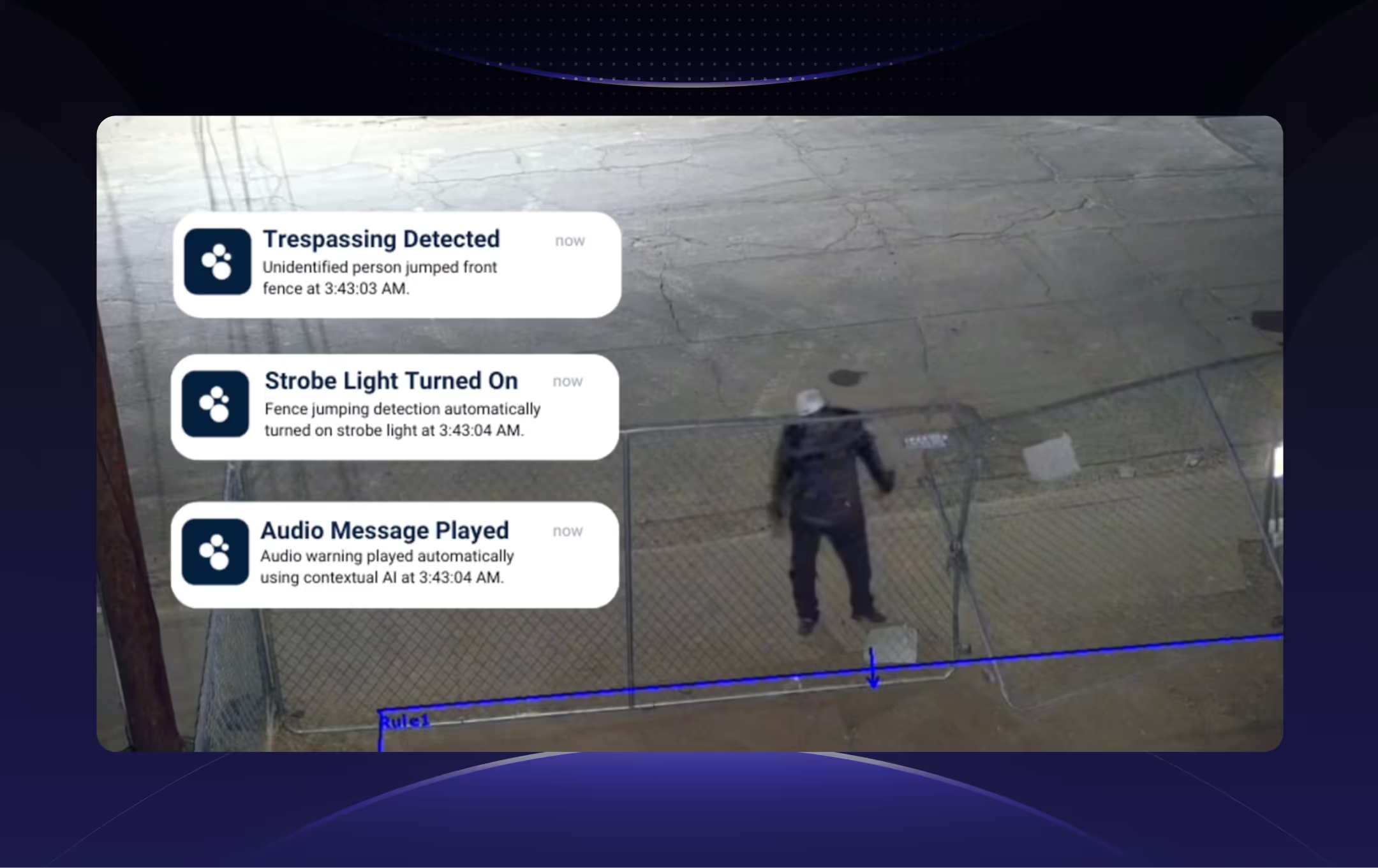
Unmanaged parking lots invite escalating behavior. Spot AI extends protection beyond store walls with outdoor camera systems and mobile trailer units that detect loitering, after-hours trespass, and ORC staging activity. When the AI Security Guard identifies a verified threat, it can fire off automated deterrents—strobe lights and voice-downs—in seconds, without requiring a guard to be physically present.
For teams managing thirty or more locations, this coverage model acts as a digital force multiplier: 24/7 awareness for stores that loss prevention staff cannot physically reach.
Key takeaways for multi-location grocery teams:
- Prioritize camera coverage at self-checkout, receiving docks, and parking lot perimeters—these three zones account for the widest detection gaps in most grocery environments.
- Integrate video AI with POS and access control systems to convert isolated incidents into actionable data patterns.
- Use automated deterrents like strobe lights and voice-downs to extend 24/7 perimeter security without adding on-site headcount.
All Star Elite: from 6% cash shrink to 1%
All Star Elite, a multi-location sports apparel retailer with eighty U.S. stores, deployed Spot AI's unified video platform to address loss prevention and operational visibility across its network. The results were measurable:
Cash shrink dropped from approximately 6% to 1%—an 83% reduction.
Merchandise shrink decreased from 10–15% to approximately 6%.
Investigation efficiency improved by more than 50%, with AI video search cutting incident resolution from hours to minutes.
Video and analytics insights supported store-operations decisions, including a 5–15% sales lift from optimized product placement and the proactive closure of three underperforming stores.
The rollout included camera health monitoring and people-counting dashboards. Read the full All Star Elite case study for implementation details.
Considerations before deploying video AI in grocery environments
No technology solves every problem on its own. Teams evaluating video AI platforms for grocery shrink reduction should weigh several factors:
Camera infrastructure quality comes first. AI analytics depend on adequate resolution, angles, and lighting. Auditing existing camera coverage and upgrading where needed should precede any AI deployment.
Start with one high-impact use case. Self-checkout loss reduction, high-shrink category protection, or parking lot deterrence each offer clear ROI measurement. Proving value in one area builds the internal case for broader rollout.
Staff adoption determines success. Floor teams need clear protocols for responding to alerts. Training should emphasize that the system supports their work—not that it monitors them.
Operational shrink requires operational fixes. Video AI can identify patterns, but receiving dock discipline, FIFO compliance, and inventory accuracy depend on process improvements that technology alone cannot deliver.
Compliance and retention policies vary by jurisdiction. Establish video retention schedules that satisfy local requirements while managing storage costs.
Turning grocery camera systems into a shrink reduction engine
Grocery shrink is not a single-source problem, and no single tool eliminates it. The retailers achieving the strongest results combine disciplined inventory management, staff engagement, strategic store layout, and camera systems enhanced by video AI into an integrated operational approach.
For loss prevention and operations leaders in 2025, the decision isn't whether to buy cameras—most grocery locations already have them. The question is whether those cameras are doing more than recording history. Spot AI works with existing IP cameras, deploys in under a week, and turns passive footage into active detection, deterrence, and faster case resolution across every store in a network.
To extend coverage across your locations without adding headcount, schedule a demo to see how Spot AI works with existing IP cameras and how AI Agents surface high-priority shrink events.
See Spot AI in action

"When I show managers the video evidence of unsafe practices, they get it immediately. It's not just me telling them there's a problem - they can see it for themselves."
Kevin, Unique Industries — Source: Spot AI Customer Story
Frequently asked questions
What are the main causes of retail shrinkage?
Retail shrinkage stems from four primary sources: external theft (including shoplifting and organized retail crime), internal theft by employees, administrative and operational errors (data entry mistakes, incorrect counts, demand forecasting misses), and vendor discrepancies (short shipments, billing errors, damaged goods accepted without inspection). In grocery environments, perishable spoilage adds a fifth significant category. Industry analysis suggests losses split more evenly across these categories than commonly assumed, with operational breakdowns contributing a comparable share to theft-related losses (Source: Retail Dive).
How can grocery stores effectively reduce shrinkage?
Effective grocery shrink reduction requires layered controls rather than a single solution. Perpetual inventory systems with cycle counting on high-shrink SKUs maintain accuracy between annual counts. Disciplined receiving dock procedures—physical verification of quantities, temperature checks on perishables, segregation of damaged goods—close a major entry point for discrepancies. Strategic product placement keeps high-value items within staff line of sight. Staff training on theft indicators and customer-service-based deterrence empowers frontline employees to act as active loss prevention partners. Camera systems enhanced with video AI add detection and deterrence capabilities that scale across locations.
What role do grocery store security cameras play in reducing shrink?
Camera systems serve multiple functions beyond recording incidents after the fact. Strategically placed cameras at entrances, self-checkout stations, POS registers, receiving docks, high-shrink aisles, and parking lots create both deterrent effect and investigative capability. When paired with video AI, these systems detect behavioral anomalies—concealment movements, self-checkout bypass, loitering in restricted areas—and route relevant clips to staff for rapid response. POS integration links video events with transaction data, enabling exception-based reporting that flags suspicious patterns like excessive voids or unusual refund activity.
What is the average shrink rate in grocery stores?
Industry benchmarks for well-managed retail operations establish baseline expectations for normal operational loss. Shrinkage rates significantly above these benchmarks signal failures in inventory control or security protocols requiring intervention. Target's CFO reported that the company's shrink returned to pre-pandemic levels by 2026 after a multi-year recovery effort that included supply chain stabilization, inventory right-sizing, and improved demand forecasting—not just theft prevention measures (Source: Retail Dive).
How does parking lot security affect overall grocery shrink?
Parking lots serve as the staging ground for organized retail crime, after-hours trespass, and cart theft. Unmanaged perimeters invite escalating behavior that eventually moves inside the store. Outdoor camera systems with night vision, mobile trailer units, and automated deterrence capabilities—such as strobe lights and voice-downs triggered by verified threats—extend loss prevention beyond store walls. Shopping cart management also links to broader shrink control, as ORC networks frequently use carts to transport stolen merchandise from store locations.
About the author
Sud Bhatija is COO and Co-founder at Spot AI, where he scales operations and GTM strategy to deliver video AI that helps operations, safety, and security teams boost productivity and reduce incidents across industries.

