




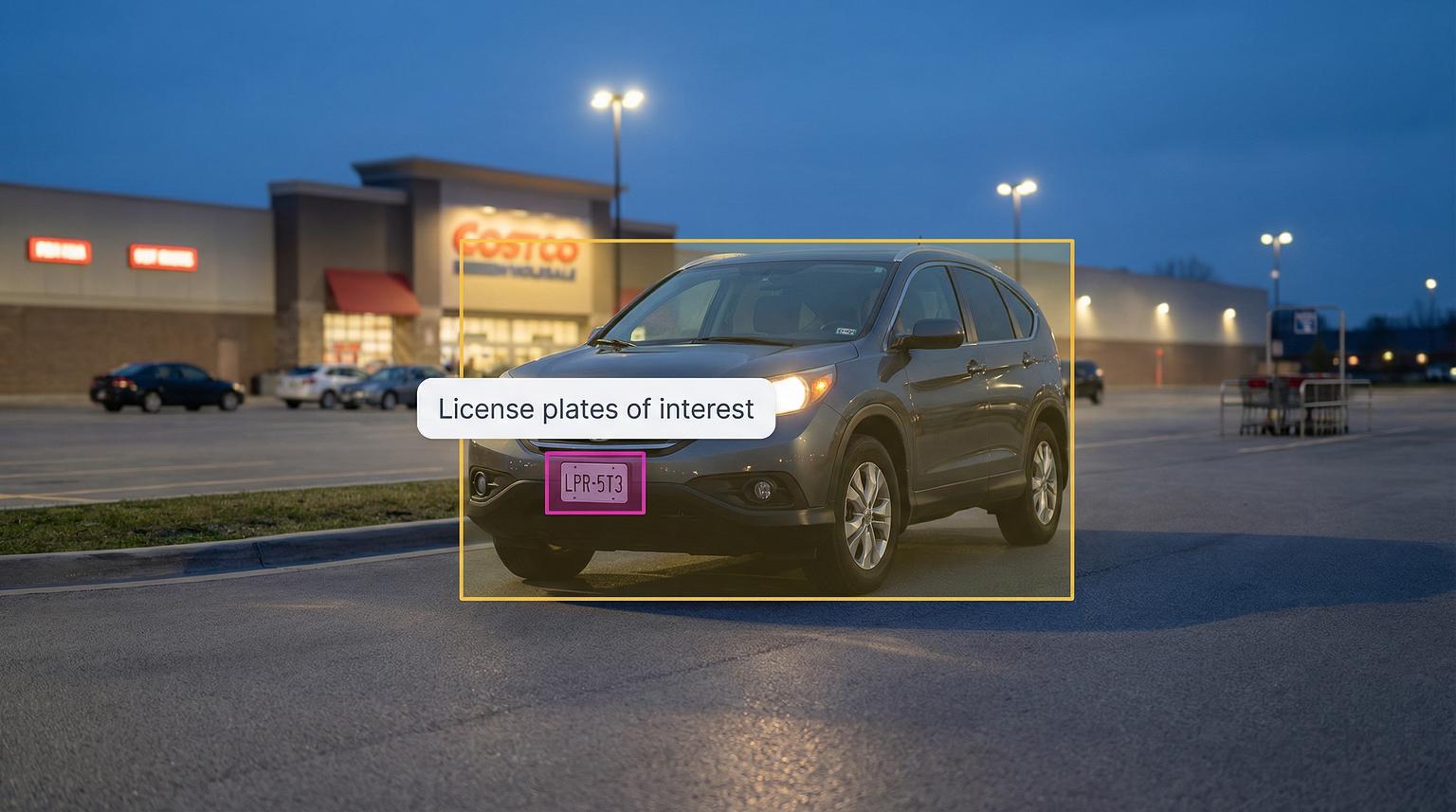


Organized retail crime (ORC) groups don't walk to work. They drive. The same vehicles show up at store after store, moving stolen merchandise across locations in a single day. Yet most retail camera systems capture nothing useful from the parking lot—the one place where vehicle intelligence could connect isolated incidents into a prosecutable pattern.
License plate recognition (LPR) changes that equation. When integrated with video AI and loss prevention case management, LPR turns every parking lot camera into a vehicle intelligence layer that identifies repeat offenders, tracks ORC operations across locations, and gives LP teams the evidence they need to coordinate with law enforcement. This article breaks down how retail LPR systems work, what hot-list alerting and cross-location pattern matching look like in practice, and what teams should consider before deploying.
Key terms to know
These definitions make the rest of this article easier to apply on the ground:
Term |
Definition |
|---|---|
License plate recognition (LPR) |
Computer vision technology that reads plate characters from video frames, converts them to searchable text, and logs them with timestamps |
Hot list |
A database of flagged license plates—known ORC vehicles, banned individuals, or stolen cars—that triggers alerts when a match appears |
Cross-location pattern matching |
Querying LPR records across multiple stores to identify the same vehicle appearing at different theft incidents |
ORC vehicle tracking |
Using LPR data to map the movement of vehicles tied to organized retail crime across a geographic area |
LP case management integration |
Connecting LPR alerts and vehicle records to the broader incident documentation workflow used by loss prevention teams |
Context-aware AI |
Multi-object AI that analyzes the surrounding situation—not just a single trigger—before deciding whether to alert |
Why parking lots are the biggest blind spot in retail loss prevention
Retail shrinkage has climbed 19% since 2019, fueled by economic pressures, thinner store staffing, and ORC networks that operate with coordination rivaling professional logistics operations (Source: Cascadia Global Security). Shoplifting incidents surged 93% from 2019 to 2023, with an additional 19% increase from 2023 to 2024 (Source: Get Safe and Sound). And 66% of retailers now report transnational ORC involvement in thefts against their companies (Source: Get Safe and Sound).
These aren't random one-offs. ORC groups conduct reconnaissance, identify security gaps, target specific high-value items for resale, and execute coordinated sweeps that overwhelm store staff. A single incident can wipe out a day's margin on high-theft categories in minutes.
The vehicle is the common thread. ORC teams use cars and vans to move between stores and transport stolen goods. But traditional camera systems treat the parking lot as dead space—recording footage nobody reviews until after losses are already reported. By then, the vehicle is long gone, and the connection between incidents at different locations remains invisible.
How can LP teams cover dozens of stores with the staff they have when the most actionable signal—which vehicles keep showing up—sits locked in unreviewed footage?
How license plate recognition works as a vehicle intelligence layer
LPR operates through a straightforward pipeline that converts raw video into searchable vehicle records:
Capture: A camera frames an incoming or departing vehicle. High-resolution optics and infrared illumination handle low-light conditions and varying angles.
Detection: Computer vision models isolate the plate region within the image frame.
Recognition: Optical character recognition (OCR) converts detected characters into a text string. Deep learning OCR models trained on diverse datasets reduce errors on angled or partially obscured plates.
Normalization and lookup: Software normalizes the string and checks it against hot-list databases. If a match is found, the system fires off an alert.
Logging: Every plate read is stored with a timestamp and location identifier, creating a searchable record of vehicle presence across the retail network.
In retail parking environments where vehicles move at low speeds and lighting is consistent, LPR performance depends heavily on camera quality, installation angle, and environmental conditions.
Tip: When evaluating LPR camera placement, prioritize entry and exit chokepoints where vehicles slow to a near-stop. These locations yield the highest plate-read accuracy because the camera has more time to capture a clear frame. Pairing LPR cameras with infrared illuminators ensures consistent performance across day and night conditions.
Hot-list alerting: from recording to acting
The difference between passive recording and active deterrence is what your team does the moment a flagged plate appears. Hot-list alerting turns a plate read into an operational trigger.
Hot-list scenario |
What happens |
LP outcome |
|---|---|---|
Known ORC vehicle arrives at Store #14 |
Alert fires to regional LP manager and on-site team within seconds |
Staff can increase floor presence, notify law enforcement, and document the visit |
Banned individual's vehicle enters the lot |
System logs arrival with timestamp and camera location |
LP team has case-ready evidence if the individual enters the store |
Stolen vehicle matches law enforcement database |
Alert routes to both LP and local police |
Faster vehicle recovery and potential apprehension |
Vehicle flagged at 3+ locations this week |
Cross-location pattern match triggers escalated alert |
Regional LP can coordinate a multi-store response |
Deploying LPR at parking garages and major intersections supports the recovery of stolen vehicles and addresses repeat-theft incidents near transit hubs. Similarly, integrating LPR with loss prevention teams helps identify suspicious vehicles tied to ORC by correlating plate reads across multiple stores.
Cross-location pattern matching: connecting isolated incidents
Individual store-level theft reports look like isolated events. Cross-location pattern matching reveals the network behind them.
The workflow operates in a clear sequence:
Incident occurs at Store A. LP reviews video and identifies the vehicle involved.
LPR records from Store A confirm the plate number and timestamp.
Database query searches for that plate across all monitored locations.
Pattern emerges: the same vehicle appeared at Stores B, C, and D within the same week, with theft reported at each location within hours of the vehicle's arrival.
Intelligence package compiles plate reads, timestamps, and video clips into a single case file for law enforcement.
This correlation converts what looked like four separate shoplifting reports into evidence of a coordinated criminal enterprise. Law enforcement can then pursue organized retail crime charges rather than individual misdemeanor shoplifting—a distinction that carries significantly heavier legal consequences and greater deterrent value.
California's ORC task force demonstrates the impact of this approach. In February 2026 alone, CHP-led operations resulted in 28 investigations and 19 arrests, recovering 30,000 stolen items valued at more than $3.15 million. Since its launch in 2019, the task force has recovered nearly 1.6 million stolen items valued at more than $73 million (Source: State of California Governor's Office). New York's organized retail theft task force also coordinates investigation efforts to recover stolen merchandise and apprehend offenders.
LP case management integration: from alert to prosecution
LPR data generates value only when it flows into the broader loss prevention workflow. A plate read sitting in an isolated database is information without action.
Effective integration connects LPR to case management through several key touchpoints:
Alert routing: When a hot-list match occurs, the alert reaches the right person—on-site staff for immediate response, regional LP for pattern analysis, or law enforcement for active investigations.
Clip generation: The system automatically generates time-stamped video clips tied to each plate read, eliminating hours of manual footage review.
Case file assembly: Plate reads, timestamps, location data, and associated video clips compile into a single incident record. LP teams can share this package with law enforcement through a clean, organized format.
Trend reporting: Aggregated LPR data feeds dashboards showing which locations experience the most flagged vehicle visits, which days and times see the highest ORC activity, and which vehicles appear most frequently across the network.
This integration addresses one of the most persistent pain points for regional LP teams: the gap between knowing something happened and having the evidence to act on it. When investigation time drops from hours of scrubbing footage to minutes of reviewing pre-assembled clips and case files, LP professionals can cover more stores without adding headcount.
Key takeaway: The biggest ROI from retail LPR comes not from individual plate reads, but from cross-location pattern matching that converts isolated shoplifting reports into prosecutable ORC cases. Prioritize integrating LPR data into your case management workflow so every plate read, timestamp, and video clip feeds a single, shareable evidence package.
What to consider before deploying retail LPR
LPR technology delivers strong operational value, but deployment decisions should account for several practical factors.
Consideration |
What to evaluate |
|---|---|
Camera placement and angles |
Entry and exit points need clear sightlines to plates. Angle, height, and distance from the lane affect read accuracy. |
Lighting and environment |
Infrared illumination handles nighttime reads. Dirty or partially obscured plates reduce accuracy, so camera positioning should minimize glare and obstruction. |
Network and connectivity |
LPR generates data that needs to reach a central platform. Cellular-first options reduce dependency on store networks—a key factor for IT teams evaluating bandwidth impact. |
Data retention policies |
Plate read logs should be retained long enough to support investigations (typically 30–90 days for general records, longer for active cases). Clear retention policies balance investigative needs with storage costs. |
State and local regulations |
Video recording in parking lots is generally permitted, but audio recording and biometric data collection trigger additional requirements that vary by state (Source: National Law Review). Multistate retailers should work with legal counsel to develop compliant practices. |
Integration with existing systems |
LPR delivers the most value when connected to case management, access control, and centralized monitoring platforms. Evaluate API compatibility before selecting a vendor. |
Quarterly security audits help identify emerging vulnerabilities before they're exploited, and risk assessments often reveal straightforward fixes—repositioning displays, adjusting lighting—that reduce theft opportunities without major technology investment.
How Spot AI delivers built-in LPR as part of a unified video AI platform
Most LPR solutions operate as standalone systems, disconnected from the broader video infrastructure. Spot AI takes a different approach: LPR is built into the platform as part of a unified video AI system that includes license plates of interest alerting, loitering detection, unauthorized entry monitoring, and suspicious activity flagging—all managed from a single cloud dashboard.
Here is how Spot AI's approach maps to the operational pain points LP teams face daily:
LP pain point |
Spot AI capability |
|---|---|
Blind spots outside the store |
Camera-agnostic platform works with existing cameras; outdoor units and mobile trailer systems extend coverage to parking lots, perimeters, and loading docks |
Stretched LP teams, reactive investigations |
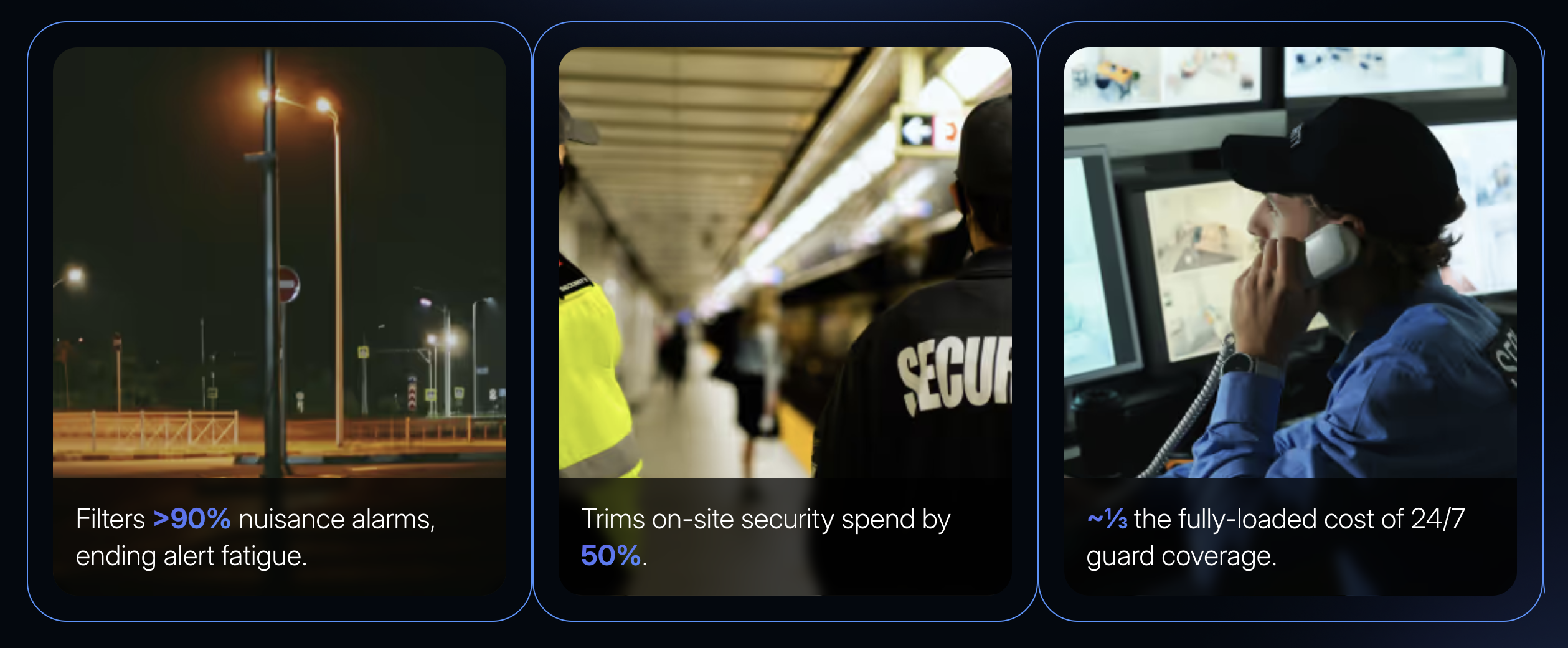
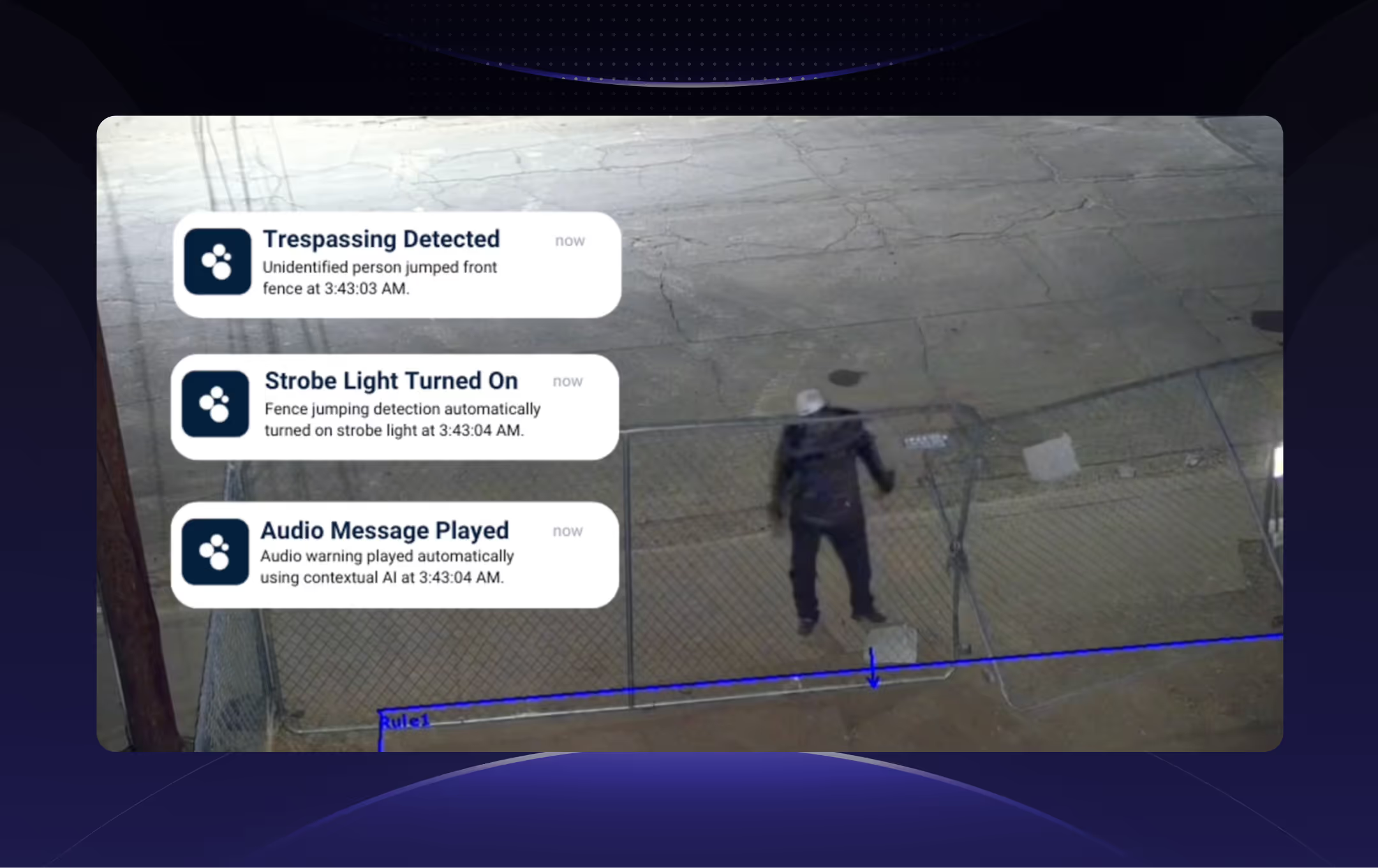
AI Security Guard triages real threats and fires off deterrents (strobes, talk-downs) so teams focus on verified incidents, not nuisance alarms |
Alert fatigue from motion-based systems |
Context-aware AI filters more than 90% of nuisance alarms, reducing noise to actionable alerts |
Guard cost and inconsistency |
Positions at roughly one-third the fully-loaded cost of 24/7 guard coverage, with consistent performance across every shift |
Proving ROI to leadership |
Centralized dashboards track incidents, deterrence interventions, and investigation time across all locations |
Spot AI's license plates of interest capability lets LP teams build and maintain hot lists directly within the platform. When a flagged vehicle arrives at any monitored location, the system generates an alert with time-stamped video, plate read, and location data—assembled into a case file ready for law enforcement sharing. For IT and facilities teams evaluating deployment, the platform connects to any existing IP camera, requires no new wiring with cellular and solar options, and can go live in under a week.
The result: deterrence that works when no one's watching, and evidence that's ready when someone needs to act.
Building a phased LPR rollout across a retail network
Enterprise-scale deployment benefits from a structured approach rather than simultaneous activation across all stores:
Assess and prioritize. Identify the three to five highest-risk locations based on shrinkage data, ORC incident history, and parking lot vulnerability. These become pilot sites.
Deploy and measure. Install LPR at pilot locations and establish baseline metrics: number of flagged vehicle visits, investigation time per incident, and incident frequency. Run the pilot for 30 to 60 days.
Refine and expand. Use pilot data to adjust hot-list criteria, camera angles, and alert routing. Roll out to the next wave of locations, incorporating lessons from the pilot.
Sustain and optimize. Conduct quarterly reviews of LPR performance across the network. Update hot lists based on new intelligence. Share cross-location pattern data with law enforcement task forces.
This phased approach lets LP teams demonstrate measurable results—fewer repeat incidents, faster investigations, reduced guard hours—before requesting budget for broader deployment.
Extend your perimeter with Spot AI
Retail LPR systems represent one layer of a broader shift: moving from recording incidents to acting on them. When license plate recognition, hot-list alerting, and cross-location pattern matching work together inside a unified video AI platform, LP teams gain the vehicle intelligence they need to disrupt ORC operations—not just document them.
Spot AI's AI Security Guard monitors your cameras, flags verified threats, and triggers deterrents so teams can respond faster and spend less time sorting through false alarms. For teams ready to turn parking lot cameras into an active vehicle intelligence layer, request a demo to see how the platform works across your locations.
See Spot AI in action

"When we figure out the correct placement of our Kobe jersey within the store, that typically increases sales by 5 percent to 15 percent because we're able to pull traffic into other areas and get ideas on other products that pair with it."
Andrew Gonzalez, Corporate Director of Loss Prevention and Safety, All Star Elite
Source: exception-based reporting
Frequently asked questions
How does AI enhance loss prevention in retail?
AI-powered computer vision analyzes camera feeds and flags suspicious signals—coordinated group movement, unusual loitering near high-value merchandise, concealment behavior—while incidents are still unfolding. This shifts LP operations from reviewing footage after losses occur to receiving alerts that enable intervention while merchandise is still in the store. When combined with LPR, AI also identifies vehicles tied to repeat offenders and ORC networks, adding a vehicle intelligence layer that connects incidents across locations.
What are the most effective technologies for retail theft detection?
The most impactful loss prevention technology stacks combine several layers: LPR for vehicle identification and hot-list alerting, video AI for behavioral detection (loitering, crowding, unauthorized entry), point-of-sale integration for flagging transaction anomalies like excessive voids or no-sale drawer opens, and centralized dashboards that aggregate alerts across all locations. Each layer addresses a different theft vector—external ORC, internal theft, and checkout fraud.
How can computer vision reduce operational costs in loss prevention?
Computer vision reduces costs primarily by cutting investigation time and replacing manual monitoring. Instead of scrubbing hours of footage after an incident, LP teams review pre-assembled clips tied to specific alerts. Automated LPR eliminates manual plate checks during patrol routes. Remote monitoring with context-aware AI and automated deterrents (strobes, talk-downs) can reduce reliance on on-site guard coverage, which represents one of the largest line items in most retail security budgets.
What are the ROI metrics for implementing AI in loss prevention?
Key metrics include shrinkage reduction (comparing inventory loss percentages before and after deployment), mean time to detection and response, investigation time per incident, false-alarm rate, and coverage per LP headcount. Indirect returns also matter: reduced employee turnover in high-incident locations, lower workers' compensation claims, and improved customer experience scores in stores where shoppers feel safe.
What compliance considerations apply to video technology in retail parking lots?
Video recording without audio is generally permitted in retail parking lots and public store areas. Audio recording triggers additional consent requirements that vary by state—California, Illinois, and several other states require all-party consent (Source: National Law Review). Conspicuous signage indicating that video monitoring is in use helps establish that individuals enter the premises with knowledge of recording. Multistate retailers should work with legal counsel to develop compliant practices across all jurisdictions.
About the author
Rish Gupta is CEO and Co-founder of Spot AI, leading the charge in business strategy and the future of video intelligence. With extensive experience in AI-powered security and digital transformation, Rish helps organizations unlock the full potential of their video data.

