






Retail loss prevention has reached a breaking point in 2025. With stores losing an estimated $47.8 billion annually to theft and organized retail crime, the pressure on district and regional loss prevention (LP) managers is intensifying (Source: Capital One Shopping). Yet, the financial loss is only half the battle. The hidden operational crisis keeping leaders awake at night is the sheer volume of time required to review, analyze, and act on incidents.
Traditional video systems force LP teams into a reactive loop. You spend hours scrubbing through footage, reconstructing timelines, and validating claims long after the damage is done. Meanwhile, repeat offenders move to the next location, and shrink accelerates. The solution isn't just better cameras or louder sirens—it is context-aware audio integrated with intelligent video.
This approach, known as the "talking" perimeter, transforms passive recording into active deterrence. By combining real-time detection with intelligent voice interventions, organizations can stop theft before it escalates and drastically reduce the analysis burden on their teams.
The hidden cost of reactive incident analysis
For regional LP managers overseeing 20 to 40 stores, the most scarce resource is time. When your setup relies on passive recording, every incident creates a manual workload. You must locate the footage, scrutinize hours of video to establish a timeline, and document findings.
This reactive process creates a bottleneck. If a single incident requires 45 to 90 minutes of analyst time to examine, a regional manager facing 10 incidents a month per store is mathematically unable to keep up.
Moving from inquiry to verification
The goal of modern video AI is to shift your workflow from "searching for evidence" to "verifying facts." In a traditional setup, you search for a needle in a haystack. In a context-aware solution, the technology presents the needle in real-time.
- Traditional workflow: an alarm triggers. You log in, scrub through 4 hours of video, find the event, clip it, and write a report. Total time: 60+ minutes.
- AI-assisted workflow: the platform detects a specific behavior (e.g., loitering at a loading dock). It sends a verified alert with a 10-second clip. You confirm the threat. Total time: 2 minutes.
By reducing the mean time to resolution (MTTR), you free up your team to focus on strategy and deterrence rather than low-value video scrubbing.
Why context-aware audio outperforms sirens
For decades, the standard response to an intrusion has been a loud, passive siren. While sirens create noise, they fail to communicate intent. A suspect hearing a generic alarm often assumes it is a false trigger or a car alarm, ignoring it entirely.
Context-aware audio changes the psychological equation. It uses specific, verbal warnings that address the behavior directly. This concept, known as "active deterrence," leverages the psychology of certainty. When a suspect hears, "You are being recorded; please leave the area now," they understand two things: they have been seen, and a targeted response has been triggered.
The psychology of deterrence
Research indicates that the certainty of being caught is a stronger deterrent than the severity of the consequence (Source: National Institute of Justice). Context-aware talkdown technology removes ambiguity.
| Feature | Passive Siren | Context-Aware Audio |
|---|---|---|
| Communication | Generic noise | Specific verbal command |
| Perception | "Is that for me?" | "They are watching me." |
| Suspect Reaction | Ignore or rush | Pause and retreat |
| False Alarm Impact | High annoyance | Low (context-specific) |
| Analysis Load | Incident occurs -> Analysis | Incident deterred -> No analysis |
By stopping the incident at the perimeter, you eliminate the need for a lengthy theft inquiry entirely. Operational efficiency improves because deterring an incident takes zero minutes of analysis time compared to the hours needed for a completed theft.
How the "talking" perimeter works
The "talking" perimeter relies on a seamless workflow between edge-based video analytics and IP audio speakers. It does not require a "rip-and-replace" of your entire infrastructure but can often integrate with existing camera systems.
- Detection: video AI agents on the camera or intelligent video recorder detect a targeted behavior, such as a person entering a no-go zone or a vehicle loitering in a parking lot after hours.
- Analysis: the system filters out noise—like stray animals or blowing debris—using deep learning models that distinguish genuine threats from environmental movement.
- Intervention: once a threat is verified (either automatically or by a human in the loop), the system triggers a pre-recorded or live voice-down.
- Escalation: if the behavior continues, the system can escalate to law enforcement with verified video evidence, reducing false dispatch fees.
This workflow ensures that your response is timely and proportional. You avoid the "boy who cried wolf" scenario of constant false alarms while maintaining a robust security posture.
Reducing noise and false alarms
A major pain point for district LP managers is alert fatigue. Legacy motion detection systems trigger on everything—shadows, headlights, and plastic bags. This noise forces teams to ignore alerts, leaving sites vulnerable.
Modern video AI substantially decreases this noise by focusing on object and behavior classification rather than pixel changes.
Key capabilities for noise reduction
- Object classification: distinguishes between people, vehicles, and animals with high accuracy.
- Loitering detection: flags individuals who remain in a sensitive area for a set duration, filtering out those simply passing through.
- Verified response: by confirming the threat before dispatching police, you save on costly false alarm fines, which can range from $50 to $100 per incident in some jurisdictions.
If you are looking to streamline your alert workflow, book a consultation to see how noise reduction works in practice.
High-impact use cases for retail
Deploying context-aware audio is most effective when targeted at high-risk zones where visibility is typically low.
1. Parking lot and perimeter security
Parking lots are incubators for retail crime, from catalytic converter theft to organized retail crime (ORC) scouting. Active deterrence cameras can detect unauthorized vehicles after hours and issue a warning: "This is a restricted area. Please move your vehicle." This stops the theft before a window is smashed.
2. Loading dock protection
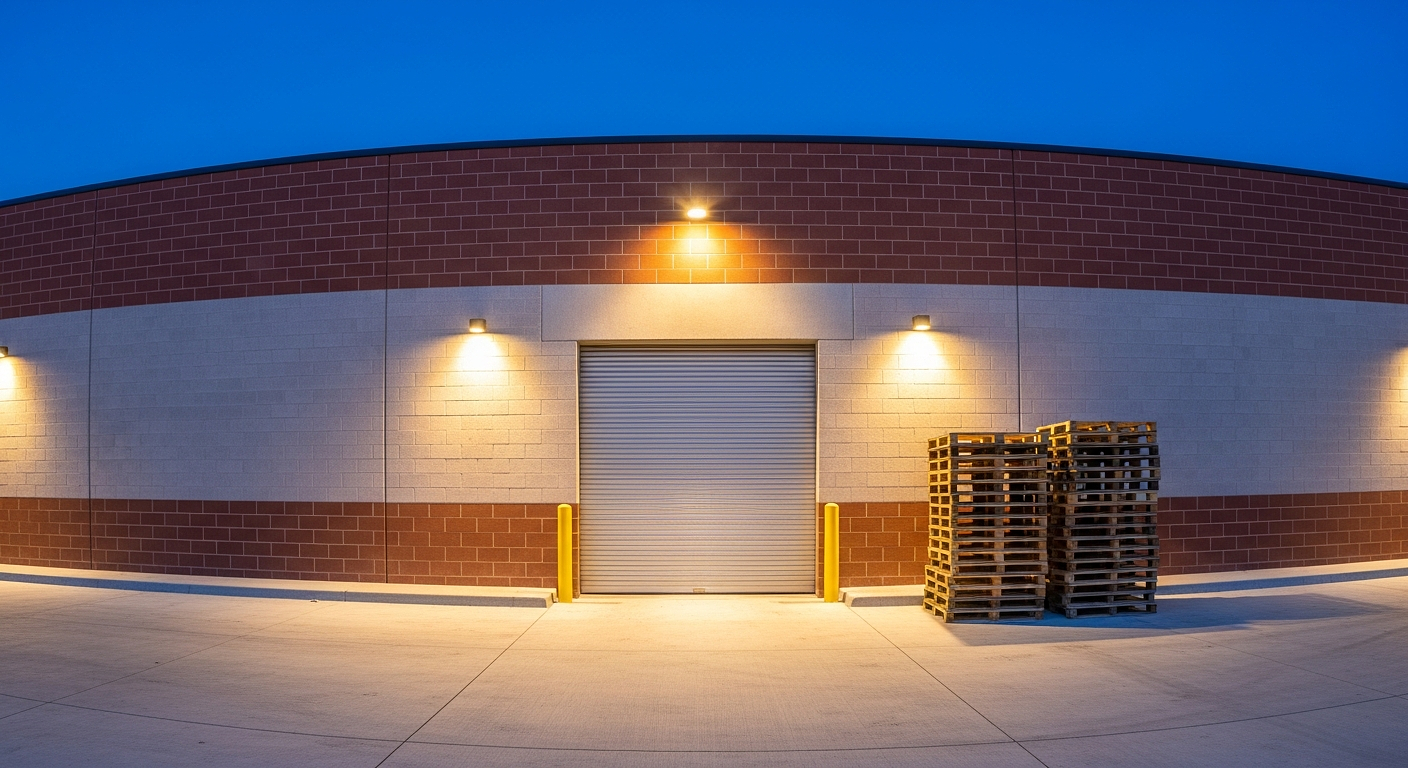
Internal theft and vendor fraud often occur at the loading dock. Video analytics can track loading processes and flag anomalies, such as goods moving during unscheduled times. Audio alerts can remind staff that all activity is being recorded, reinforcing SOP adherence without a physical guard presence.
3. After-hours loitering
Vandalism and break-ins often start with loitering. By detecting dwell time at storefronts or back entrances, the system can trigger lights and audio to disperse groups before they attempt entry. This automated response acts as a force multiplier, allowing you to cover 40 stores effectively without adding headcount.
ROI: efficiency and shrink reduction
Investing in audio-video integration is not just a security decision; it is a financial one. The return on investment comes from three main buckets: reduced shrink, lower guard costs, and operational time savings.
Calculating the value
- Shrink reduction: a 5-15% reduction in shrinkage can save millions across a regional footprint. For a 50-store region with average shrink, this impact is swift and measurable.
- Guard replacement: automated perimeter protection can reduce the need for overnight standing guards, cutting security labor costs significantly
- Time savings: reducing analysis time from hours to minutes allows your existing LP team to manage more locations effectively.
| Cost Center | Traditional Approach | Audio-Video AI Approach |
|---|---|---|
| Incident Review | 60+ mins/incident | < 5 mins/incident |
| False Alarms | High dispatch fees | Verified dispatch only |
| Guard Spend | High (Standing guards) | Low (AI Security Guard) |
| Deterrence | Reactive (After theft) | Anticipatory (Before theft) |
Implementation: camera-agnostic flexibility
One of the biggest hurdles for regional managers is the fear of a "rip-and-replace" project. You likely have a mix of cameras across your stores—some new, some old.
Spot AI’s platform is camera-agnostic, meaning it works with the IP cameras you already have. You do not need to tear out cabling or buy proprietary hardware for every location. This flexibility allows for a phased rollout. You can start with high-risk stores, prove the value, and expand across the district without a massive capital layout.
By centralizing these feeds into a single dashboard, you standardize investigations across your region. Whether a store has Hikvision, Axis, or Hanwha cameras, the analysis process for your team remains identical.
Conclusion
The shift to a "talking" perimeter represents a fundamental change in how retail leaders manage risk. It moves the industry from simply documenting crime to actively deterring it. For district and regional LP managers, the value lies in regaining control of your time. By automating deterrence and streamlining investigations, you stop drowning in data and start engineering safer, more profitable stores.
"We've set up the system to understand normal versus abnormal behavior. If someone's in our lobby showcase area after hours, or if there's unusual movement patterns around sensitive areas, the system sends a real-time alert." — Mike Tiller, Director of Technology, Staccato
Ready to reduce your incident review time and secure your perimeter? Book a consultation to see Spot AI in action.
Frequently asked questions
What is the difference between active deterrence and passive monitoring?
Passive monitoring simply records video footage for later review. Active deterrence uses real-time analytics to detect threats and triggers on-the-spot responses, such as strobe lights or voice-down warnings, to stop the incident from occurring.
Can I use my existing security cameras with audio deterrence systems?
Yes, modern platforms like Spot AI are camera-agnostic. They can connect to your existing IP cameras and add intelligence to them. For audio features, you may need to add IP speakers if your current cameras do not have built-in audio capabilities.
How does the system reduce false alarms?
This technology uses advanced video AI to classify objects (people, vehicles) and behaviors (loitering, crossing lines). This filters out non-threats like animals, weather events, or shadows, ensuring you only receive alerts that require attention.
Does this technology replace human security guards?
It acts as a force multiplier. While it can replace standing guards in many scenarios (like overnight parking lot watch), it is best used to augment your team, allowing one LP manager to effectively monitor multiple locations simultaneously.
Is the audio intervention automated or live?
It can be both. You can configure the system to play automated pre-recorded messages for specific events (e.g., "No Loitering") or allow a remote operator to speak directly through the system for a live intervention.
About the author
Sud Bhatija
Sud Bhatija is COO and Co-founder at Spot AI, where he scales operations and GTM strategy to deliver video AI that helps operations, safety, and security teams boost productivity and reduce incidents across industries.

