




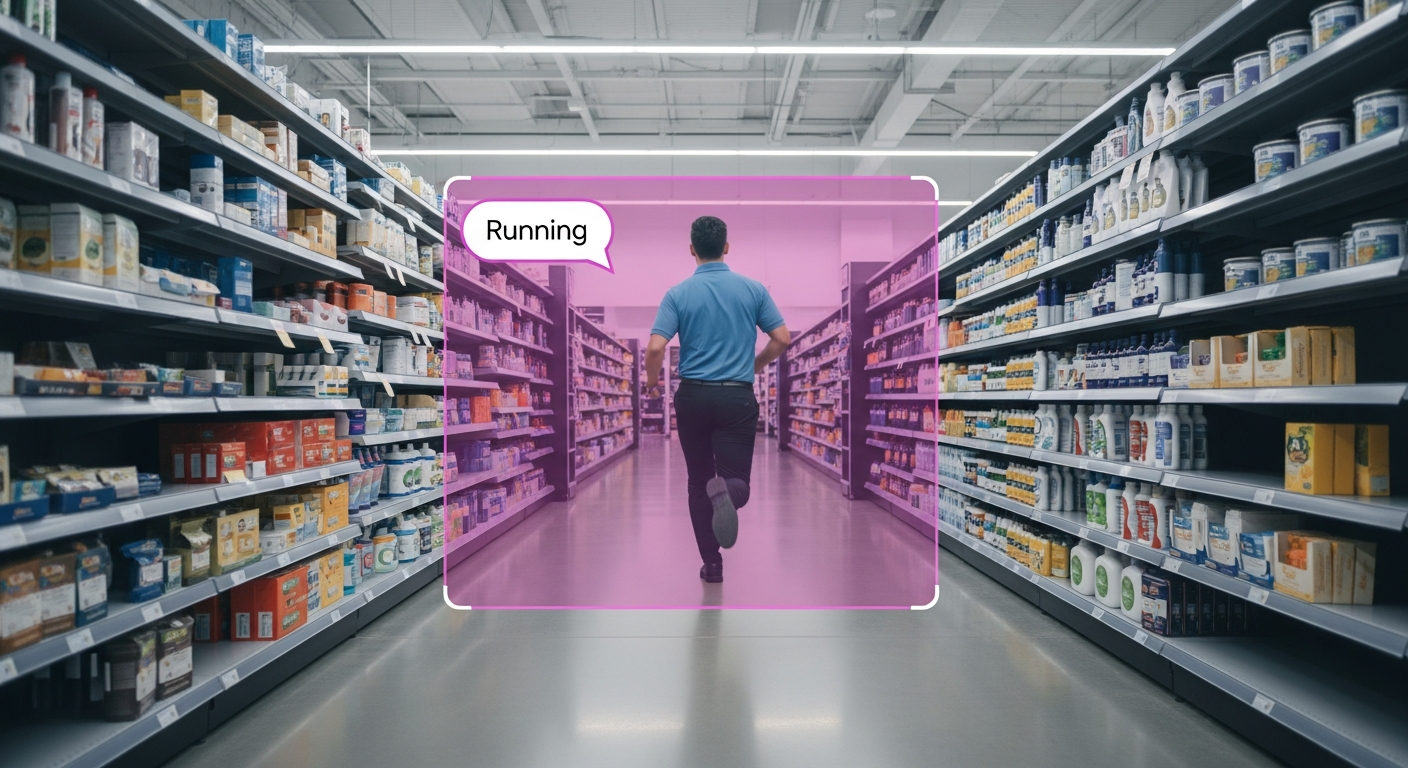


For Asset Protection Directors and VPs, the gap between safety policy and floor reality is a constant source of friction. You invest in comprehensive LMS modules and standard operating procedures (SOPs), yet back-of-house injuries, and compliance gaps persist. The disconnect isn't usually a lack of information—it's a lack of engagement. Traditional classroom-based safety training often achieves completion rates of only 20-30%, leaving the majority of your workforce under-prepared for the hazards they face daily (Source: LearnWorlds).
In contrast, video incident-based training—leveraging actual clips from your retail environment—transforms abstract rules into concrete reality. By using video incident clips for effective associate safety training, organizations can boost training completion rates to 83% while grounding lessons in the specific context of their stores (Source: Engageli). This approach does not just tick a compliance box; it actively reduces risk, lowers workers' compensation costs, and strengthens your safety culture.
Here is how to build a video-based training program that connects executive strategy with frontline execution.
Why traditional retail safety training fails
To improve associate safety training, we must first understand why standard methods fall short. The "70-20-10 rule" of employee development suggests that employees learn 70% from on-the-job experience, 20% from coaching, and only 10% from formal training events (Source: LearnWorlds).
Relying solely on written handbooks or generic e-learning modules ignores how adults learn.
In the high-paced retail sector, where turnover is high and shift overlap is minimal, staff often learn through trial and error. Unfortunately, "error" in retail means OSHA recordable incidents, customer injuries, or shrinkage.
The visual advantage
Video-based learning aligns with cognitive processing strengths. The human brain processes visual information 60,000 times faster than text, allowing associates to absorb complex scenarios swiftly (Source: Synthesia).
Training method | Avg. completion rate | Knowledge retention | Engagement level |
|---|---|---|---|
Spot AI Video Incident Training | 83% | High (Contextual) | High (Relatable) |
Traditional E-Learning | 20-30% | Moderate | Low |
Written Handbooks | Very Low | Low | Very Low |
In-Person Seminars | Varies | Moderate | Moderate |
By shifting to video incident clips for retail training, you move from theory to practice.
Identifying the right incident clips
The first step in building your library is identifying footage that offers genuine educational value. You do not want to simply highlight mistakes; you want to show cause, effect, and the correct alternative behavior.
Asset protection managers often struggle with "Manual Investigation Processes," spending 4-6 hours reviewing footage to find a single event (Source: Persona Report). This inefficiency makes building a training library daunting.
However, modern video AI systems can help by letting you search for behaviors rather than scrubbing timelines.
Key scenarios to capture for training:
No-go zone violations: Identify instances where employees enter restricted areas, such as loading docks or compactor zones, without authorization.
Improper lifting/Overexertion: Capture examples of unsafe lifting techniques in the stockroom to address the leading cause of retail injury.
De-escalation opportunities: Use footage of customer interactions that escalated to violence or aggression to teach early warning signs and exit protocols.
SOP adherence gaps: Highlight common procedural errors, such as leaving back doors propped open or failing to check IDs for age-restricted purchases.
Navigating legal and compliance requirements
Before deploying using security footage for training, you must establish a secure compliance framework. Retail environments often capture sensitive data, and mishandling footage can create liability.
Steps to ensure compliance:
Verify consent protocols: While federal law generally permits workplace monitoring, many states require specific notice. Ensure your employment agreements clearly state that video systems are used for training and safety purposes.
Redact non-essential individuals: If a recording involves a customer or an associate not relevant to the training, use blurring technology to protect their privacy.
Handle healthcare data carefully: If your retail environment includes pharmacies or clinics, treat footage as Protected Health Information (PHI) under HIPAA. Ensure strict access controls and audit logs are in place.
Standardize retention policies: Define how long training clips are kept. Footage used for training should be treated differently than footage retained for active litigation.
Integrating video into daily operations
The most effective training happens during regular work, not only in a back office. To improve compliance with video training, integrating it into daily routines helps.
Microlearning and shift huddles
Long training sessions disrupt floor operations. Instead, utilize microlearning—short, focused sessions that fit into pre-shift huddles. Research shows that microlearning modules achieve markedly higher completion rates than long-form courses (Source: Engageli).
How to structure a video safety huddle:
Review: Play a 30-60 second clip of a recent close call or a correctly followed SOP.
Discuss: Ask the team to identify the hazard or the correct behavior.
Apply: Have the team demonstrate the correct protocol on the spot.
Recap: Summarize the key takeaway in under two minutes.
Connecting to performance scorecards
Link training to accountability. Use data from your video system to track trends. If a specific store struggles with "Forklift Enters No-go Zones", assign targeted video modules to that location's team. This helps shift from generic training to targeted coaching.
Leveraging Spot AI for automated training insights
For Asset Protection leaders, the hurdle is often scale. Managing multi-location security operations and ensuring consistent training across hundreds of sites is tough to manage when systems are disconnected.
Spot AI helps by surfacing relevant clips for training from your existing cameras. Instead of waiting for an accident report, Spot AI can surface clips you may want to review for training.
How Spot AI supports safety training:
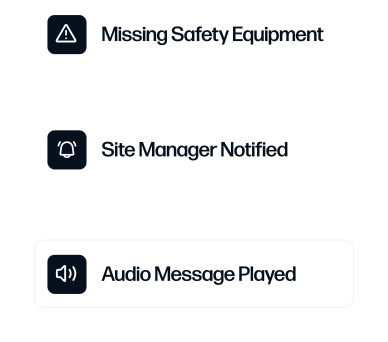
Automated detection: Video AI Agents detect specific behaviors like "Running" or "Missing PPE" automatically. This reduces the time spent hunting for training material.
Rapid search: Use natural language search to find "person in warehouse aisle" or "forklift near pedestrian" in seconds, not hours.
Cloud dashboard: Share a critical safety clip from one location with your entire fleet quickly. If a safety incident occurs in Store A, Store B can learn from it promptly.
Privacy tools: Built-in tools allow for easy blurring and redaction to maintain associate privacy during training sessions.
By using a platform that unifies video data, you can support consistency across shifts and help teams follow SOPs while minimizing administrative work.
Measuring the impact of video-based training
To justify the investment to the C-suite, you must demonstrate ROI. Shift the conversation from "training completion" to "risk reduction."
Key metrics to track:
Occurrence reduction: Measure the frequency of specific incident types pre- and post-training. Organizations implementing intensive safety training have seen incident reductions of 54-68% (Source: PMC).
Workers' compensation costs: Track the decrease in claims associated with the specific hazards addressed in your video modules.
Audit compliance scores: Monitor improvements in safety audits for locations using video incident clips for retail instruction.
Shrink rate: While primarily a safety initiative, better operational awareness often correlates with lower shrink. Aim for the industry target of <1.5% of sales (Source: Persona Report).
Creating a culture of continuous improvement
The ultimate goal of using video incident clips for effective associate safety training is to move from a reactive culture to a forward-looking one. When associates see real footage, they understand that safety protocols are not arbitrary rules—they are essential protections against real hazards.
By leveraging video AI to surface these insights, you empower your managers to coach effectively and your associates to work safely.
This approach turns your video security system from a passive recording tool into a resource for improving operations.
See how Spot AI’s video AI platform can help you automate safety insights and standardize training. Request a demo to experience the platform in action.
Frequently asked questions
What are the best practices for employee safety training?
Best practices include using real-world video examples, keeping training sessions short (microlearning), integrating training into daily workflows, and measuring behavioral changes rather than just test scores. Using actual incident clips increases relevance and retention (Source: Synthesia).
How can video training improve compliance in retail?
Video training improves compliance by making abstract rules concrete. Seeing a "real" violation and its consequences helps associates recognize hazards in their own environment. It also allows for consistent messaging across multiple locations, supporting consistent SOPs across stores.
What are effective methods for training staff with incident footage?
Effective methods include "spot the hazard" exercises, pre-shift huddles reviewing close calls, and using clips to demonstrate the "right way" vs. "wrong way" of performing a task. Always focus on the behavior, not the person, to maintain a positive culture.
How do I implement a comprehensive safety training program?
Start by identifying your top risks. Use video analytics to gather baseline data and relevant clips. Develop short training modules around these clips. Deploy them through your LMS or shift meetings, and track incident rates to measure success.
What certifications are available for safety professionals?
Safety professionals can pursue certifications such as the Safety Management Specialist (SMS) or Certified Safety Professional (CSP). For retail-specific focus, the Certified Organized Retail Crime Investigator (CORCI) is valuable for asset protection leaders.
About the author
Sud Bhatija is COO and Co-founder at Spot AI, where he scales operations and GTM strategy to deliver video AI that helps operations, safety, and security teams boost productivity and reduce incidents across industries.






.png)
.png)
.png)