






Managing complex schedules, budgets, and diverse teams of subcontractors across multiple multi-acre commercial sites is the operational reality for today’s construction project managers. You serve as the central point of accountability for project delivery, balancing the competing demands of schedule adherence, cost control, and safety compliance. Yet, a single safety incident can derail weeks of progress, trigger costly OSHA violations, and damage client relationships.
The limitation often lies in the constraints of traditional monitoring. You cannot physically inspect every phase of work across 20+ active projects simultaneously, leading to blind spots in asset tracking and safety compliance. Without real-time visibility, you are often forced into reactive firefighting—investigating incidents after the damage is done or struggling to find evidence for charge-backs when subcontractors damage materials.
This guide covers practical ways to improve these workflows. By moving from paper-based processes to digital incident management, you can lower incident risk, make OSHA reporting easier, and protect project margins.
Key terms to know
Before diving into workflows, it is helpful to clarify the specific terminology used in modern incident management and regulatory compliance.
- Incident management: a systematic, end-to-end process encompassing the identification, response, investigation, and resolution of workplace disruptions, from close calls to major safety events.
- Recordable incident: an injury or illness that results in death, days away from work, restricted work, job transfer, medical treatment beyond first aid, or a significant diagnosis by a healthcare professional (Source: Kelley Kronenberg).
- Root cause analysis (RCA): a disciplined investigation process that moves beyond identifying what happened to understanding why it happened, often using methods like the "5 Whys".
- Leading indicators: insight-driven safety metrics that identify potential risk, such as close call reporting rates, safety audit completion, and training hours, rather than just tracking past injuries.
- Total recordable incident rate (TRIR): a standard metric for measuring safety performance, calculated as (Number of recordable incidents × 200,000) / Total hours worked (Source: Vitruvi Software).
The reality of incident management challenges
For construction managers, the core frustration often isn't the lack of data, but the inability to access it when it matters. You might waste hours driving between job sites for inspections, only to miss a critical safety violation that occurs ten minutes after you leave. This lack of real-time visibility creates substantial operational risks.
Common friction points in traditional workflows
- Delayed detection: in traditional setups, detection depends almost entirely on worker awareness and willingness to report. If a worker bypasses a safety protocol or a subcontractor damages a delivery, you might not know until days later.
- Inadequate evidence: without timestamped visual proof of subcontractor damage or safety violations, recovering costs through charge-backs becomes a "he-said, she-said" dispute that erodes profit margins.
- Data silos: incident data scattered across spreadsheets, emails, and field notebooks makes it impossible to identify trends, such as a specific subcontractor consistently failing PPE protocols.
- Reactive security: traditional camera systems typically offer no proactive alerts for theft or vandalism, forcing you to spend hours reviewing footage after losses have already occurred.
Structuring effective incident management workflows
To move from reactive responses to more timely management, use a structured lifecycle for every incident. Effective frameworks recognize seven stages: detection, logging, categorization, prioritization, escalation, resolution, and closure.
1. detection and rapid response
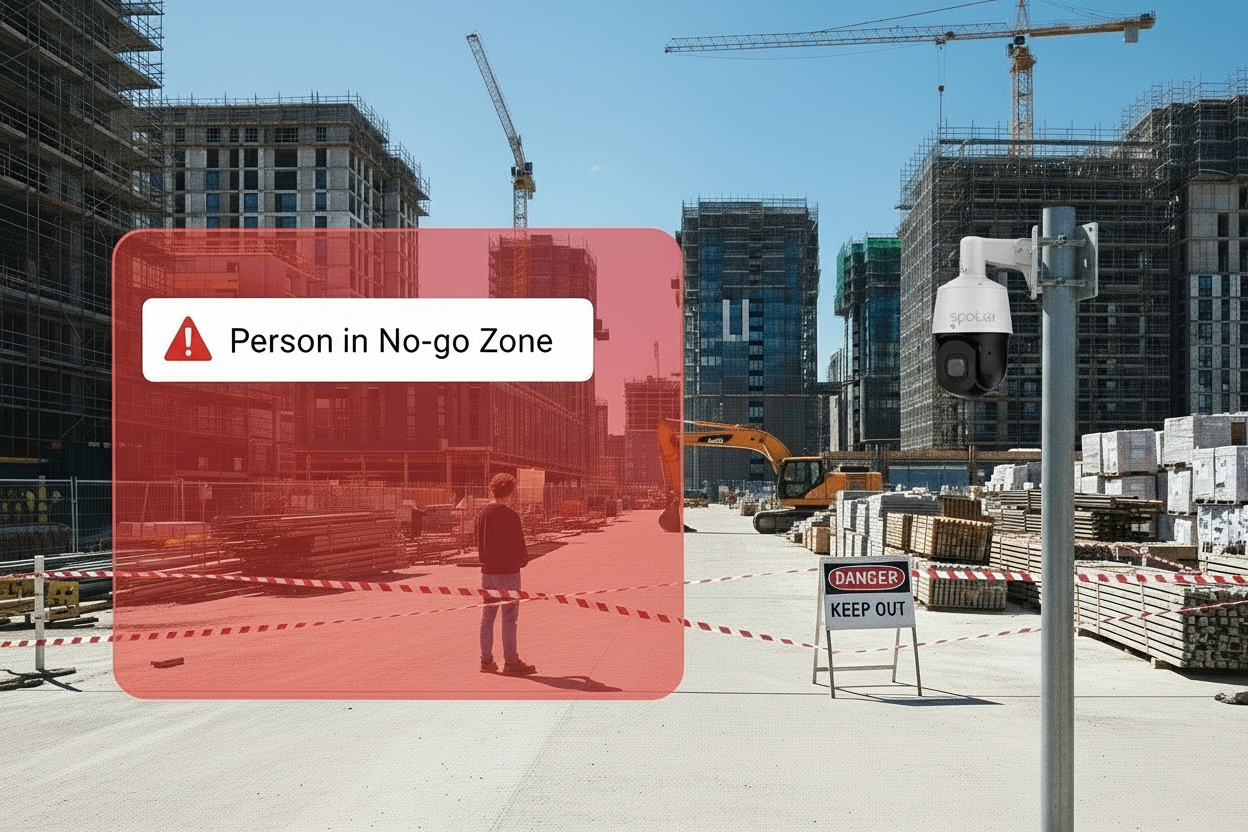
The speed of detection directly affects outcomes. While traditional methods rely on manual observation, advanced video systems now support teams. For example, computer vision can detect unauthorized personnel in equipment zones or flag missing PPE, alerting supervisors quickly. This can allow for intervention sooner.
2. centralized logging and documentation
Once an incident or close call is reported, it must be logged swiftly to create a single source of truth. Timeliness is critical here; OSHA Form 301 must be completed within seven calendar days of receiving information about a recordable injury (Source: Vector Solutions). Centralized logging ensures that photos, witness statements, and video evidence are stored securely in one platform, accessible to authorized stakeholders from any device.
3. categorization and prioritization
Not all incidents require the same level of response. A close call involving a crane lift requires different prioritization than a minor first-aid event. Clear categorization ensures issues are routed quickly through appropriate channels. For instance, critical equipment failures on the critical path might trigger a rapid escalation to the Project Executive, while minor issues follow standard resolution protocols.
4. escalation protocols
Defined escalation paths guard against bottlenecks. Major incident management best practices establish clear thresholds—based on severity, cost impact, or safety risk—that trigger escalation within specific timeframes. For construction managers, this means automated notifications when an incident threatens the project schedule or exceeds a specific cost threshold.
Navigating OSHA reporting and compliance
Regulatory compliance is a non-negotiable aspect of project management. OSHA regulations mandate specific reporting and investigation requirements that vary based on incident severity. Organizations that fail to meet these requirements face penalties ranging from fines to project shutdowns.
Understanding recordability
The foundation of compliance rests on accurately determining which incidents are "recordable." This includes any work-related injury or illness resulting in days away from work, restricted work, or medical treatment beyond first aid. Misclassifying incidents can lead to underreporting violations or unnecessary documentation of minor first-aid cases.
Essential OSHA forms and timelines
| Form | Purpose | Deadline/requirement |
|---|---|---|
| OSHA Form 301 | Injury and illness incident report capturing individual incident details. | Must be completed within 7 calendar days of learning a case is recordable (Source: Vector Solutions). |
| OSHA Form 300 | Log of work-related injuries and illnesses; a chronological record of the year's incidents. | Entries must be made within 7 days of determining recordability (Source: Kelley Kronenberg). |
| OSHA Form 300A | Summary of work-related injuries and illnesses. | Certified by an executive and posted from Feb 1 to April 30; electronic submission by March 2 (Source: Kelley Kronenberg). |
Maintaining accurate records is not just about avoiding fines; it protects the company during liability claims and insurance audits. Records must be retained for five years, meaning your documentation system must be reliable and searchable long after the project closes (Source: Vector Solutions).
Integrating technology for forward-thinking management
To address the frustration of time-consuming manual monitoring and disconnected systems, construction leaders are turning to integrated technology platforms. Cloud-based systems and AI are changing how sites are monitored and managed.
Cloud-based visibility and mobile access
Cloud-based platforms allow you to monitor multiple sites from a single dashboard. This addresses the "windshield time" problem, enabling virtual site walks where you can zoom into specific areas to verify progress or safety compliance without leaving the office. Mobile accessibility means field teams can report incidents, upload photos, and log observations directly from the jobsite, helping ensure data is captured in near real time.
Video AI agents as force multipliers
Video technology has evolved from passive recording to more intelligent analysis. Video AI agents help monitor for specific risks on an ongoing basis when cameras are online.
- Automated PPE detection: AI can identify missing hard hats or high-visibility vests, helping promote more consistent safety protocol adherence across sites without constant physical presence.
- No-go zone alerts: to help mitigate struck-by incidents, video analytics can detect when workers enter restricted vehicle zones or hazardous areas, sending alerts in real time.
- Asset tracking: object detection capabilities help track valuable equipment and materials, alerting you when items are moved unexpectedly to reduce theft and blind spots in asset tracking (Source: Spot AI).
- Quality verification: high-resolution video systems allow you to visually verify work completion, reducing the need for rework and physical inspections (Source: Spot AI).
Reducing false alarms
A common frustration with traditional security is excessive false alarms caused by wind, rain, or wildlife. Advanced AI filtering distinguishes between actual threats (people, vehicles) and environmental factors, helping you focus on genuine security concerns with less alarm fatigue (Source: Spot AI).
Best practices for investigation and mitigation
Collecting data is only valuable if it leads to improvement. Effective incident management workflows must include robust investigation and analysis phases.
Root cause analysis (RCA)
Rather than stopping at the immediate cause (e.g., "worker slipped"), RCA seeks the underlying systemic failure. Methods like the 5 Whys or Fishbone Diagrams help investigators drill down to root causes, such as inadequate training or poor maintenance schedules. For example, a subcontractor damage incident might reveal a flaw in material staging protocols rather than just individual negligence.
Leveraging objective evidence
Investigations often stall due to conflicting witness accounts. Video evidence provides an objective, timestamped record of events. This capability is crucial for dispute resolution; having searchable footage allows you to quickly find and export evidence of subcontractor damage or delivery discrepancies, protecting your budget from unfair charge-backs.
Tracking leading indicators
Top-performing projects focus on leading indicators—metrics that forecast future performance.
- Close call reporting: sites that actively track close calls—incidents that did not result in injury or damage—can identify and fix hazards before they escalate. High close call reporting rates often correlate with lower incident rates (Source: ComplianceSigns).
- Training completion: tracking safety training and orientation completion ensures that all personnel, including rotating subcontractor crews, are aware of site-specific hazards.
- Observation frequency: regular safety observations and toolbox talks keep safety top-of-mind and are proven to reduce TRIR (Source: ComplianceSigns).
Comparison of video AI solutions for construction
When selecting a technology partner to improve incident management, consider how different solutions address the specific needs of large-scale construction projects.
| Feature/criteria | Spot AI | Legacy camera systems | Pure cloud cameras |
|---|---|---|---|
| Deployment speed | Plug-and-play; can be live quickly. Works with existing cameras. | Slow; requires extensive cabling and DVR setup. | Moderate; requires replacing all hardware. |
| AI capabilities | Built-in Video AI Agents for PPE, no-go zones, and forklifts. | None or very limited motion detection. | Varies; often requires expensive licenses per camera. |
| Connectivity | Hybrid Edge-Cloud. continues recording if internet fails. | Local only (DVR/NVR). no remote access. | 100% dependent on high-bandwidth internet. |
| Searchability | Google-like search for people, vehicles, and behaviors. | Manual scrubbing (hours of wasted time). | Varies; often limited by bandwidth. |
| Scalability | Unlimited users and sites on one dashboard. | Difficult to network multiple sites together. | Can become costly with per-camera subscriptions. |
Spot AI offers a unified Video AI platform that works with most existing and new cameras. It is built for operations and safety, using video to provide timely alerts, search, and workflows that help reduce risk (Source: Spot AI).
Protecting project outcomes with smarter incident management
Improving incident management workflows for large-scale projects requires moving beyond reactive documentation to better visibility. By implementing structured workflows, understanding regulatory requirements, and using Video AI technology, construction managers can address common challenges: limited visibility, insufficient evidence for disputes, and time-consuming manual monitoring.
The transition to a digital, AI-supported approach does more than just improve safety metrics. It protects your schedule from delays, your budget from unfair claims, and your company from liability. With tools that offer real-time alerts and intelligent search, you can maintain oversight across 20+ sites effectively, ensuring that your projects are delivered safely, on time, and within budget.
Want to see how video AI can streamline your site safety and operations?
Request a Spot AI demo and experience incident management workflows in action.
Frequently asked questions
What are the key steps in incident management?
The key steps in the incident management lifecycle are detection, logging, categorization, prioritization, escalation, resolution, and closure. Following this structured process ensures that every incident is handled consistently and that data is captured for future analysis.
How can technology improve incident reporting?
Technology improves incident reporting by enabling real-time mobile data capture, which reduces delays and increases accuracy. Cloud-based platforms allow for centralized logging, automated workflows, and rapid access to incident data from any location, eliminating data silos.
What are the OSHA requirements for incident reporting in construction?
OSHA requires employers to complete Form 301 for every recordable injury or illness within seven calendar days. Additionally, incidents must be logged on Form 300, and an annual summary (Form 300A) must be certified and posted. Serious incidents involving fatalities or severe injuries have even stricter, timely notification timelines (Source: Vector Solutions).
What are best practices for incident management workflows?
Best practices include establishing clear escalation protocols, utilizing root cause analysis (like the 5 Whys) to minimize recurrence, integrating close call reporting, and using centralized digital systems to maintain a single source of truth for all safety data.
How can incident response times be improved?
Incident response times can be improved by using automated detection systems, such as Video AI, which alert supervisors to hazards quickly. Additionally, defining clear escalation pathways helps ensure that critical incidents are routed to the right decision-makers promptly.
About the author
Dunchadhn Lyons leads Spot AI’s AI Engineering team, building real-time video AI for operations, safety, and security—turning video data into alerts, insights, and workflows that cut incidents and boost productivity.

