




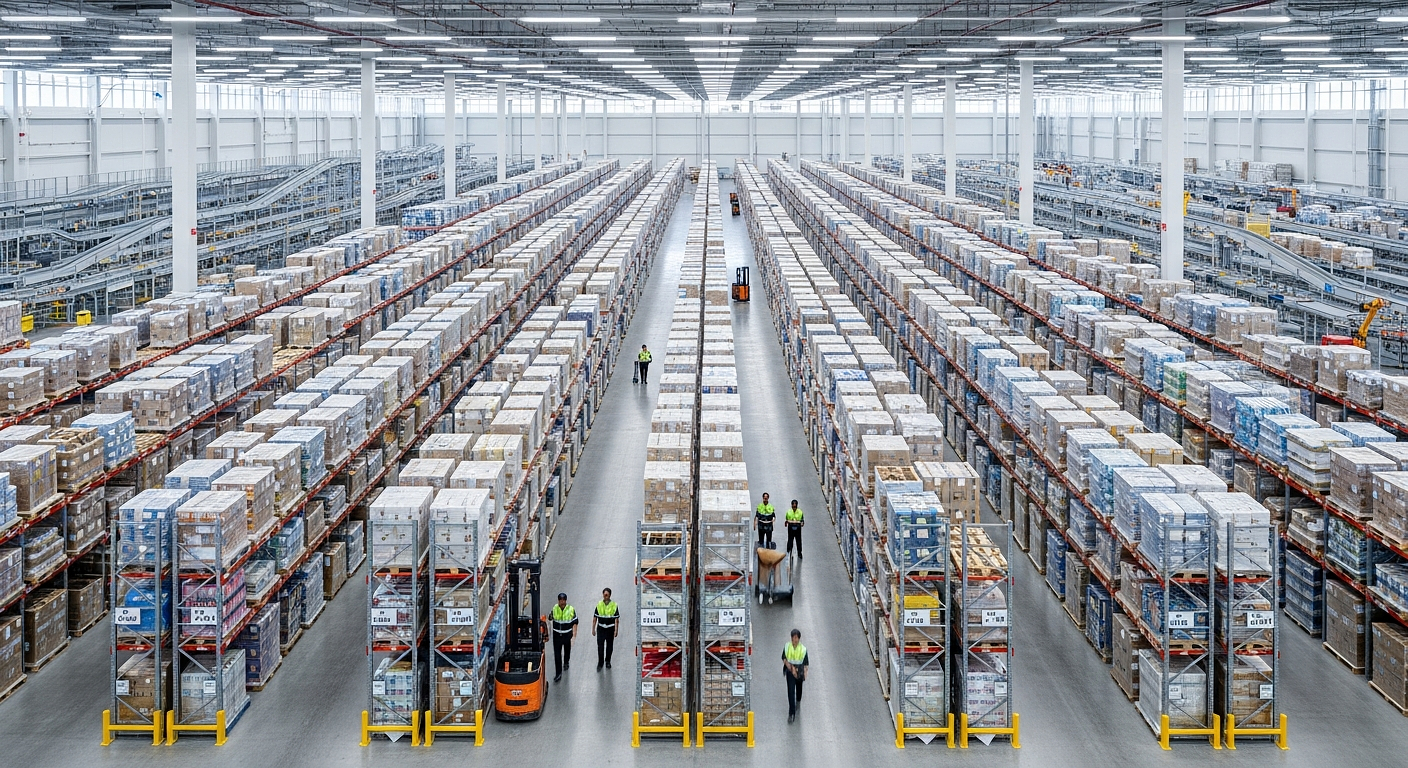


Retail growth is a double-edged sword. As you expand from five sites to fifty—and eventually to five hundred—the operational strategies that worked for a single storefront often become liabilities at an enterprise scale. This is specifically evident in physical security infrastructure. While a small business security camera system consisting of local recorders and unconnected monitors works for a standalone boutique, it creates a massive blind spot for a regional chain.
For IT, Facilities, and Loss Prevention leaders, the obstacle isn't just about adding more cameras; it is about data fragmentation. When video data is trapped in local silos, you cannot track organized retail crime (ORC) rings across state lines, you cannot standardize staff performance, and you certainly cannot govern bandwidth efficiently across a wide area network (WAN).
To protect margins and drive operational efficiency, modern retailers must transition from fragmented recording to unified enterprise intelligence. This shift requires moving beyond "small biz" hardware to a platform that turns video data into a strategic asset.
The scalability paradox of legacy architectures
The fundamental gap between a small business system and an enterprise solution is not just about feature count—it is about architecture. Small business systems prioritize low initial hardware costs and local storage. When you scale this model across 100 sites, you inherit 100 operational islands.
The bandwidth and storage bottleneck
A primary failure point for legacy setups at the enterprise level is network infrastructure. A typical high-definition camera consumes between 1 to 3 megabits per second (Mbps). For a single store, this is manageable. However, if a retail chain with 50 outlets attempts to centralize footage from just four cameras per site using traditional streaming methods, the aggregate bandwidth requirement approaches 800 Mbps continuously.
Most retail sites do not have the provisioned bandwidth to support this load without crippling point-of-sale (POS) systems and other business-critical applications. This forces IT teams into a difficult choice: degrade video quality to unusable levels or pay exorbitant fees for bandwidth upgrades.
The management nightmare
Beyond bandwidth, the administrative burden of "small biz" setups scales linearly with store count. Overseeing 100 independent Network Video Recorders (NVRs) means handling 100 separate login credentials, 100 distinct firmware update schedules, and 100 potential points of failure.
If a firmware vulnerability is discovered, IT teams cannot push a global patch; they often must coordinate with regional technicians to visit sites physically. This lack of centralized oversight creates inconsistent security postures where some stores remain vulnerable while others are patched.
Why fragmented video fails loss prevention
Retail shrinkage is a nearly $100 billion annual problem in the U.S. (Source: National Retail Federation), driven largely by theft, administrative error, and vendor fraud. For Regional Loss Prevention (LP) managers, the inability to correlate data across sites is a critical weakness of legacy platforms.
Blind spots in organized retail crime
Organized retail crime (ORC) groups operate across networks, targeting specific high-value items across multiple sites. With isolated store setups, an LP manager cannot easily identify that the same group hit Store A on Tuesday and Store B on Wednesday until weeks later—if ever.
Enterprise-grade multi-site video management solves this by allowing investigators to search for attributes (like a red truck or a specific clothing color) across all connected sites in real-time. This turns reactive reporting into forward-looking intelligence, allowing teams to identify patterns and coordinate with law enforcement effectively.
The cost of manual investigation
Traditional investigation methods are labor-intensive. Reviewing footage for a "sweethearting" incident (where a cashier gives unauthorized discounts) often requires scrubbing through hours of video to match transaction logs.
By integrating video with POS data, enterprise platforms enable exception-based reporting. This allows LP teams to filter for specific transaction types—such as "voids over $50" or "no-sale drawer opens"—and swiftly view the corresponding video clip. According to some industry analyses, this capability can reduce investigation time significantly, freeing up LP professionals to focus on strategy rather than video scrubbing.
Moving to enterprise intelligence with Spot AI
To solve the "small biz" trap, retailers need a platform that decouples the camera hardware from the intelligence layer. Spot AI utilizes an Intelligent Video Recorder (IVR) that processes video at the edge while governing data in the cloud. This hybrid approach solves the bandwidth and management issues inherent in legacy architectures.
Comparison: legacy NVR vs. Spot AI enterprise platform
| Feature | Legacy NVR / "small biz" system | Spot AI enterprise platform |
|---|---|---|
| Deployment Speed | Slow; requires manual configuration per site. | Plug-and-play; live in minutes with no new wiring. |
| Bandwidth Impact | High; streams heavy video data constantly. | Low; processes at the edge, sends lightweight metadata. |
| Scalability | Limited; adding sites increases complexity. | Unlimited; oversee 1 or 1,000 sites from one dashboard. |
| Hardware Flexibility | Proprietary; locks you into one camera brand. | Camera-agnostic; works with existing IP cameras. |
| Search Capability | Manual rewind and watch. | AI-powered; search by color, vehicle, or behavior. |
| Health Monitoring | Reactive; find out it's broken when you need footage. | Anticipatory; automated alerts for offline cameras. |
Case study: Tidewater Fleet Supply
The operational impact of unifying video systems is best illustrated by Tidewater Fleet Supply, a distributor with 14 retail sites and 3 distribution centers. Their legacy, SMB-style setup created substantial scale problems: investigations took hours, remote access was difficult, and cameras often failed without warning.
By deploying Spot AI, Tidewater unified all sites into a single dashboard. This shift allowed them to:
- Centralize monitoring: access all sites remotely without VPNs or complex networking.
- Accelerate action: use AI-powered search to resolve incidents in minutes rather than hours.
- Ensure uptime: receive timely alerts if a camera went offline, eliminating blind spots.
- Protect investment: they utilized existing cameras where possible, avoiding a costly rip-and-replace scenario.
Read the full story here: Tidewater Fleet Supply Case Study.
Transforming video into operational strategy
When video platforms are centralized and intelligent, they serve departments beyond security. Operations and merchandising teams can leverage visual data to improve store performance and customer experience.
Optimizing staffing and queues
Video analytics for retail operations can track customer queue lengths and wait times. By analyzing this data, managers can adjust staffing schedules to match peak traffic hours, reducing checkout abandonment and improving customer satisfaction.
Merchandising insights
Heatmap technology reveals how customers move through a store, identifying high-traffic zones and "dead" areas. Merchandisers use this data to optimize product placement and validate the effectiveness of end-cap displays, ensuring that high-margin items receive maximum visibility.
The IT and facilities advantage
For the IT and Facilities teams tasked with maintaining these platforms, the shift to an enterprise platform like Spot AI addresses critical pain points regarding maintenance and infrastructure.
- Camera-agnostic flexibility: you do not need to replace every functional camera in your fleet. Spot AI works with most existing IP cameras, allowing you to upgrade hardware incrementally rather than forcing a capital-intensive overhaul.
- Remote health monitoring: instead of waiting for a store manager to report a broken camera after an incident occurs, IT teams receive automated alerts when a device goes offline. This reduces "truck rolls" and allows for remote troubleshooting.
- Secure remote access: modern platforms eliminate the need for port forwarding or open firewalls at each store site. Users access video through a secure, cloud-native dashboard with role-based access controls and audit logs, satisfying strict enterprise security reviews.
Conclusion
Continuing to rely on small business security camera setups for an enterprise retail operation is a calculated risk that offers diminishing returns. The hidden costs of manual management, bandwidth inefficiency, and fragmented intelligence far outweigh the perceived savings of consumer-grade hardware.
By transitioning to a unified Video AI Agent platform, retailers can bridge the gap between store-level recording and boardroom strategy. Spot AI empowers organizations to standardize best practices, reduce shrink through insight-driven intelligence, and turn every camera into a productive member of the team.
Ready to see Spot AI in action?
Stop managing disconnected recorders. Request a demo to experience how Spot AI unifies your retail video operations.
"What is awesome is we did not need to tear out our existing systems. Spot AI let us keep using our current cameras and DVRs so we had time to upgrade gradually."
— Michael M.
Frequently asked questions
What are the best security camera solutions for businesses with multiple sites?
The best solutions for multi-site businesses are cloud-hybrid platforms that offer centralized oversight. Look for solutions that provide a unified dashboard, low bandwidth consumption through edge processing, and camera-agnostic software that integrates with your existing hardware.
How can AI improve loss prevention in retail?
AI improves loss prevention by automating the detection of suspicious behaviors, such as loitering or unauthorized entry, and integrating with POS systems to flag transaction anomalies like excessive voids. This moves LP teams from reactive video review to anticipatory incident management.
What are the compliance requirements for video surveillance in retail?
Compliance varies by region (such as GDPR in Europe or CCPA in California) but generally requires secure data storage, defined retention periods, and audit logs of who accesses footage. Enterprise platforms help automate these policies across all sites to ensure consistent adherence to regulations.
How do I choose a video management system that scales?
Choose a system that decouples storage from bandwidth. Avoid systems that require streaming all footage to the cloud continuously. Instead, prioritize hybrid architectures that process video locally (at the edge) and only send relevant metadata and clips to the cloud for review.
What are the ROI factors for investing in video analytics?
ROI factors include reduced shrinkage (theft and fraud reduction), lower operational costs (less time spent on investigations), optimized staffing (labor savings from queue analysis), and the avoidance of "rip-and-replace" costs by utilizing existing camera infrastructure.
About the author
Joshua Foster
Joshua Foster is an IT Systems Engineer at Spot AI, where he focuses on designing and securing scalable enterprise networks, managing cloud-integrated infrastructure, and automating system workflows to enhance operational efficiency. He is passionate about cross-functional collaboration and takes pride in delivering robust technical solutions that empower both the Spot AI team and its customers.

