




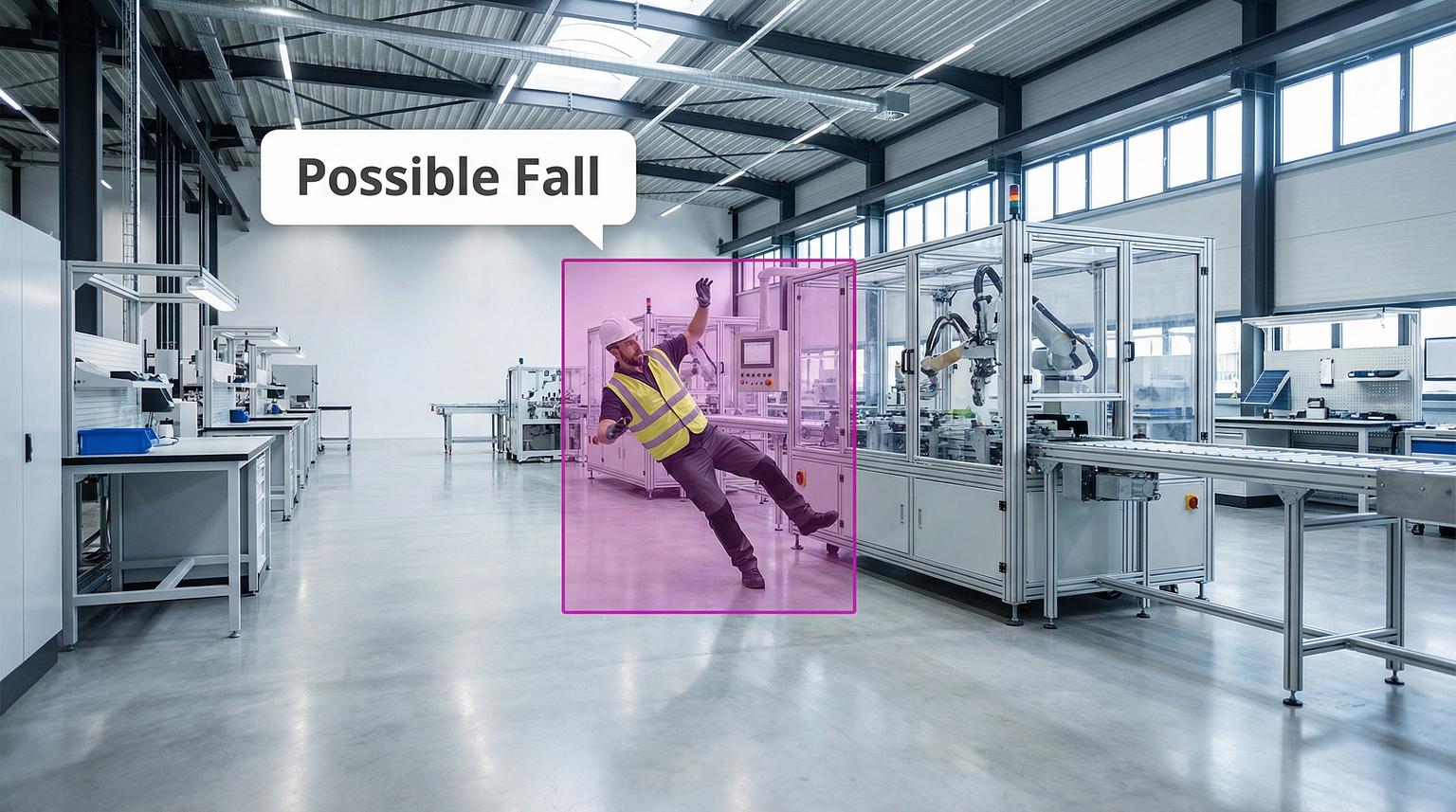


The retail environment has shifted. HR and safety directors are no longer just managing compliance; they are managing volatility. From aggressive customer behavior to parking lot security risks, the scope of "workplace safety" has expanded beyond the store walls. Traditional video systems fail to address this reality because they are inherently reactive. They record incidents for later review, often hours or days after the damage is done.
To protect staff effectively, organizations must move from documenting history to detecting pre-event indicators. By leveraging real time video analytics for safety, retail leaders can identify precursors to violence or accidents—such as aggressive posturing, unauthorized entry, or dangerous crowding—and trigger automated escalation policies that intervene before an incident occurs.
Key terms to know
Before exploring how AI camera systems for retail transform safety protocols, it is helpful to define the core technologies and concepts involved.
- Video AI agents: intelligent software that pairs with existing cameras to detect specific behaviors or environmental changes in real time, acting as a "digital teammate" for safety staff.
- Pre-event indicators: observable behaviors or conditions that typically precede a safety incident, such as loitering near an entrance or a sudden crowd surge at a register.
- Leading vs. lagging indicators: lagging indicators measure past incidents (e.g., injury rates), while leading indicators (e.g., near-miss reports, hazard identification) anticipate and help reduce future risk.
- Intelligent video recorder (IVR): hardware that processes video data locally or in the cloud to enable advanced search and alert capabilities without replacing existing camera infrastructure.
The high cost of reactive safety monitoring
For decades, retail safety relied on manual observation and lagging indicators. This approach leaves substantial gaps in protection... By the time a report is filed, the opportunity for mitigation has passed.
Why manual monitoring fails
- Limited attention span: security staff cannot monitor dozens of camera feeds simultaneously without fatigue, leading to missed events.
- Delayed response: incidents are often identified only after a report is filed, delaying investigation and corrective action.
- Inconsistent documentation: manual incident logs vary in quality and detail, making it difficult to identify trends or root causes.
Detecting pre-event indicators with video AI
The most effective way to improve staff safety is to identify warning signs that precede an event. Video AI agents for operations and safety turn passive cameras into active detectors that recognize these pre-event indicators.
1. Identifying aggressive behavior and workplace violence
Workplace violence is a growing concern in retail... By integrating audio analytics, systems can also identify raised voices or specific keywords that indicate distress, triggering an alert to management or security personnel in real time. This allows for de-escalation intervention before a physical altercation occurs.
2. Managing crowds and occupancy risks
Overcrowding at checkout lines or service counters does more than hurt customer experience; it creates safety liabilities. Retail store heatmapping and real-time occupancy tracking measure crowd density and dwell time. When occupancy thresholds are breached, the platform alerts store managers to open additional registers or redirect traffic. This anticipatory crowd management reduces the risk of slip-and-fall incidents and ensures compliance with fire codes.
3. Securing the perimeter and parking lot
For many employees, the most vulnerable moments of their shift are opening and closing times... Automated loitering detection identifies individuals or vehicles lingering in restricted zones or after hours. Instead of relying on a guard to patrol every hour, AI camera solutions for retail monitor these high-risk zones continuously.
Automating escalation policies
Detecting a risk is only half the battle; the AI must also act. Forward-looking security escalation policies ensure that alerts result in rapid, consistent responses.
1. Real-time alerts to key personnel
When a pre-event indicator is detected—such as a person entering a backroom restricted area—the platform sends a notification in real time to the relevant manager's mobile device. This reduces the "noise" of constant monitoring, allowing staff to focus on their work until a specific intervention is needed.
2. Automated deterrence
To support retail perimeter security automation, video solutions can trigger swift deterrents without human intervention... This "Contextual Talkdown" capability deters theft and vandalism, reducing the need for physical security guards to confront potential threats.
3. Streamlined incident reporting
Automated platforms capture the entire context of an event—video, audio, and timestamps—and package it for review. This automated safety incident reporting capability significantly reduces the time required for investigations. Instead of scrubbing through hours of footage, safety directors can access a complete evidence package in minutes.
Enhancing compliance and reducing liability
Regulatory compliance is a major burden for HR and safety directors. Automated safety incident reporting helps organizations meet strict OSHA requirements by ensuring accurate, timely documentation.
Simplifying OSHA recordkeeping
OSHA requires precise recordkeeping for workplace injuries... Integrated video analytics solutions can pre-populate incident reports with data captured during the event, such as time, location, and incident type. This reduces administrative time from hours to minutes and improves the accuracy of records submitted for electronic filing.
Mitigating workers' comp claims
Reducing workers comp claims retail leaders face requires objective evidence. Video analytics provide an irrefutable audit trail of incidents. By integrating with workers' compensation management systems, video evidence can clarify exactly how an incident occurred, countering fraudulent claims and accelerating the resolution of legitimate ones.
Comparing safety monitoring approaches
| Feature | Spot AI (Video AI Agents) | Traditional Camera Systems |
|---|---|---|
| Detection Type | Proactive: Detects pre-event indicators (loitering, crowding, posture) in real time. | Reactive: Records footage for passive review after an incident. |
| Response Speed | Real-time: Automated alerts and deterrents (lights/audio) trigger without delay. | Delayed: Requires human discovery, often hours or days later. |
| Search Capability | Intelligent Search: "Show me people at the back door after 10 PM." | Manual Scrubbing: Fast-forwarding through hours of video. |
| Scalability | Cloud-Managed: Updates automatically; manages multiple sites from one dashboard. | Local Only: Requires site-by-site updates and maintenance. |
| Hardware | Camera-Agnostic: Works with existing IP or analog cameras. | Proprietary: Often requires "rip-and-replace" of hardware. |
Implementation: protecting staff without "surveillance"
A common concern for HR directors is the perception of "spying" on employees. It is critical to frame employee safety compliance monitoring as a tool for protection, not punishment.
- Focus on environmental hazards: use the system to detect slip and fall prevention technology triggers, such as wet floors or blocked aisles, rather than just monitoring employee speed.
- Transparent communication: clearly communicate that the system is designed to identify external threats (loitering, aggressive customers) and ensure safe open/close procedures.
- Data privacy: utilizing features like face redaction protects employee privacy while still allowing the AI to identify unsafe behaviors or unauthorized entry.
Improving safety outcomes with intelligent video
The transition to active intelligence video solutions represents a fundamental shift in how retail organizations manage risk. By identifying pre-event indicators, automating escalation, and streamlining compliance, HR and Safety Directors can create a safer environment for staff and customers alike.
This approach moves beyond simple monitoring to true risk reduction. It empowers teams to intervene before a situation escalates, reducing injuries, lowering costs, and building a culture of safety that employees can trust.
See Spot AI in action for retail staff safety
Discover how Spot AI’s video AI platform can help you detect risks and automate safety protocols. Request a demo to experience the technology with your existing cameras.
"We've set up the platform to understand normal versus abnormal behavior. If someone's in our lobby showcase area after hours, or if there's unusual movement patterns around sensitive areas, the platform alerts us in real time."
— Mike Tiller, Director of Technology, Staccato (Spot AI Customer Story: Staccato)
Frequently asked questions
How can AI improve safety in retail environments?
AI improves safety by identifying hazards and threats in real time. Instead of passively recording, AI camera systems for retail identify pre-event indicators like loitering, blocked exits, or aggressive behavior, allowing staff to intervene before an accident or crime occurs.
What are the benefits of real-time video analytics?
Real-time analytics transform video from a forensic tool into a preventative one. Benefits include real-time alerts for unauthorized entry, automated deterrence (lights/audio) to stop theft, and automated safety incident reporting that reduces investigation time from days to minutes.
How do automated reporting systems enhance compliance?
Automated platforms ensure that every incident is documented with accurate timestamps and video evidence. This supports employee safety compliance monitoring and helps organizations meet OSHA recordkeeping standards by providing objective data for Form 300 and 301 filings, reducing the risk of fines and audits.
What technologies are effective for reducing workplace accidents?
Technologies such as slip and fall prevention technology, retail store heatmapping for crowd control, and loading dock safety monitoring are highly effective. These tools identify environmental hazards (like spills) and unsafe operational patterns, enabling managers to address risks proactively.
About the author
Sud Bhatija
Sud Bhatija is COO and Co-founder at Spot AI, where he scales operations and GTM strategy to deliver video AI that helps operations, safety, and security teams boost productivity and reduce incidents across industries.

