






It’s 3:00 AM. Your phone rings. Another perimeter alarm at a downtown location. You dispatch a guard or authorize a police response, only to discover forty-five minutes later that it was a plastic bag caught in an HVAC vent or a cleaning crew member who forgot the code.
For security leaders and operations directors, this scenario is more than a nuisance—it is a direct hit to the budget and your team’s credibility. The reality is that emergency response systems face heavy volumes of noise. Data indicates that false alarms account for over ninety percent of all security dispatches, leading to delays for genuine incidents. When police departments respond to thousands of unfounded calls annually, they inevitably deprioritize repeat sources. This effect undermines the effectiveness of your security program, increasing the risk that a real break-in is treated as just another glitch.
Traditional sensor-based setups are no longer sufficient for the complex retail environment. The solution lies in moving from blind sensors to intelligent vision. Video AI for retail security analyzes footage from your existing cameras to verify potential incidents in real time, ensuring that when you escalate an incident, responders have clear, actionable context.
Key terms to know
- False positive: an alert triggered by a non-critical event, such as environmental movement or authorized staff, incorrectly flagged as a security breach.
- Video verification: the process of using visual footage to confirm the validity of an alarm signal before requesting police or guard dispatch.
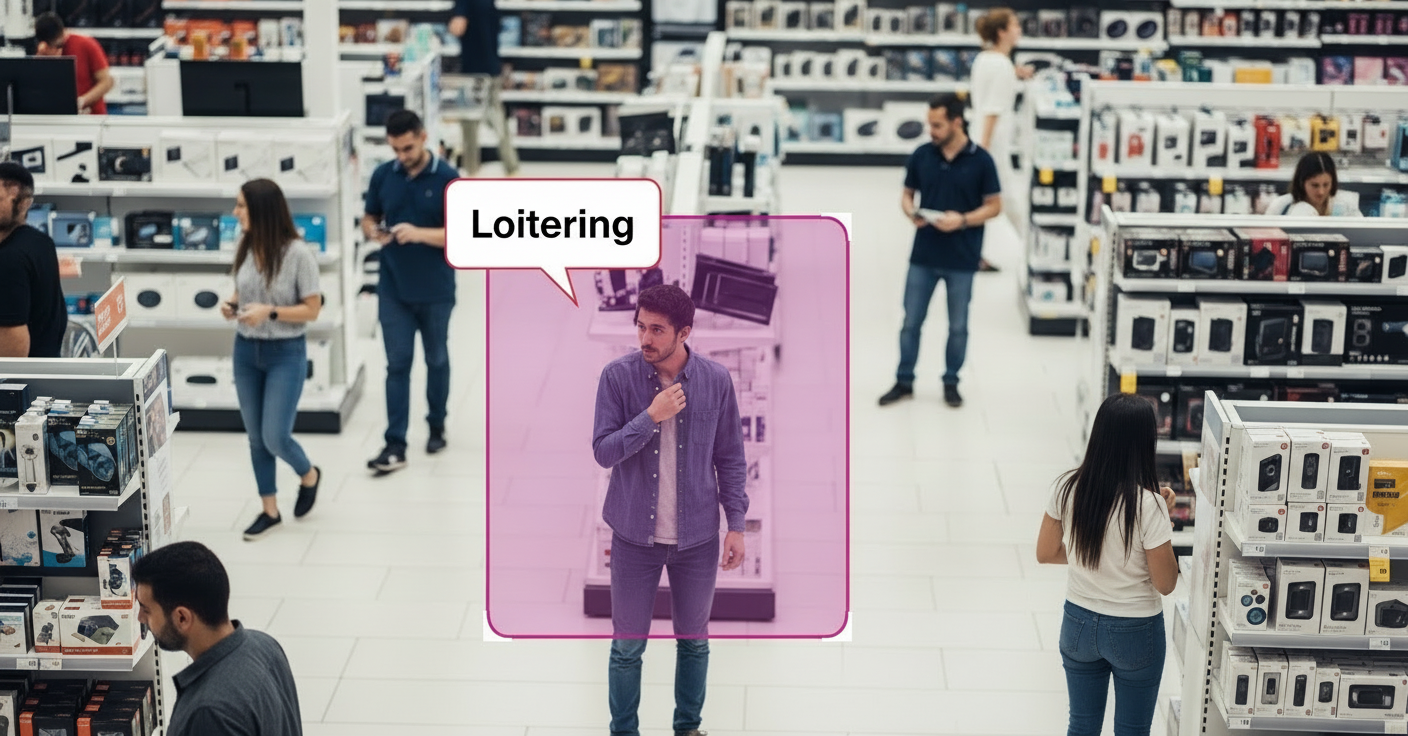
- Video AI agents: software that analyzes video feeds continuously to detect defined activities (e.g., loitering or intrusion) and filter out non-relevant motion.
- Context correlation: the ability to compare video with other inputs (e.g., access control logs or POS data) to help determine whether an event is authorized.
The high cost of the false alarm crisis
For retail organizations, the impact of false alarms extends far beyond the monthly monitoring fee. It creates a ripple effect that damages operational efficiency, drains resources, and strains public safety relationships.
1. Strained emergency resources and response delays
The sheer volume of false positives has forced law enforcement to change how they prioritize calls. In regions like Fort Worth, Texas, data shows that between ninety-four and ninety-nine percent of alarm activations are false. Consequently, response times for property crimes have suffered. In Dallas, the average police response time for priority two incidents—such as break-ins—has been recorded at approximately ninety-four minutes.
If your system triggers a false alarm today, and a real organized retail crime (ORC) gang hits your store tomorrow, the police response may be delayed by hours because your location is flagged as a frequent source of nuisance alarms. This delay allows criminals to operate with impunity, often completing theft operations long before law enforcement arrives.
2. Alarm fatigue among security teams
When guards or monitoring center staff are repeatedly bombarded with non-events, their psychological readiness deteriorates. This phenomenon, known as alarm fatigue, leads to slower reaction times and a lack of urgency. Research indicates that up to thirty percent of security alerts go uninvestigated due to volume overload (Source: Databahn). A hesitation of even a few seconds can be the difference between apprehending a suspect and watching them escape with thousands of dollars in merchandise.
3. Direct financial penalties and wasted labor
Municipalities are increasingly imposing heavy fines for false dispatches to recoup costs. Beyond fines, the internal cost is staggering. When internal investigations require extensive manual video review, your loss prevention team spends valuable time chasing ghosts instead of implementing proactive theft mitigation strategies. How to reduce investigation time becomes a critical operational question when teams are spending hours scrubbing footage for events that never happened.
Why traditional retail security alarms fail
To fix the problem, you must first understand why legacy setups generate so much noise. Most retail alarms rely on simple motion or vibration sensors. These devices are binary; they detect a change in the environment but lack the intelligence to understand what caused the change.
1. Environmental interference
Retail environments are dynamic. Heating and cooling systems kick on, moving hanging signage. Delivery vehicles create vibrations. In varied climates, weather events like wind or temperature shifts can trigger sensors. A motion sensor cannot distinguish between a person cutting a fence and a tree branch swaying in the wind. This environmental noise is responsible for a significant portion of false alerts.
2. Operational complexity and human error
Retail stores have high traffic and complex staffing schedules. Authorized employees entering early for a shift, cleaning crews working overnight, or delivery drivers dropping off stock can all trigger alarms if the system lacks context. Human error—such as forgetting a code or propping a door open—remains a leading cause of false dispatches.
3. Lack of visual context
The fundamental flaw of traditional alarms is blindness. A door contact sensor tells you a door opened. It does not tell you if it was forced open by a crowbar or opened by a manager who forgot to disarm the panel. Without visual verification, every signal must be treated as a crisis, leading to the high false positive rates seen across the industry.
How video AI fixes false alarms with verification
Video AI for retail security minimizes false alarms by adding a layer of visual analysis to the detection process. Instead of replacing your entire infrastructure, this technology acts as a digital force multiplier, turning blind sensors into intelligent teammates.
1. Distinguishing people from noise
Modern video AI agents use computer vision to classify objects. They can distinguish between a person, a vehicle, an animal, or a shadow. This capability allows the platform to filter out false positives caused by environmental factors before they ever reach a human operator. By setting up specific "no-go zones," alerts are only sent when a human is detected in a restricted area, ignoring movement from banners or pests.
2. Visual verification before dispatch
The most effective way to stop false alarms is to see what is happening. Video verification allows operators or LP managers to view a snippet of footage in real-time when an alert occurs. This confirms whether a real intrusion is in progress or if it is a false alarm, preventing needless police dispatch. This shift from reactive logging to proactive verification is transforming loss prevention technology.
3. Real-world impact: proactive perimeter defense
The difference between a passive recording and an active AI agent is measurable. Storage Asset Management (SAM), which operates largely unstaffed facilities, deployed Spot AI to gain remote oversight. In one instance, the system detected intruders at 1:00 AM. Because the alert was verified instantly, police arrived while the incident was still in progress. Following this intervention, the facility reported a complete elimination of break-ins (Source: Storage Asset Management Case Study).
4. Contextual integration with operations
Video AI becomes even more powerful when integrated with other data sources.
- Access control integration: if a door sensor trips, but the video AI sees an authorized employee badge in, the platform understands this is a legitimate entry.
- POS integration: if merchandise is moved, but the POS system records a transaction, the activity is flagged as a sale rather than theft.
This context correlation can cut false positives by up to 85% and support calling law enforcement when incidents are verified.
Implementation guidance for loss mitigation leaders
Deploying video AI for retail security goes beyond a hardware upgrade; it changes workflows from reactive to proactive loss mitigation. For best results, LP directors can follow a clear, step-by-step rollout.
1. Select platforms that work with your existing cameras
Avoid closed systems that require replacing all existing hardware. Choose camera-agnostic AI solutions that connect with your current IP or analog cameras. This approach lets you roll out across locations without a massive "rip-and-replace" capital expenditure. You can retrofitting legacy cameras with AI to unlock dormant data immediately.
2. Configure detection models for specific environments
One size does not fit all. A "Loitering" alert might need different parameters for a busy urban flagship store compared to a suburban distribution center. Work with your technology partner to tune sensitivity. For instance, configure "Vehicle Enters No-go Zones" specifically for loading docks to guard against unauthorized access while allowing scheduled deliveries.
3. Establish clear alert routing and escalation steps
Define clear workflows for who receives alerts and how they are verified.
- High-confidence alerts: multi-verified incidents (e.g., video confirms person + after-hours). These may route directly to security dispatch or trigger contextual talkdowns to deter the intruder automatically.
- Low-confidence alerts: single signals. These route to an internal SOC or store manager for quick visual verification via the cloud dashboard.
4. Use a hybrid cloud approach
Retail locations often have intermittent internet. Edge computing for retail video allows an intelligent video recorder to process data locally if the internet goes down, then sync critical alerts to the cloud once connectivity returns. This supports continuous operation and ensures no data is lost during outages.
Costs and benefits of more accurate alarm systems
Justifying the budget for video AI is straightforward when you look at the total cost of ownership and the hidden costs of false alarms.
| Metric | Traditional Alarm System | Video AI Platform (Spot AI) |
|---|---|---|
| False Alarm Rate | High (90%+) | Low (Cut by up to 85%) |
| Verification Speed | Slow (Phone calls, site visits) | Swift (Visual verification via dashboard) |
| Investigation Time | Hours (Manual scrubbing) | Minutes (AI-powered smart search) |
| Police Response | Deprioritized / Fines | Prioritized (Verified crime in progress) |
| Data Utility | Binary (On/Off) | Rich (Behavioral trends, heatmaps) |
Financial impact
- Eliminated fines: reducing false alarms keeps your locations below the threshold for municipal fines, which can save thousands annually per district.
- Labor efficiency: AI-powered search capabilities, such as attribute search for video, can significantly cut investigation time, freeing up your LP team to focus on training and strategy rather than scrubbing footage.
- Shrink reduction: retailers implementing AI-powered video analytics can significantly reduce shrinkage through improved detection and faster intervention.
- Payback period: for many enterprise retailers, efficiency gains and lower shrink can lead to a meaningful return on investment within 12 to 24 months.
Turn your cameras into proactive defenders
The era of tolerating a 90% false alarm rate is over. For Loss Mitigation Directors and Security VPs, the "boy who cried wolf" scenario is a strategic vulnerability that leaves assets exposed and budgets bleeding.
By adding video AI for retail security to basic sensors, you can improve collaboration with law enforcement, give your teams verified information, and make better use of your security infrastructure. Spot AI helps you bring more consistency to each shift, minimize risk, and strengthen security with clearer visibility and faster verification.
"We've set up the system to understand normal versus abnormal behavior. If someone's in our lobby showcase area after hours, or if there's unusual movement patterns around sensitive areas, the system alerts us immediately."
— Mike Tiller, Director of Technology, Staccato
Don't let false alarms dictate your security strategy. Request a demo to see how Spot AI’s video AI platform can cut false alarms and strengthen retail security.
Frequently asked questions
What are the main causes of false alarms in retail?
The primary causes include environmental interference (weather, HVAC movement), user error (staff entering wrong codes, propping doors), and the inability of traditional sensors to distinguish between authorized personnel and intruders.
How can AI minimize false positives in security systems?
AI minimizes false positives by using computer vision to verify the source of motion. It distinguishes between people, vehicles, and animals, and can cross-reference visual data with access control logs to verify if an entry is authorized, filtering out non-threats automatically.
What strategies are effective for minimizing nuisance alarms?
Effective strategies include implementing video verification to visually confirm alarms before dispatch, regularly maintaining sensors, training staff on proper arming/disarming procedures, and using AI to filter out environmental noise like moving shadows or debris.
What role does video analytics play in loss mitigation?
Video analytics turns reactive recording into actionable insights. It detects defined behaviors (like loitering or unauthorized entry) in near real-time, enabling quicker intervention. It can also speed up investigations, often cutting the time spent reviewing footage by hours.
How can businesses improve alarm accuracy?
Businesses can improve accuracy by upgrading to a platform that works with existing cameras and layers visual analysis over existing sensors. Configuring specific "no-go zones" and tuning sensitivity to the environment (e.g., ignoring busy sidewalks outside a window) can improve accuracy.
About the author
Sud Bhatija
COO and Co-founder
Sud Bhatija is COO and Co-founder at Spot AI, where he scales operations and GTM strategy to deliver video AI that helps operations, safety, and security teams boost productivity and minimize incidents across industries.

