




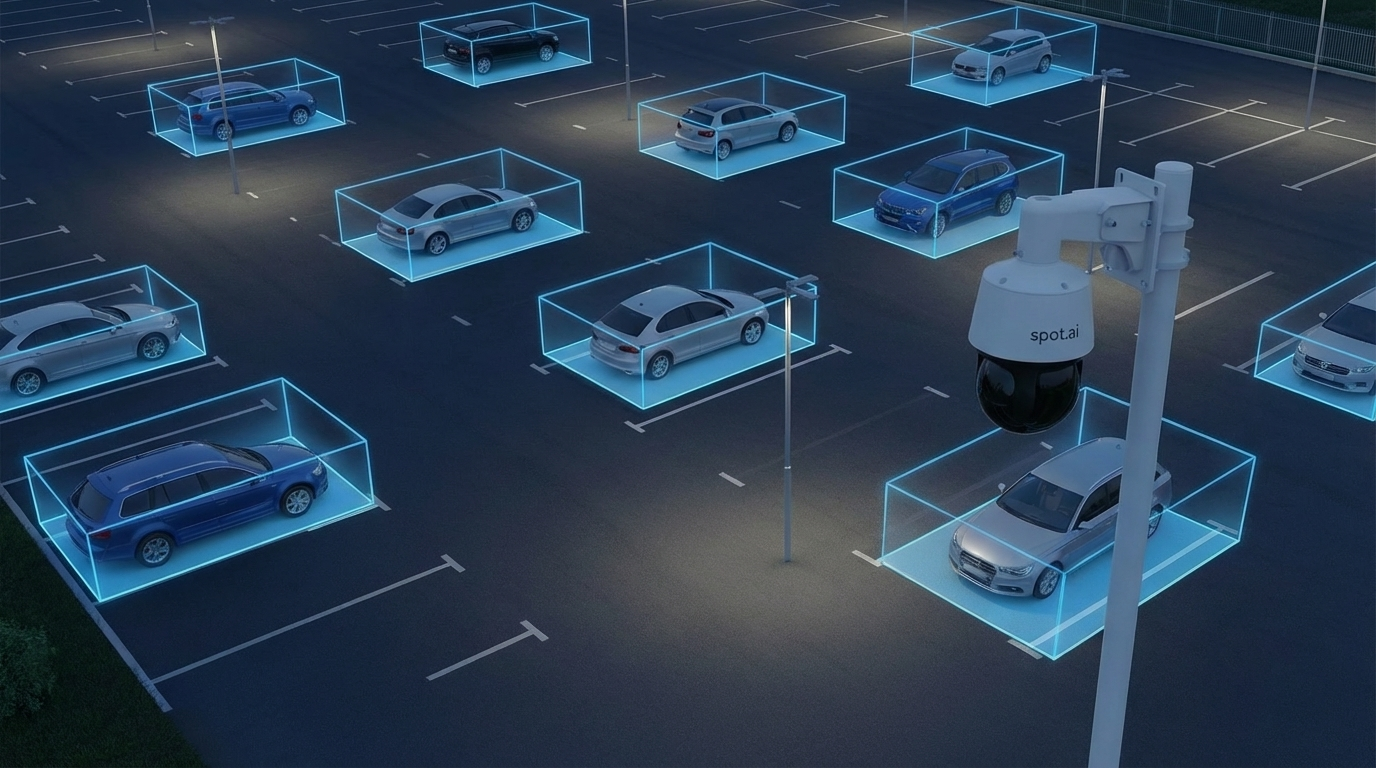


Retail parking lots have become the primary staging ground for organized retail crime and a major source of liability claims. Recent industry data shows a 93% increase in shoplifting incidents compared to pre-pandemic levels, with parking facilities serving as the critical entry and exit point for these operations (Source: TheStreet). For Loss Prevention Directors, these sprawling outdoor environments represent a vulnerability gap where traditional monitoring systems fall short. Passive cameras only record crimes for later review, while hiring 24/7 on-site security guards across multiple locations creates an unsustainable payroll expense that erodes profitability.
Modern Video AI Agents—intelligent video analytics solutions that turn existing cameras into automated monitoring tools—offer a scalable alternative. By detecting incidents in real time and automating deterrence, these solutions extend the security perimeter to the curb without scaling headcount. This technology addresses the operational and financial hurdles of securing retail parking facilities, transforming dormant video feeds into active teammates that patrol your property around the clock.
The operational gap in parking lot security
Loss prevention leaders face distinct pain points when securing outdoor assets. Unlike the controlled environment of a store interior, parking lots suffer from variable lighting, weather conditions, and vast blind spots that human patrols cannot cover simultaneously.
Why traditional methods fall short
- Reactive by design: standard cameras capture evidence but do nothing to prevent incidents. By the time a catalytic converter is stolen—roughly 14,000 were stolen in 2024 alone—the perpetrators are gone (Source: Police1).
- Cost-prohibitive staffing: a single unarmed security guard costs approximately $35–$50 per hour in 2025. Maintaining 24/7 coverage for a single location runs between $306,600 and $438,000 annually (Source: Crimewatch). For a chain with 10 locations, this payroll expense exceeds $3 million—often costing more than the shrink it prevents.
- Human limitations: guards cannot monitor all areas simultaneously. Organized retail crime (ORC) groups often observe parking lots to identify patrol patterns and blind spots before striking.
The AI advantage for loss prevention
AI Security Guards transform passive video feeds into active intelligence. Instead of paying for idle time, retailers deploy Video AI Agents that provide continuous monitoring. These systems detect specific behaviors—such as loitering near high-value inventory or vehicles entering restricted zones—and trigger real-time alerts. This shifts the approach from reviewing footage after the fact to enabling faster, informed responses.
Core capabilities of video AI agents in parking lots
AI platforms address the specific frustrations of loss prevention teams—overwhelming false alarms and coverage gaps—through advanced computer vision templates. These capabilities map directly to retail operational needs.
1. Real-time incident detection
AI models identify specific incidents rather than simple motion, cutting nuisance alarms by up to 90% (Source: Axionsecurity Ca).
- Loitering detection: identifies individuals lingering in high-risk areas—employee entrances, loading docks—for extended periods. This serves as a proxy for potential break-in attempts or pre-incident surveillance.
- Vehicle enters no-go zones: automatically alerts staff when a vehicle enters a restricted area, such as a fire lane or behind-store inventory staging zone.
- Crowding detection: flags unusual gatherings of people, which often indicates a coordinated theft attempt or a safety incident in progress.
2. License plate recognition (LPR)
License plate recognition cameras extend the security perimeter by tracking vehicles entering and exiting the property.
- Stolen vehicle identification: systems cross-reference plates with databases of flagged or stolen vehicles, enabling rapid response.
- Forensic search: loss prevention teams can search video history by license plate to track the movements of repeat offenders or known ORC vehicles across multiple locations.
- Access control integration: automated gates grant access to authorized delivery trucks while flagging unauthorized vehicles promptly.
3. Environmental adaptation
Parking lots present difficult viewing conditions. AI security guards use advanced image processing to maintain visibility regardless of the environment.
- Low-light performance: detects human presence in low-light conditions where many cameras struggle, supporting 24/7 monitoring.
- Weather resistance: algorithms filter out visual noise from rain, snow, or fog to maintain detection accuracy during adverse weather.
Financial analysis: AI vs. human security payroll
For finance-focused Loss Prevention VPs, the ROI argument for AI security comes down to the dramatic difference in total cost of ownership compared to human guarding.
| Cost category | Traditional security guard (24/7) | AI security guard / remote monitoring |
|---|---|---|
| Hourly cost | $35–$50 per hour (Source: Crimewatch) | $3–$10 per hour (Source: Ocnjdaily) |
| Annual cost (per site) | $306,600 – $438,000 | $26,000 – $87,000 |
| Coverage capability | Single location visibility; limited by line of sight | Simultaneous monitoring across connected cameras |
| Liability impact | Limited documentation; human error in reporting | Comprehensive video audit trail; helps lower insurance premiums by 5–15% (Source: Nrfbigshoweurope) |
Key Takeaway: Deploying AI security guards lowers security payroll expenses by 70–92% compared to traditional guarding models while providing broader geographic coverage.
Operationalizing AI for safety and efficiency
Beyond mitigating theft, AI security guards help operations teams standardize safety protocols and reduce liability risks in parking areas.
Reducing liability and insurance claims
Liability claims from personal injuries and vehicle damage are major cost drivers. AI solutions provide objective evidence to refute fraudulent claims.
- Incident documentation: when a safety event occurs, the system provides a time-stamped video record, enabling timely response and creating clear documentation.
- Traffic enforcement: AI monitors for speeding or wrong-way driving in parking lanes, helping facility managers redesign traffic flows to reduce accidents.
- Insurance premium reduction: documented 24/7 AI monitoring can lower commercial property insurance premiums by 5–15% (Source: Nrfbigshoweurope).
Real-world impact: Storage Asset Management
The transition from reactive recording to active deterrence delivers measurable results. Storage Asset Management (SAM), operating nearly 50 virtually managed facilities, deployed Spot AI to bridge the gap between remote operations and on-site security. At one facility, the system detected intruders at 1 AM and alerted local police immediately. Officers arrived while the crime was in progress, leading to an arrest. Following the publicized arrest, the site reported zero subsequent break-ins—proof that intelligent deterrence effectively secures the perimeter.
Implementation strategy for retail chains
To avoid the integration headaches that plague many loss prevention technology projects, retailers should follow a phased deployment strategy that leverages open architecture.
Step 1: Assessment and pilot
- Identify high-risk locations based on historical shrink data and incident reports.
- Deploy AI on existing camera infrastructure where possible. Spot AI's camera-agnostic platform connects to ONVIF-compliant cameras, eliminating the need to rip and replace hardware.
- Establish baseline metrics: incident response time, false alarm rate, and investigation hours.
Step 2: Configuration and training
- Configure "No-go Zones" and "Loitering" alerts specific to each parking lot's layout.
- Train loss prevention staff to use the dashboard for smart searches rather than scrubbing video manually. This can significantly reduce investigation time when searches are configured well.
- Integrate alerts with mobile devices so store managers or regional directors receive notifications in real time.
Step 3: Enterprise rollout and hybrid modeling
- Scale the solution across the chain, prioritizing sites with the highest ORC activity.
- Adopt a hybrid security model: use AI for primary detection and monitoring, and deploy human guards only for targeted responses or during high-risk windows (e.g., holiday overnights). This optimizes labor spend.
Top AI security guard solutions comparison
When evaluating solutions, Loss Prevention Directors should prioritize deployment speed, openness, and ease of use.
| Feature | Spot AI | Traditional video management systems (VMS) | Dedicated remote guarding services |
|---|---|---|---|
| Deployment speed | Live in days in many cases | Weeks to months; requires complex cabling | Varies; depends on hardware installation |
| Hardware compatibility | Camera-agnostic; works with existing IP cameras | Often creates vendor lock-in with proprietary cameras | Often requires proprietary mobile units |
| AI capabilities | Built-in AI Agents (LPR, Safety, Operations) | Usually requires expensive add-on modules | Relies on human verification of motion alerts |
| Cost structure | Predictable software license + hardware | High upfront capital expenditure | Monthly service fees + equipment rental |
| User interface | Modern cloud dashboard; Google-like search | Complex, technical interface requiring training | Typically managed by the vendor, not the client |
Spot AI Advantage: Spot AI offers a unified Video AI platform that makes advanced analytics accessible. Retailers can leverage their existing camera investment while adding powerful AI agents that detect loitering, vehicle intrusions, and safety hazards—without the complexity of legacy enterprise systems.
Frequently asked questions
How does AI improve security in retail parking lots?
AI transforms passive cameras into active detectors. Instead of recording crime, AI algorithms detect specific behaviors like loitering, vehicles in restricted zones, or crowding in real time. This helps security teams or law enforcement respond faster to potential issues, reducing incident rates.
What are the cost benefits of AI security solutions compared to guards?
AI security solutions significantly lower ongoing security-related operating expenses. While 24/7 human guard presence can run upwards of $300,000 annually per site, AI-powered monitoring operates at a fraction of that cost. AI systems also help lower indirect costs through better documentation for insurance and liability claims.
Can AI security guards work with my existing cameras?
Yes. Modern platforms like Spot AI are camera-agnostic and connect to your existing IP cameras, upgrading them with advanced AI capabilities. This eliminates expensive rip-and-replace projects and lets you modernize your security infrastructure using hardware you already own.
How does AI help reduce liability in parking lots?
AI reduces liability by providing objective, high-definition evidence of incidents. A clear video record supports rapid, appropriate response. Continuous recording also helps organizations counter fraudulent claims regarding vehicle damage or personal injury—common issues in retail environments.
What is the difference between video analytics and AI security guards?
Older video analytics rely on basic motion detection, leading to high false alarm rates from blowing trash or animals. AI security guards use deep learning to understand context, distinguishing between a person, a vehicle, and harmless movement. These models classify people and vehicles to prioritize alerts and reduce false alarms.
Secure your perimeter today
The era of relying solely on human patrols to secure vast retail parking lots is ending. Rising payroll costs combined with sophisticated organized retail crime demand a more intelligent approach. AI security guards extend protection to the furthest corners of the parking lot, providing continuous monitoring at a fraction of the cost.
By shifting from reactive recording to timely AI-assisted detection, loss prevention leaders can reduce shrink, shorten investigation times, and demonstrate clear value to the C-suite.
"We have multiple uses for Spot AI and whether that's reviewing footage from our parking lots or getting a live feed from our offices Spot AI gives us the perfect tools to do this quickly and with precision."
- Daniel A., Systems and Programs Coordinator
Ready to see how video AI can strengthen your parking lot security? Request a demo to experience Spot AI's platform in action.
About the author
Sud Bhatija is COO and Co-founder at Spot AI, where he scales operations and GTM strategy to deliver video AI that helps operations, safety, and security teams boost productivity and reduce incidents across industries.

