




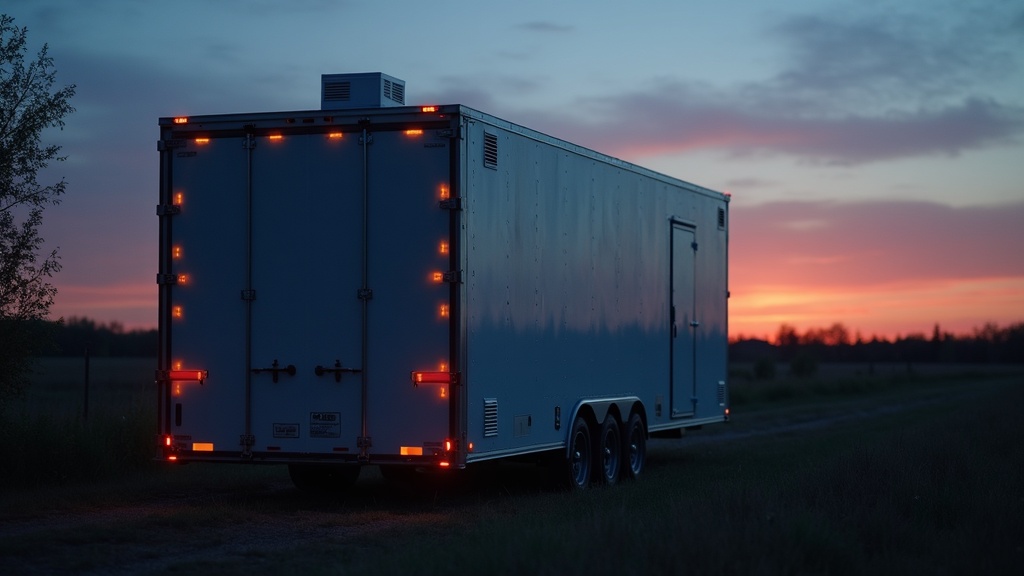


LiveView Technologies pricing: how much does LVT really cost in 2026
LiveView Technologies (LVT) does not publish a full official price list, so the honest 2026 answer to "how much does LVT cost" is a range, not a single number. LVT's own FAQ says its units "can cost anywhere from $1,500 to $4,000 depending on your needs and configurations," and third-party resellers report mobile surveillance unit rentals of roughly $1,200 to $3,400 per unit per month, with outright purchase around $38,000 to $52,000 per unit. Because LVT sells a leased, self-contained appliance, the real cost is not one sticker but a per-unit monthly subscription multiplied by every zone you need to cover.
That per-zone math is why buyers pricing LVT usually end up comparing it to guard coverage and to software-only options. Physical security already competes with rising labor costs: the median annual wage for a US security guard was $42,470 in May 2025, and guard employment is projected to show little or no change from 2024 to 2034, with roughly 162,300 openings a year driven largely by turnover (Source: U.S. Bureau of Labor Statistics). This guide breaks down LVT pricing by cost layer, explains the lease and purchase models, surfaces the costs that rarely appear on the first quote, and shows how the numbers compare to a per-camera software subscription like Spot AI that runs on the cameras you already own.
Key takeaways
- LVT does not publish full list pricing. Real cost is a per-unit monthly lease, and its own FAQ cites units from $1,500 to $4,000 depending on configuration.
- LVT is a hardware-as-a-service model: you lease a self-contained trailer, and the monthly fee bundles the unit, its cameras, connectivity and data, the cloud platform, storage, and optionally 24/7 monitoring.
- Cost scales by unit, not by camera. Each LVT unit covers one zone, so every additional blind spot means another trailer and another monthly line.
- Buying a unit outright (roughly $38,000 to $52,000 per third-party listings) does not end the subscription, because the cloud platform is still a recurring fee.
- Buyers increasingly weigh LVT against a per-camera software subscription such as Spot AI, which turns the cameras you already own into an AI Security Guard across indoor and outdoor sites on one dashboard.
Before the model details, here is the fast view of where money goes in an LVT quote. This table leads with the cost factors so you can pressure-test any proposal you receive.
Cost factor | What drives it | Documented range or note |
|---|---|---|
Per-unit monthly subscription | Configuration (D3 vs Omni), camera count, monitoring level, contract term | LVT FAQ cites units from $1,500 to $4,000; third-party rentals about $1,200 to $3,400 per unit per month |
Number of units | One appliance covers one zone, so coverage scales linearly with units | Multiply the per-unit fee by every zone you need to watch |
Monitoring level | Self-monitor via the platform vs 24/7 live remote monitoring by a partner | Monitoring is offered through third-party partners; separate rate not publicly specified |
Contract term | Month-to-month vs annual or multi-year commitment | Contract discounts common; a documented public-agency example ran about $45,000 per year per unit |
Purchase option | Buy the trailer outright instead of leasing | Third-party listings about $38,000 to $52,000 per unit; a cloud subscription still applies |
Relocation and reconfiguration | Moving a unit to a new location or changing its camera setup | A physical logistics event; cost not publicly specified |
How LVT pricing actually works
LVT prices on hardware-as-a-service logic rather than a shrink-wrapped software price. Getting the model right matters more than any single sticker number, because it decides whether you are buying one appliance or committing to a fleet of monthly leases.
The per-unit subscription (lease model)
LVT's core offer is a leased Mobile Surveillance Unit. Its documentation describes a self-contained trailer or pole-mounted appliance built around a "Live Unit" that houses the camera, lights, speaker, and edge controller. The monthly fee is bundled: it covers the hardware, the cameras on the unit, multi-network cellular connectivity with optional satellite backup, the cloud platform and mobile app, and video storage, with footage typically retained for 30 days and customizable per customer. Power is off-grid by design, using two 400-watt solar panels, battery backup, and an optional smart generator, which is exactly why the units drop onto sites with no wired power or internet. That bundling is the appeal and the catch: one predictable line item, but a line item you pay for every unit, every month, for as long as the site needs coverage.
Lease versus buy
LVT is primarily a lease business, and third-party listings put outright purchase at roughly $38,000 to $52,000 per unit. The important nuance is that buying the trailer does not switch off the recurring cost, because the LVT platform, connectivity, and storage remain a subscription even on a purchased unit. For most buyers the decision is less "own versus rent the metal" and more "which structure carries the lower total cost across the number of zones and the number of years I actually need." A short-term construction or event deployment usually favors the lease, while a permanent site is where the buy-versus-lease-versus-software comparison gets interesting.
Why you still need a quote
LVT publishes some figures on its own FAQ and holds a GSA Federal Supply Schedule listing for public-sector buyers, but a full official price list is not publicly specified. The documented ranges above are useful for sanity-checking a proposal, yet your real number depends on unit configuration, how many zones you cover, the monitoring level, and the contract length. Treat any online figure as a starting point, then get an itemized quote per unit and per month.
Key terms
- Mobile surveillance unit (MSU): a self-contained outdoor camera appliance, usually trailer or pole mounted, that runs on solar and cellular so it can deploy where there is no power or network.
- Hardware-as-a-service (HaaS): a model where you pay a recurring fee for equipment plus the software and service around it, rather than buying the hardware outright.
- Camera-agnostic: software that works with cameras from many makers, so you can reuse existing IP cameras instead of buying the vendor's own.
- IVR (Intelligent Video Recorder): Spot AI's on-site recorder, which keeps full-resolution video in the facility and sends only metadata to the cloud.
Hidden and indirect costs to budget for
The first quote rarely tells the whole story. These are the costs that show up later and reshape the total for a trailer-based program.
- Per-zone hardware scaling. Because one unit covers one field of view, every additional blind spot, gate, or lay-down area means another leased trailer and another monthly fee. Coverage cost grows in unit-sized steps, not smoothly.
- Relocation and reconfiguration. Moving a unit to a new location or changing its camera setup is a physical logistics event, not a software toggle, so plan for time and possible added cost each time the site changes.
- Mandatory subscription on purchased units. Even if you buy a trailer outright, the platform, connectivity, and storage remain a recurring bill, so the "one-time" purchase is never the whole cost.
- Monitoring add-on. Live 24/7 remote monitoring is delivered through third-party partners and is typically priced on top of the base unit, so confirm whether your quote includes it or assumes you self-monitor.
- Indoor coverage gap. A trailer secures a perimeter or lot, but it does not extend to interior cameras, so indoor operations, safety, or point-of-sale needs usually require a separate system and a separate budget.
- Contract length. The best per-unit rates usually come with annual or multi-year commitments, so weigh the discount against how long you truly need each zone covered.
When you compare quotes, normalize everything to a monthly cost per zone across the full length of the deployment. A trailer that looks affordable for one lot can become the biggest line on the security budget once you multiply it by every zone and every month, so the number that matters is total program cost, not the price of a single unit.
What buyers compare LVT against
Most teams pricing LVT in 2026 are also weighing a software-first alternative. The relevant contrast is not feature-by-feature; it is how each platform treats your cameras and where the cost lands over time. LVT is a self-contained appliance with its own cameras, ideal for a truly greenfield outdoor zone with no power or network. Spot AI takes a different path: it is a per-camera software subscription that turns the cameras you already own into an AI Security Guard, so you are not paying for a full appliance per zone, and indoor and outdoor cameras live on one dashboard.
Pricing dimension | LiveView Technologies (LVT) | Spot AI |
|---|---|---|
License model | Per-unit monthly lease (hardware-as-a-service); purchase option still carries a subscription | Per-camera software subscription (recurring); figure quoted by Spot AI |
Camera approach | Self-contained appliance ships with its own cameras; reuse of existing cameras not publicly specified | Camera-agnostic; works with any ONVIF IP camera you already own, legacy analog via the IVR |
Coverage scaling | Add a unit per zone; each zone is another monthly line | Add cameras, often ones already installed; indoor and outdoor on one dashboard |
Deployment | Rapid drop-in trailer; off-grid solar and cellular for sites with no power or network | Most sites live in days on existing infrastructure; outdoor units can feed the same platform |
Deterrence | AI talk down, strobes and floodlights, pan-tilt spotlight, license plate recognition | AI Security Guard with AI Talk Down context-aware escalation and active deterrence |
Published list price | Not publicly specified; lease and quote-based (FAQ cites units $1,500 to $4,000) | Not publicly specified; quote-based |
Compliance posture | GSA Federal Supply Schedule approved; other certifications not publicly specified | SOC 2, NDAA-compliant, PCI-clean edge architecture |
The comparison gets sharper when you fold in labor. Physical guard coverage is a large, recurring line item, and it is under pressure: with a median guard wage of $42,470 and roughly 162,300 openings a year from turnover, staffing a post around the clock multiplies that base several times once shifts, benefits, and overtime are added (Source: U.S. Bureau of Labor Statistics). Both a trailer and a software-based AI Security Guard aim to replace some of that spend, but they scale differently. Storage Asset Management runs Spot AI across roughly 50 virtually-managed facilities; at one previously targeted site, perimeter break-ins stopped entirely, and a 1 a.m. intruder detection led to an in-progress arrest with no repeat incidents afterward. A top-five North American EV charging network reports reducing incidents by 80% with no human monitoring. Customers report saving up to half of their guard spend, though results depend on the site.
If you already have cameras and power at a site, that is the moment to compare structures. Reusing the ONVIF cameras you already own with a software subscription can cover the same ground as a per-zone appliance, while a solar trailer still earns its place on a truly off-grid zone with no cameras at all.
"With Spot AI, these facilities are more secure and better watched than the ones we staff traditionally, where we pay for a full-time person on-site."
Lee Kunkel, Director of Virtual Operations, Storage Asset Management
How to evaluate and negotiate an LVT quote
Because the number is configuration-driven and scales by unit, a disciplined process is worth more than any single benchmark. Work through these steps before you sign.
- Count your zones first, then your time horizon. Model the per-unit monthly fee across every zone you need to cover and across the full length of the deployment, not the price of one trailer.
- Ask for an itemized quote that separates the base unit, the monitoring level, connectivity and data, and storage or retention, so a blended monthly number does not hide where the cost sits.
- Confirm the contract term and any early-termination or relocation fees, since the best per-unit rate usually comes with a longer commitment.
- Decide lease versus buy deliberately, and remember that a purchased unit still carries the platform subscription, so the buy option is not a one-time cost.
- Inventory the cameras, power, and network you already have. Where those exist, a per-camera software subscription can secure the site without a full appliance per zone, and it also covers indoor cameras a trailer cannot reach.
- Test the alternative in parallel. Price a per-camera software subscription that reuses your existing ONVIF cameras against the LVT quote, and compare the delivered outcomes across the whole site, not just the sticker on one unit.
For a deeper side-by-side on capabilities and architecture, see the full Spot AI vs LVT comparison, and for the wider economics of trailer-based programs, read mobile surveillance trailer cost and ROI and the roundup of the best mobile surveillance trailers for oil and gas. It also helps to compare the trailer model against an always-on virtual security guard, to weigh AI security guards versus traditional guards on cost, and to see how perimeter intrusion detection with video AI works on the cameras you already own.
The most useful way to settle a pricing question is to see the numbers against your own sites. Book a demo with Spot AI to get a quote that reflects your footprint and to see how an AI Security Guard performs on the cameras you already own, indoors and out.
Frequently asked questions
How much does LiveView Technologies (LVT) cost in 2026?
There is no full public list price, so the answer is a range. LVT's own FAQ cites units from $1,500 to $4,000 depending on configuration, and third-party resellers report mobile surveillance unit rentals of roughly $1,200 to $3,400 per unit per month. Because each unit covers one zone, your real cost is the per-unit fee multiplied by the number of trailers you need, over the length of your contract.
Does LVT publish list pricing?
Not in full. LVT states some figures on its FAQ and holds a GSA Federal Supply Schedule listing for public-sector buyers, but a complete official price list is not publicly specified. Your number depends on unit configuration, zone count, monitoring level, and contract length, so you will need an itemized quote.
Is it cheaper to lease or buy an LVT unit?
It depends on how long you need coverage. LVT is primarily a lease business, and third-party listings put outright purchase at roughly $38,000 to $52,000 per unit. The key point is that buying does not end the recurring cost, because the cloud platform, connectivity, and storage remain a subscription even on a purchased unit. Short-term sites usually favor the lease, while permanent sites are where a full buy-versus-software comparison pays off.
What does the LVT monthly subscription include?
The lease bundles the self-contained unit and its cameras, off-grid solar power with battery backup, multi-network cellular connectivity, the cloud platform and mobile app, and video storage, with footage typically retained for 30 days. Live 24/7 remote monitoring is available through third-party partners and is generally priced separately, so confirm whether your quote includes it.
How does LVT's cost compare to Spot AI?
LVT is priced as a per-unit hardware-as-a-service lease, so cost scales with the number of trailers and zones. Spot AI is a per-camera software subscription that runs on the cameras you already own, so buyers often avoid a full appliance per zone and cover indoor and outdoor sites on one dashboard. Neither publishes a public list price, so compare itemized quotes on total program cost across every zone and the full contract length.
About the author
Joshua Foster is an IT Systems Engineer at Spot AI, where he focuses on designing and securing scalable enterprise networks, managing cloud-integrated infrastructure, and automating system workflows to enhance operational efficiency. He is passionate about cross-functional collaboration and takes pride in delivering robust technical solutions that empower both the Spot AI team and its customers.






.png)
.png)
.png)
.svg)