




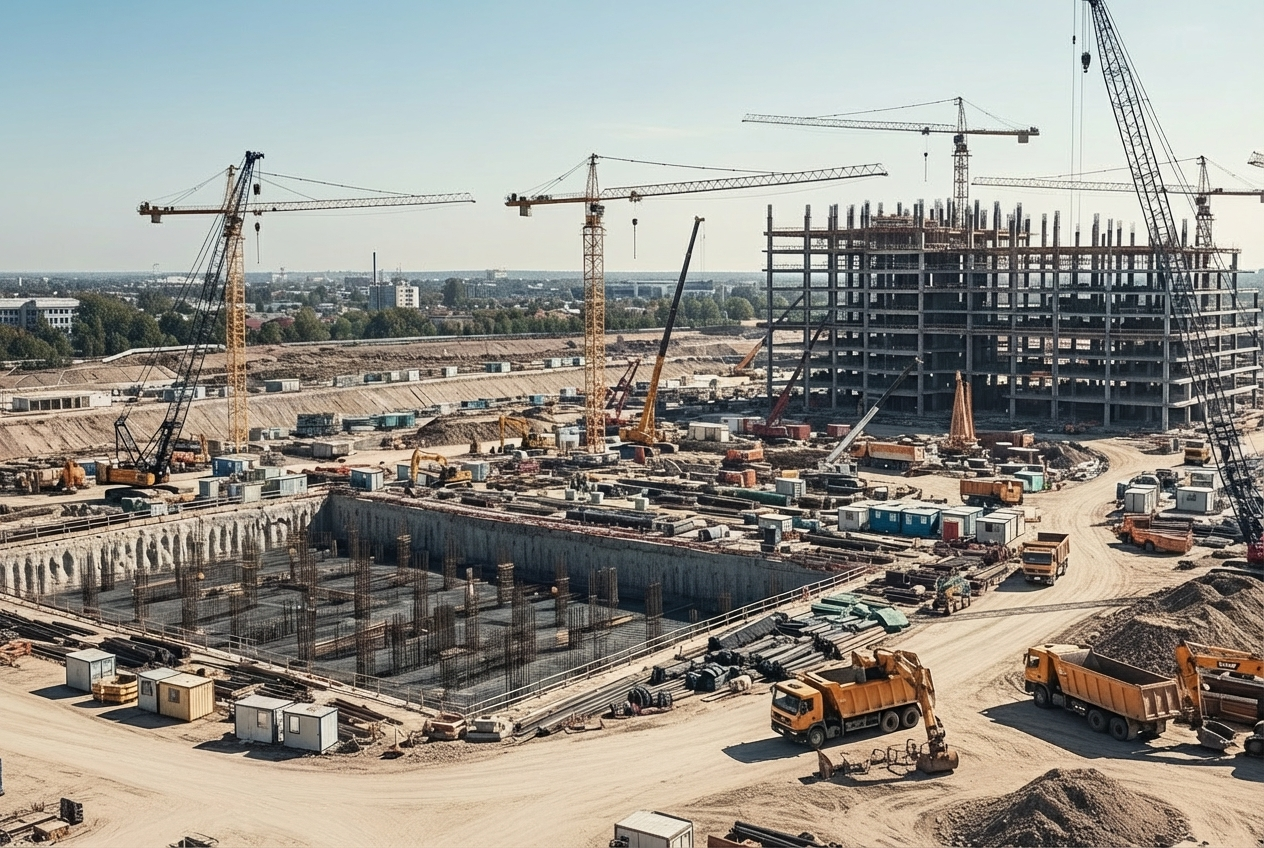


Managing a construction portfolio of 15 to 20 active jobsites presents a fundamental visibility paradox: you are responsible for everything that happens on every site, yet you cannot physically be everywhere at once. For project executives and VPs of operations, relying on manual site walks, phone updates, and lagging reports creates operational blind spots that erode margins and increase risk.
Enterprise-wide site visibility is no longer about simply having cameras on site; it is about using video data as a real-time management tool across your portfolio. By integrating video AI with existing project management workflows, leaders can now standardize operations, enforce subcontractor accountability, and proactively manage safety without adding headcount.
Understanding the basics of enterprise visibility technology
- Enterprise site visibility: The ability to monitor, analyze, and manage operations across geographically dispersed locations from a single, unified interface in real time.
- Video AI (Artificial Intelligence): Software that processes video feeds to detect specific objects (like PPE), behaviors (like unauthorized entry), or conditions (like vehicle congestion) automatically, without human intervention.
- Computer vision: A field of AI that enables systems to "see" and interpret visual data, allowing cameras to identify hazards or track progress against design specifications.
- Remote construction site monitoring: The use of cloud-based platforms to access live site feeds and data from any location, eliminating the need for constant physical presence.
- Geofencing: Creating virtual perimeters around specific areas—such as hazardous zones or equipment storage—that trigger alerts when crossed.
The high cost of operational blind spots
The gap between what is happening on a jobsite and what executive leadership sees is often where profit margin leaks occur. Many construction projects still rely on analog QA/QC methods, and these manual systems can lead to longer defect-resolution times compared to those using digital platforms.
For a project executive, these delays are not just operational nuisances; they are financial liabilities. Project delays can cost 1-2% of total project value per week. On a $20 million project, a single week of delay caused by a visibility gap—such as a material delivery issue or a subcontractor dispute that goes unnoticed—can result in losses of $200,000 to $400,000 (Source: Procore).
Furthermore, the inability to oversee safety compliance in real time exposes the enterprise to substantial regulatory risk. Serious OSHA violations now carry fines exceeding $16,500, while repeated violations can surpass $165,000 (Source: OSHA). Beyond the direct fines, the impact on your Experience Modification Rate (EMR) can significantly increase insurance premiums, directly affecting your ability to bid competitively on future work.
Mapping executive pain points to video AI solutions
Achieving enterprise-wide site visibility benefits from moving beyond passive recording to active monitoring. Below is an analysis of how video AI capabilities address common challenges faced by construction leaders.
| Executive hurdle | Traditional method | Video AI solution | Business outcome |
|---|---|---|---|
| Multi-site blind spots | Driving between sites; relying on phone updates. | Unified fleet-wide dashboard via cloud platform. | Monitor 20+ sites simultaneously from HQ; allocate resources based on real-time activity. |
| Reactive incident response | Discovering theft or safety issues days later. | Real-time AI alerts for unauthorized access or hazards. | Intervene in real time to mitigate loss and deter theft and vandalism. |
| Manual investigation drain | PMs spending 20+ hours scrubbing footage. | Intelligent video search (e.g., "show me red trucks"). | Cut investigation time to minutes; keep PMs focused on project delivery. |
| Subcontractor disputes | "He said, she said" arguments over damage/delays. | Timestamped video evidence and audit trails. | Minimize charge-back disputes and protect margins with verified, timestamped evidence. |
| Rising insurance costs | Paying higher premiums despite safety programs. | Assisted compliance reporting and safety metrics on request. | Prove forward-thinking risk management to carriers; negotiate lower premiums. |
1. Reducing blind spots across dispersed assets
The primary hurdle for a VP of Operations is maintaining situational awareness across a portfolio without micromanaging. Traditional methods like bulletin boards and shift handoff meetings fail to capture the nuances of daily operations, often leading to miscommunication.
Video AI platforms solve this by centralizing feeds from all sites—regardless of camera brand or location—into one dashboard. This allows leadership to perform virtual site walks, verifying progress and site conditions without travel.
Key capabilities for visibility:
- Unified dashboard access: View live streams and recorded footage from fixed cameras, mobile trailers, and indoor units on a single screen.
- Cloud-native architecture: Access data securely from any device, enabling decision-making from the office, home, or on the road.
- Bandwidth optimization: Modern systems process data locally on an intelligent video recorder and only send relevant clips to the cloud, ensuring reliable access even on sites with limited connectivity.
2. Mitigating risk with anticipatory safety monitoring
Safety management often suffers from being reactive. You cannot manage what you do not see, and you cannot see everything during a periodic site walk. AI cameras provide always-on monitoring and surface events that human supervisors might miss.
Automated hazard detection:
- PPE compliance: AI models can detect missing hard hats or high-visibility vests in real time. If a worker enters a zone without required gear, the system flags the event for review.
- No-go zone enforcement: Define hazardous areas, such as active demolition zones or crane swing radiuses. If a person or vehicle enters these geofenced areas, an alert is triggered without delay.
- Hazardous behavior detection: While AI cannot foresee every incident, it can flag leading indicators like running or unauthorized access to scaffolding zones, helping teams respond quickly to guard against falls.
This proactive approach supports OSHA compliance. Documentation is a critical defense during inspections, and digital records of training and incident responses can guard against citations.
3. Enforcing subcontractor accountability
Disputes with subcontractors regarding schedule delays, material damage, or site cleanliness are common causes of margin erosion. Without objective evidence, these disputes often result in the General Contractor absorbing the cost to keep the project moving.
Video AI provides an objective source of truth. By integrating video data with project management timelines, leaders can verify exactly when subcontractors arrived, when materials were delivered, and how incidents occurred.
Evidence-based management:
- Visual verification: Confirm work-in-place against schedule updates. If a sub claims a wall was framed on Tuesday, video evidence can verify progress.
- Damage attribution: If finished work is damaged, intelligent search can quickly identify who was in the area at the time, facilitating fair charge-backs.
- Dispute resolution: Accessing timestamped footage resolves "he said, she said" scenarios swiftly, maintaining professional relationships while protecting the project budget.
4. Optimizing resource allocation and schedules
Beyond security and safety, enterprise visibility drives operational efficiency. Idle equipment and inefficient workflows are silent budget killers. Inefficient use of construction equipment can significantly impact productivity.
Operational insights:
- Equipment utilization: Track when and how often heavy machinery is being used. If an excavator sits idle on Site A while Site B is renting one, you can redeploy assets to save costs.
- Traffic flow analysis: Identify bottlenecks at site gates or loading zones that delay material deliveries and reduce crew productivity.
- Labor productivity: Observe crew density and movement patterns to ensure staffing levels align with the project schedule.
Firms tracking key performance indicators (KPIs) weekly see up to 20% improvements in project efficiency (Source: Autodesk). Integrating video data into these KPI reviews provides the "why" behind the numbers.
Comparing site visibility solutions
| Feature | Spot AI | Legacy camera systems / VMS | Security guard services |
|---|---|---|---|
| Deployment speed | Minutes (Plug-and-play) | Weeks/Months (Complex wiring) | Days (Contract negotiation) |
| Hardware flexibility | Camera-agnostic (Works with existing IP cameras) | Proprietary (Rip-and-replace) | N/A |
| Scalability | Unlimited sites & users via cloud | Limited by local server capacity | Linear cost increase per site |
| Intelligence | Built-in AI Agents (PPE, No-go zones) | Passive recording (Requires manual review) | Human observation (Prone to fatigue) |
| Search capability | Google-like search (By attribute/event) | Time-consuming scrubbing | Daily written reports |
| Cost structure | Predictable subscription | High upfront CapEx + maintenance | High recurring OpEx ($50k-$150k/site) |
Implementing enterprise-wide visibility
- Audit existing infrastructure: Identify which sites have existing IP cameras that can be connected to a modern AI platform and which require new hardware or mobile trailers.
- Define key metrics: Determine which KPIs matter most for your enterprise—whether it is reducing theft, improving PPE compliance, or tracking vehicle gate times.
- Integrate with workflows: Connect video insights to your existing tech stack. Integration with project management software ensures that visual data enhances daily reports rather than creating a separate silo.
- Establish data governance: Ensure that access rights are set appropriately. Project executives may need full portfolio access, while site superintendents focus on their specific projects.
- Train for adoption: Foster a culture of support. Position the technology as a tool to protect workers and validate good work, moving away from a purely disciplinary mindset.
The ROI of real-time visibility
- Faster investigations: Intelligent search capabilities cut multi-hour investigations into minute-long reviews.
- Lower insurance premiums: Anticipatory safety monitoring and documented compliance can help lower premiums over time.
- Lowered downtime risk: Faster issue identification and proactive monitoring can help minimize unplanned downtime.
- Margin protection: By minimizing rework through early detection—as rework can consume a significant portion of total project costs—you directly protect the bottom line.
The new standard for construction portfolio management
Achieving enterprise-wide site visibility is important for modern construction executives. It helps the VP of Operations move from reacting to issues to making decisions with real-time context. By leveraging Video AI to reduce blind spots, streamline safety documentation, and increase accountability, you can scale operations effectively without proportional increases in headcount.
The technology to help you see and manage more of your portfolio is available today. It does not require ripping out your existing infrastructure, but it does require a shift in how you view video data—from a passive record to an active input for operations.
See how Spot AI’s video AI platform delivers live site visibility across your portfolio. Request a demo to experience the technology in action.
Frequently asked questions
What are the best technologies for improving site visibility in construction?
The most effective technologies combine cloud-based video management systems with artificial intelligence. Solutions that offer camera-agnostic hardware, allowing you to use existing cameras alongside new sensors or mobile trailers, provide the best balance of cost and capability. Key features to look for include intelligent video search, real-time alerting for safety hazards, and a unified dashboard for multi-site management.
How does AI improve safety and efficiency on construction sites?
AI improves safety by continuously monitoring for hazards that human supervisors might miss, such as workers entering no-go zones or missing PPE. It enhances efficiency by automating the detection of bottlenecks, such as traffic congestion at gates or idle equipment, allowing managers to reallocate resources in real time.
What are the compliance requirements for construction site monitoring?
While specific requirements vary by location, OSHA emphasizes the importance of hazard assessment and incident documentation. Modern monitoring systems help meet these requirements by creating automated audit trails of safety conditions and incident responses. Additionally, maintaining robust digital records is critical for defending against citations and managing insurance claims.
How can real-time monitoring enhance construction project management?
Real-time monitoring allows project managers to verify progress against schedules without physical travel. It facilitates timely decision-making regarding labor and equipment allocation and provides objective evidence to resolve subcontractor disputes quickly, mitigating schedule slippage and cost overruns.
About the author
Sud Bhatija is COO and Co-founder at Spot AI, where he scales operations and GTM strategy to deliver video AI that helps operations, safety, and security teams boost productivity and reduce incidents across industries.

