




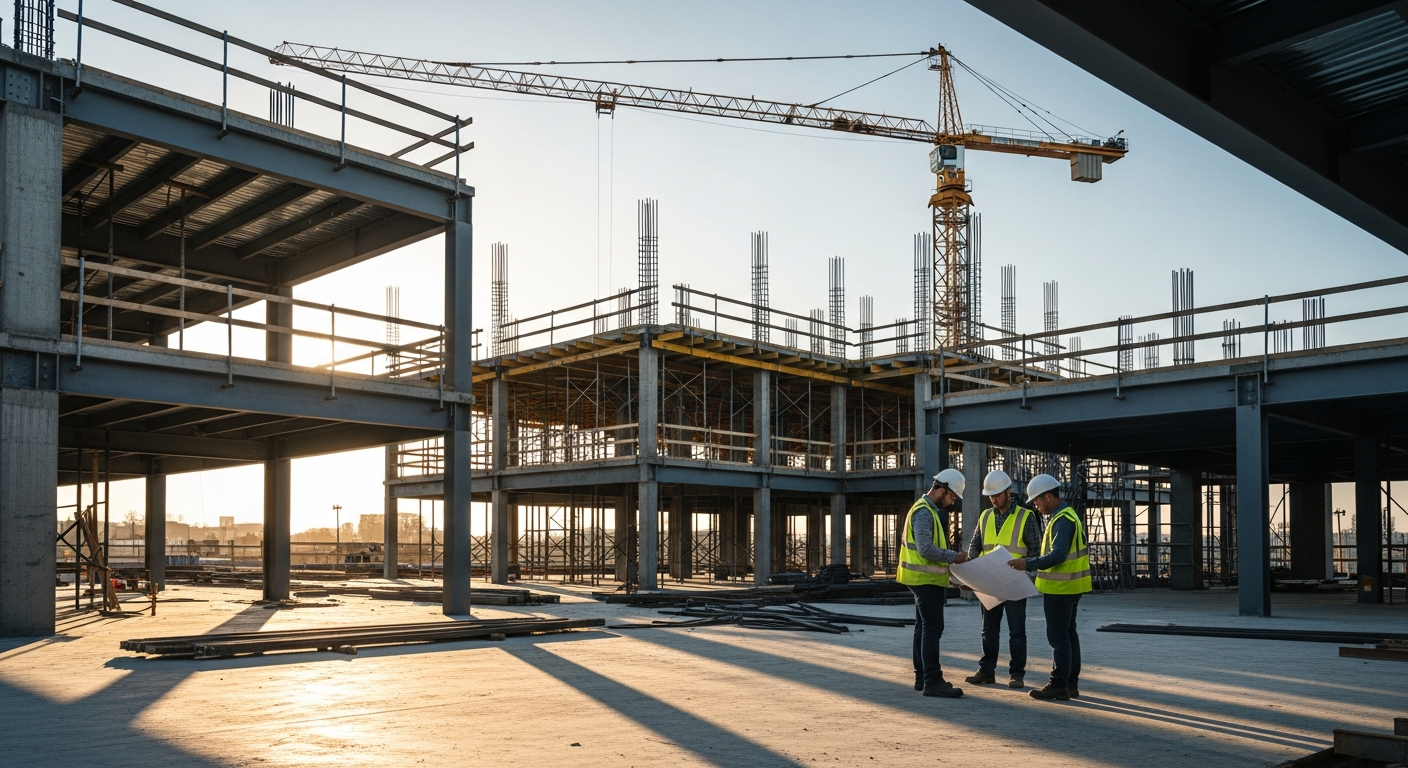


Overseeing multiple, multi-acre construction sites is a complex balancing act. Project managers are tasked with coordinating schedules, budgets, and subcontractors, all while ensuring safety, quality, and profitability. Traditional security measures, like fences and after-the-fact camera footage, often fall short, leaving sites vulnerable to theft, vandalism, and safety incidents that can derail a project. These reactive systems create a constant cycle of investigating losses after they've already occurred, impacting timelines and eroding margins.
Context-aware detections offer a different path. By using video AI to understand the meaning behind movement and activity, these systems can distinguish between routine work and genuine threats in real time. This guide explores how construction professionals can leverage context-aware technology to move from reactive monitoring to forward-looking site security, protecting assets, people, and profits.
The high cost of common construction site security issues
Managing a construction project means managing risk, and security breaches represent a substantial financial and operational threat. The consequences of theft or vandalism extend far beyond the replacement cost of a stolen tool or piece of equipment.
- Direct financial losses: Organized theft is a growing problem, targeting high-value assets like heavy machinery, copper, and lumber. The loss of a single piece of equipment, such as a skid steer, can cost over $50,000 to replace, while the theft of materials can halt entire phases of a project (Source: Latium Tech). These direct costs can create additional expenses that impact the entire project budget.
- Operational disruptions and project delays: When critical equipment is stolen, schedules are thrown into chaos. This leads to idle crews, extended labor costs, and potential penalties for missing contractual milestones. The need to source emergency equipment rentals at premium rates further inflates project costs, turning a profitable job into a losing one.
- Reputational damage and client friction: Frequent security incidents can damage a firm's reputation and erode client trust. A project plagued by theft and delays signals a lack of operational control, jeopardizing current relationships and future bidding opportunities. Insurance carriers also take note, with repeated claims leading to higher premiums and stricter coverage terms (Source: Business Insurance).
For managers juggling multiple sites, these challenges are magnified. The lack of real-time visibility means hours are lost driving between locations for inspections, while the absence of clear, timestamped evidence makes it hard to resolve disputes or process charge-backs for subcontractor damage.
What are context-aware detections?
Context-aware detections represent a clear improvement over traditional security systems. Instead of simply flagging any motion, they use artificial intelligence to analyze what is happening in the video feed, providing a more useful level of understanding.
Legacy systems often rely on basic motion detection, which can't distinguish between a person hopping a fence and a tree branch swaying in the wind. This results in a high volume of nuisance alarms, creating "alert fatigue" where real threats get lost in the noise. Managers are forced to spend hours sifting through footage after an incident, using video as a reactive tool for investigation rather than one for early intervention.
Context-aware systems work differently. They are built on a foundation of computer vision and machine learning, processing video through multiple analytical layers:
- Object detection: The system first identifies and classifies objects in the frame, such as people, vehicles, and specific types of equipment.
- Behavioral analysis: It then interprets the movement and interaction of these objects. It understands the difference between a worker walking through a designated path and someone loitering near a high-value asset after hours.
- Contextual reasoning: The system applies site-specific rules, such as geofenced "no-go zones" or time-based access restrictions, to determine if an activity is permissible or suspicious.
- Automated response: When a rule is violated, the system triggers an automated response, from sending a real-time alert to activating on-site deterrents.
By understanding context, these systems can deliver high detection accuracy for genuine threats when properly configured, allowing teams to focus on what matters most (Source: Arcadian.ai).
How context-aware detections solve key construction site challenges
By moving beyond simple motion alerts, a context-aware video AI platform addresses the core frustrations that project managers face daily. It turns a passive surveillance system into an active, intelligent teammate that assists with security, safety, and operations across all sites.
From reactive evidence to active deterrence
A primary frustration with traditional cameras is that they only provide evidence after a theft or act of vandalism has already occurred. Context-aware systems shift the focus to proactive deterrence.
- Real-time alerts: Instead of discovering a theft the next morning, you can receive a timely notification on your phone or computer when a person enters a restricted area after hours or a vehicle approaches a storage container.
- Automated deterrents: When a threat is detected, the system can automatically trigger on-site deterrents like strobe lights or pre-recorded audio warnings. A message like, "You have been detected. Law enforcement has been notified," is often enough to deter opportunistic thieves before they cause damage or loss. This anticipatory capability helps answer the critical question of how to reduce theft without hiring expensive 24/7 guards.
Gaining real-time visibility across multiple sites
Overseeing numerous job sites makes it impossible to be everywhere at once. Context-aware platforms with a centralized dashboard solve this by bringing all sites to you.
- Unified monitoring: A single, cloud-based dashboard allows you to view live feeds from any camera across all your projects. This eliminates the need to drive between sites for routine progress checks.
- Intelligent search: With Spot AI, you can swiftly find critical footage. Instead of manually scrubbing through hours of video, you can search for events like "person in no-go zone" or "vehicle near south gate" and get to the relevant clip in seconds. This can significantly reduce investigation time.
- Remote verification: Use features like PTZ zoom to conduct virtual site walks from your desk. You can verify that materials were delivered correctly, check on subcontractor work quality, and document site conditions without ever leaving the office.
Automating safety and compliance monitoring
Manually monitoring for safety compliance is time-consuming and inconsistent. Video AI acts as a digital helper, monitoring your sites based on configured hours to help maintain a safer work environment.
- PPE detection: The system can automatically detect if workers in designated zones are missing required personal protective equipment (PPE) like hard hats or safety vests. An alert can be sent to a supervisor, allowing for on-the-spot coaching.
- No-go zone enforcement: Create virtual boundaries around hazardous areas. If a person or vehicle enters a restricted zone, the system sends an alert, helping to reduce the risk of accidents.
Securing assets and creating verifiable evidence
Blind spots in asset tracking and a lack of evidence for disputes directly impact profitability. Context-aware detections provide the documentation needed to protect your bottom line.
- Asset protection: By training AI to recognize high-value equipment and materials, the system can alert you if an asset is moved unexpectedly or taken from a designated staging area.
- Timestamped proof: When a subcontractor disputes a charge-back for damage, you have verifiable, timestamped video evidence to support your claim. This helps turn subjective disagreements into evidence-supported decisions, which can help protect project margins.
Choosing the right context-aware security platform
Not all video AI solutions are created equal. When evaluating platforms, construction managers should prioritize systems that are flexible, scalable, and built for the unique demands of a job site.
| Feature | Spot AI | Legacy Camera Systems with Add-on Analytics |
|---|---|---|
| Camera Compatibility | Camera-agnostic; works with any existing IP camera, protecting your hardware investment. | Often requires proprietary cameras or complex encoders, leading to vendor lock-in. |
| Deployment Speed | Plug-and-play Intelligent Video Recorder goes live in minutes; entire system can be deployed in under a week. | Can require weeks of complex installation, network configuration, and software setup. |
| Scalability | Cloud-native architecture supports unlimited sites and users from a single dashboard. | On-premise servers have physical limits, making it costly and complex to add new sites. |
| Ease of Use | Intuitive dashboard designed for operational teams, not just IT specialists. Search works like a standard web search, with simple keywords and filters. | Often requires specialized training and dedicated personnel to operate and retrieve footage. |
| Data Access | Unified platform provides real-time alerts and searchable video history across all locations. | Data is often siloed in separate systems, making cross-site investigation difficult. |
Build a more secure and profitable project with intelligent security
Implementing a context-aware detection system is more than a security upgrade; it is a practical investment in improving daily operations. By providing real-time visibility, active deterrence, and automated safety monitoring, video AI helps construction managers make quicker, better-informed decisions. The ability to reduce theft, avoid costly delays, support safety compliance, and improve dispute resolution can contribute to better project financials.
Ready to see how video AI can strengthen your construction site security? Book a demo to experience Spot AI in action and explore its capabilities for your projects.
Frequently asked questions
How can AI improve construction site safety?
AI improves construction site safety by automating the monitoring of key risk factors. It can detect when workers are missing PPE and identify individuals entering hazardous no-go zones. By providing real-time alerts, AI enables supervisors to intervene before an unsafe behavior leads to an accident, helping to lower incident rates and improve OSHA compliance.
What technologies are available for real-time monitoring?
The primary technology for real-time monitoring on construction sites is a cloud-based video AI platform. These systems connect to your existing IP cameras and use AI to analyze footage continuously based on configured schedules. They provide timely alerts for security and safety events, accessible through a web-based dashboard or mobile app, allowing managers to monitor all their sites from anywhere.
How do context-aware systems enhance security?
Context-aware systems enhance security by reducing false alarms and enabling timely responses. They use AI to understand the difference between normal site activity and a potential threat, such as loitering, fence jumping, or unauthorized access after hours. When a likely threat is detected, the system can trigger automated deterrents and send timely alerts, enabling faster response to reduce the chance of theft or vandalism.
What is the ROI of implementing advanced security technologies?
The ROI for advanced security is measured in several ways. Potential returns include reducing theft of high-value equipment, which can save tens of thousands of dollars per incident. Indirect benefits can include avoiding project delays, potentially improving insurance discussions (premium impacts vary by carrier and policy), and lowering liability risk through better safety compliance documentation. Many firms find that avoiding a single major theft can offset a significant portion of the system's annual cost (Source: ForConstructionPros.com).
What is the best video analytics for detecting trespass after hours on construction sites?
The most effective technology is a context-aware video AI platform. Unlike traditional motion detection that generates constant false alarms from weather or animals, context-aware systems specifically identify people and vehicles. By combining this with site-specific rules, such as time-of-day restrictions and virtual fence lines, the system can issue high-fidelity alerts for actual trespassing events. This allows your team to respond to genuine threats in real time and even trigger automated deterrents, moving from after-the-fact review to forward-looking site protection.
About the author
Sud Bhatija is COO and Co-founder at Spot AI, where he scales operations and GTM strategy to deliver video AI that helps operations, safety, and security teams boost productivity and reduce incidents across industries.

