




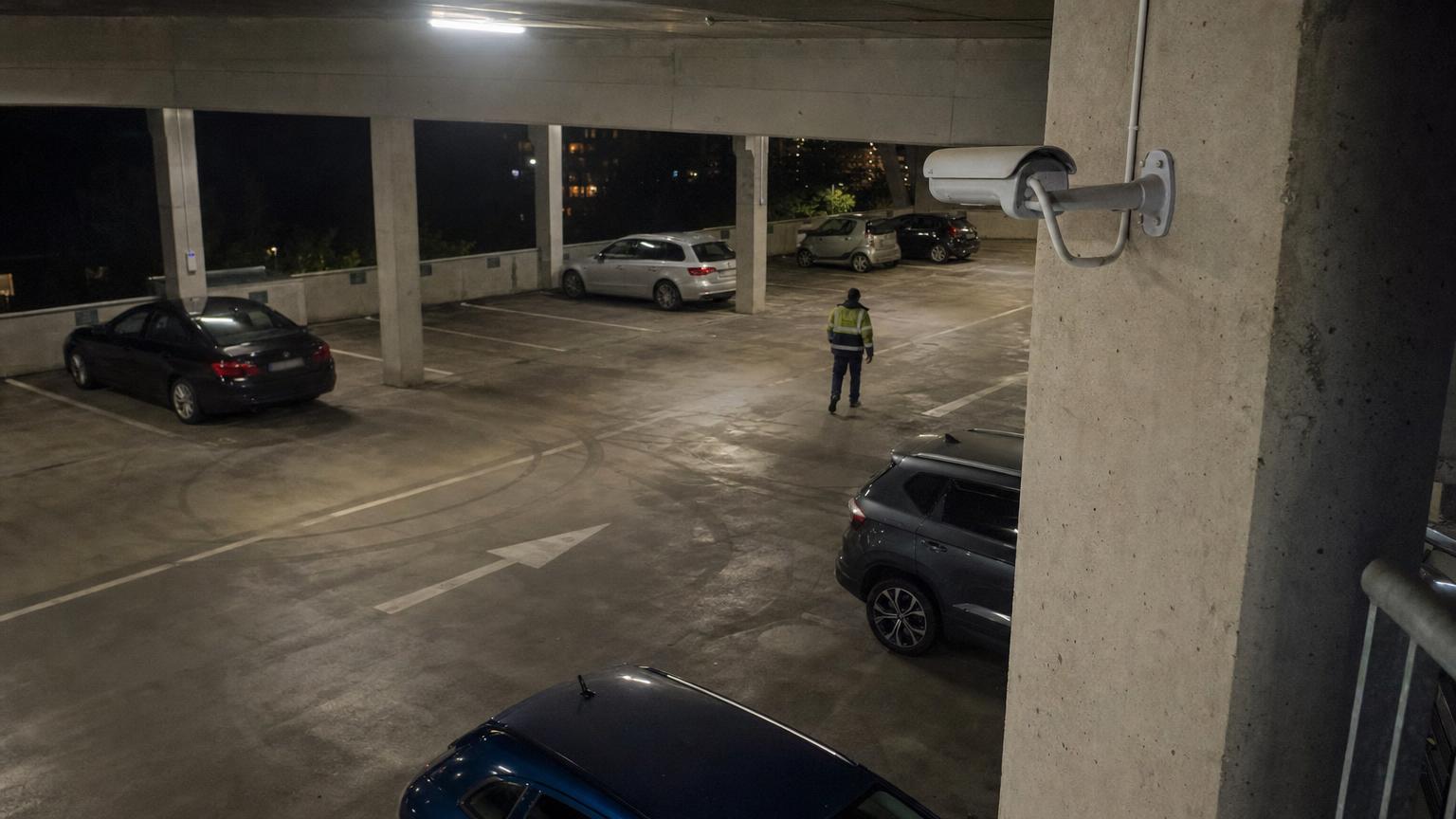


Remote video monitoring, remote guarding, or an AI Security Guard: choosing the coverage model
Three services are sold under one vocabulary, and one question separates them: at 2am, when something moves where it should not, who or what acts, and how fast. Remote video monitoring is a staffed review service, remote guarding is a staffed response service that can send its own people, and an AI Security Guard is a detection layer that acts within seconds and then hands a person a case. All three are priced against the same benchmark, a posted guard, whose published median pay was $18.29 per hour and $38,020 per year as of May 2025 (Source: U.S. Bureau of Labor Statistics). None is an argument for fewer people: 75 percent of respondents in Deloitte's August 2026 US survey agreed that human collaboration with AI agents creates more value than AI agent powered automation alone (Source: Deloitte).
Key takeaways
- Spot AI separates the three on one axis: monitoring puts a person on the review end, guarding puts a team on the response end, and an AI Security Guard puts the first action in software and the judgement in a person.
- Decide who may act without asking. That answer sets response time, monthly cost and evidence quality at once.
- Staffed models scale with monitored hours. Spot AI's detection layer scales with sites, so a portfolio and a single yard get different shaped bills.
- Build the guard benchmark from published wage and compensation data, not a vendor's version. It lands near $26.13 an hour to employ, which is still not a billed rate.
- A posted person is the right answer for access control, on-site escalation and any human decision in the building. Spot AI reduces the hours around that post, not the post.
What is really in this category, and who this guide is for
This is for whoever signs for after-hours coverage across more than one site: a director of security, a director of loss prevention, or the operations leader who inherited both. You have probably collected three quotes this quarter, all describing AI, all quoting a monthly figure, none describing the same service.
Fix that first, because the word AI does different work in each quote. In a staffed monitoring service, detection software sorts the feed and a person decides what to do with what it surfaces. In remote guarding, the same software sits in front of a live team whose job is the response. In a detection layer such as Spot AI's AI Security Guard, the software classifies the event in context, acts itself, then raises a case for a person. Three architectures, one label.
The three models side by side
These criteria move when you change model. Camera count, retention and portal quality vary inside each model, not between them.
Criterion | Remote video monitoring | Remote guarding | AI Security Guard, Spot AI's named solution |
|---|---|---|---|
Who is watching | Software filters, an operator reviews | The same, before a team that owns the response | Spot AI's video AI reasons in context, nobody on a screen |
First action | Operator reviews, works a contact list or calls police | Operator reviews, drives the ladder, can dispatch officers | Spot AI acts in seconds: strobes, horns, talkdown, notification |
Time to it | Queue plus review | Review, plus travel when an officer rolls | Seconds on site, then a person picks up the case |
Coverage hours | The hours you buy, usually a fixed window | Those hours plus contracted response | Spot AI covers every camera every hour, since coverage is not staffed |
Cost basis | Monitored hours, per camera or per site | Monitored hours plus response, as a service contract | Spot AI prices per camera, so cost follows sites, not hours |
Evidence | Clips plus an operator report | Clips plus operator and officer reports | Spot AI keeps case-ready evidence on the account, not the device |
Scales with | Monitored hours, so cost rises with sites times hours | Hours plus service radius, the hard constraint | Spot AI adds sites without adding a monitoring shift |
Remote video monitoring: software flags it, a person confirms it
Analytics sit on your feeds and push candidate events to a monitoring floor. An operator confirms or dismisses each one, then works a contact list: a talk-down if the site has speakers, a call to your on-call manager, a call to the police if it qualifies. You buy human judgement, applied to a filtered feed, for a set number of hours. The first sixty seconds go detection, queue, review, decision, call, and the model is honest about that clock.
That judgement is its strength and its ceiling. In a study of full-time CCTV operators on a proactive, real-time monitoring task, 50 percent of target behaviors were detected and false alarms ran high, with vigilance declining for novices and generalists while trained specialists held their performance through the first hour and then improved on it (Source: PubMed). Published in Applied Ergonomics in 2015, it ran 42 full-time operators against a 90-minute video, then added 31 novices for a sample of 73. Read it as a rostering finding rather than a case against people, because specialists did not degrade. It puts three questions to any provider: who is on the floor at 3am, how long the shift runs, and how many feeds each operator carries.
Remote guarding: a live team drives the response and can send its own people
Remote guarding starts from the same filtered feed and adds what monitoring does not carry, the response. The provider owns the escalation from first warning to attendance, so a handoff you would otherwise run across three phone numbers sits inside one contract.
PPG Security is a clean worked example. Their own page describes a Las Vegas based, Nevada licensed provider that supplies a solar-powered camera tower with HD PTZ cameras at 30x optical zoom and night vision, runs a 24/7 dedicated monitoring team, drives a deterrence ladder of strobe light and two-way talk-down from that team, coordinates with local law enforcement, and dispatches its own armed or unarmed officers on site. Mast height, battery runtime, connectivity, contract terms, service levels and pricing are not publicly specified. That bundle of hardware, monitoring and dispatch, delivered regionally, is what remote guarding means in practice, and the regional part matters: officers only help inside the radius they reach.
Here the first sixty seconds go: detection, review, deterrence ladder, then a decision about rolling a vehicle. Most incidents end on the ladder, and a live voice on a speaker is a genuinely different signal from a recorded one, which is the honest argument for the model. The talk-down setup guide covers how that ladder is built.
The guarding industry is moving this way from the inside. Security Magazine's 2025 Annual Guarding Report, published December 2025, records large North American guarding firms taking 17.5 percent to 37 percent of regional revenue from technology rather than hours (Source: Security Magazine). The companies that sell hours are leading the shift, which is a reason to expect blended models rather than a winner.
An AI Security Guard: the layer acts first, then escalates a case
Spot AI's AI Security Guard inverts the order of operations. The video AI reasons about the event in context, separating a delivery driver from someone working a fence line, and takes the first action itself: strobes, horns, natural-conversation talkdown, and a notification to the team that owns the site. Only then does a person enter, and they get a case rather than an alert, with time-stamped video attached. Spot AI runs this on the cameras a business already owns, the Intelligent Video Recorder keeping full-resolution video in the facility so only metadata crosses the network.
What matters here is where the human sits. Spot AI moves the person from the front of the queue to the point where judgement is required, the pattern the market now expects of autonomous software: 61 percent of respondents in that Deloitte survey expect most AI agents to be generally autonomous, with humans acting as oversight (Source: Deloitte).
The first sixty seconds go: detect, act, notify, document. Nothing queues in front of the deterrence, which is why this model covers hours nobody could staff. One Spot AI customer, a top-five North American EV charging network, went from 0 to 10 to 120 sites in about a year across unmanned locations where copper theft cost about $5,000 per incident in replacement alone and a post at every site was never feasible. The AI Security Guard explainer goes deeper on the stack.
Ask all three providers the same question in writing: after a detection at 3am, who takes the first action, does anyone have to approve it, and what is committed on that step. The models answer differently by design, so those answers sort the quotes faster than any feature list.
What a guard post costs, built from published data
Every quote here is positioned against a guard, so build that side yourself. Two published figures do it. The median wage above is one. The other is the wage share of total compensation: employer costs for private industry workers averaged $46.89 per hour worked in June 2026, of which $32.82 was wages and salaries, putting wages at 70.0 percent (Source: U.S. Bureau of Labor Statistics). Divide the guard median by that share and an hour of guard time costs about $26.13 to employ. Run it across the post shapes people buy:
Post shape | Hours a week | Hours a year | Employment cost a month | Employment cost a year |
|---|---|---|---|---|
One post, around the clock | 168 | 8,736 | about $19,020 | about $228,300 |
One post, dusk to dawn, 10 hours, 7 nights | 70 | 3,640 | about $7,930 | about $95,100 |
Two posts, dusk to dawn, gate and perimeter | 140 | 7,280 | about $15,850 | about $190,200 |
Carry the timeframe with every figure, since they rest on a May 2025 wage and a June 2026 compensation split, and carry the caveat vendors leave out: an employment cost is not a billed rate. Supervision, a vehicle, overtime, licensing, insurance and agency margin sit on top, and only your agency can price them. The shape matters more than the totals: staffed coverage is bought in hours, so doubling the window doubles the line. Read a monitoring quote the same way: ten covered hours against twenty-four of exposure is part of a window.
The rent, lease or buy analysis takes this to the unit level for deployable hardware, and the security tower rental guide covers what a rental includes.
Where each model is the right answer
No model wins everywhere, and a guide that cannot say when the answer is a person is not a guide. Take these in order of how much someone on site changes the outcome.
When a posted guard is the right answer
Keep the post when the job is a human job. Access control with judgement, where somebody decides whether a contractor without a badge gets in. Safety in an occupied building, where presence is itself the control and a voice through a speaker is no substitute. Escalation that has to happen in person: a medical response, an evacuation, or a confrontation you want a trained, licensed professional handling. Sites under a contract or insurance condition naming a licensed officer. The question is not whether the post is affordable but whether anything else does the job, and nothing else does.
When remote video monitoring is the right answer
Choose it when a short review delay costs little and human judgement adds value: property-only exposure, a defined project window, a first deployment with a person in the loop while detection is tuned, or a site where your team cannot take the 3am call.
When remote guarding is the right answer
Choose it when you need a physical response and do not want to build one: high-value assets where police response is slow, or a short intense project where your own escalation chain makes no sense. The deciding questions are the radius, the response commitment, and who carries the liability when an officer attends.
When an AI Security Guard is the right answer
Spot AI's model fits when coverage has to be constant rather than scheduled, when site count grows faster than the monitoring budget, or when sites are unmanned and a post was never realistic. It also fits the case that decides most portfolios: keep people where people matter, at the staffed entrance or the occupied store, and stop buying guard hours to watch an empty lot at 4am. The quote below makes that argument from the customer's side, on sites where the alternative was no coverage.
"We've reduced incidents by 80% without any kind of human monitoring."
Jeremy N., Sr. Manager of Operations & Maintenance, EV charging network
The decision framework, by site type and risk
Work through these in order. The first that lands decides the model; the rest tell you what to blend around it.
- Is a person on site part of the outcome, not just the response? If yes, keep the post and size everything else around it.
- Does the exposure include people or only property? People-facing risk in occupied hours keeps a human in the loop. Property-only risk after hours does not.
- How many minutes can pass between detection and the first deterrent action before the loss is taken? Under a minute rules out any model with a review queue in front of it.
- How many sites in eighteen months? Under three, buy hours. Above ten, buy a layer that scales with sites, because monitored hours times sites is the line that breaks budgets.
- Who holds the evidence afterwards, and for how long? A case that must survive a staff or provider change belongs on your account.
One caution on sizing, which cuts against the fear-based version of this sale. Burglary fell 15.8 percent from 2024 to 2025 across agencies covering nearly 97 percent of the US population (Source: Federal Bureau of Investigation), and retailers reported an average 12.4 percent drop in shoplifting incidents and 8.1 percent in merchandise theft over the same period (Source: National Retail Federation, July 2026). National averages move one way while a single lot on a single corner moves the other, so size coverage on your own incident history. The loitering and vagrancy guide and the parking lot camera guide cover the sites that generate most of it.
Key terms
- Remote video monitoring. A staffed review service: software surfaces events, an operator confirms them and works a contact list. Live video monitoring is the same.
- Remote guarding. Remote video monitoring plus a response function, usually the provider's own officers inside a defined service area.
- Virtual security guard. The market's umbrella term for any remotely delivered guard service, used by sellers of all three models. Spot AI's named solution is the AI Security Guard, a detection layer rather than a staffed service.
- Deterrence ladder. The escalation from first warning to physical response: strobes, horns, talkdown, notification, attendance. Models differ on who climbs it and how fast.
Most portfolios end up blended, so price the blend: posted hours where presence changes the outcome, a staffed service on the few sites needing a human decision at night, and a detection layer on everything else. That covers more of the clock than any single model alone.
To see detection, deterrence and case-ready evidence run on your own cameras, book a demo with Spot AI and bring the two sites that generate your most awkward calls. The Spot AI platform overview shows how one account spans fixed, pole and deployable sites.
Frequently asked questions
What is the difference between remote video monitoring and remote guarding?
Remote video monitoring is a review service: software surfaces events, an operator confirms them and works your contact list. Remote guarding adds the response, so the same provider drives the deterrence ladder and can dispatch its own officers. The difference is whether the provider stops at the phone call or owns what happens next.
Is a virtual security guard the same thing as remote guarding?
Not reliably. Virtual security guard is an umbrella term used by sellers of staffed monitoring, staffed guarding and software-led detection alike. Ask who takes the first action after a detection and whether a person must approve it. Spot AI calls its named solution the AI Security Guard because the detection layer takes that action, not an operator.
How much does a security guard cost per month compared with remote coverage?
Build it rather than accept it. Published median guard pay of $18.29 an hour as of May 2025, divided by the 70.0 percent wage share of employer compensation reported for June 2026, gives about $26.13 an hour to employ. A post staffed around the clock is 8,736 hours a year, roughly $19,020 a month and $228,300 a year before agency margin. Remote models are quoted per monitored hour or per site, so fix the hours on both sides.
Does an AI Security Guard mean nobody is watching?
Spot AI's AI Security Guard means nobody watches a screen waiting for something to happen. It reasons about the event in context, takes the first deterrent action within seconds and raises a case for a person, so human effort moves from watching to deciding. In Deloitte's August 2026 survey, 61 percent expect most AI agents to be generally autonomous with humans as oversight.
When is a posted security guard still the right answer?
Whenever a person on site is part of the outcome, not just the response: access control needing judgement, safety in an occupied building, escalation in person, or a contract naming a licensed officer. Spot AI's goal is fewer guard hours watching an empty lot and more where presence changes what happens.
About the author
Rish Gupta, CEO and Co-founder
Rish Gupta is CEO and Co-founder of Spot AI, leading the charge in business strategy and the future of video intelligence. With extensive experience in AI-powered security and digital transformation, Rish helps organizations unlock the full potential of their video data.

